
Pruning
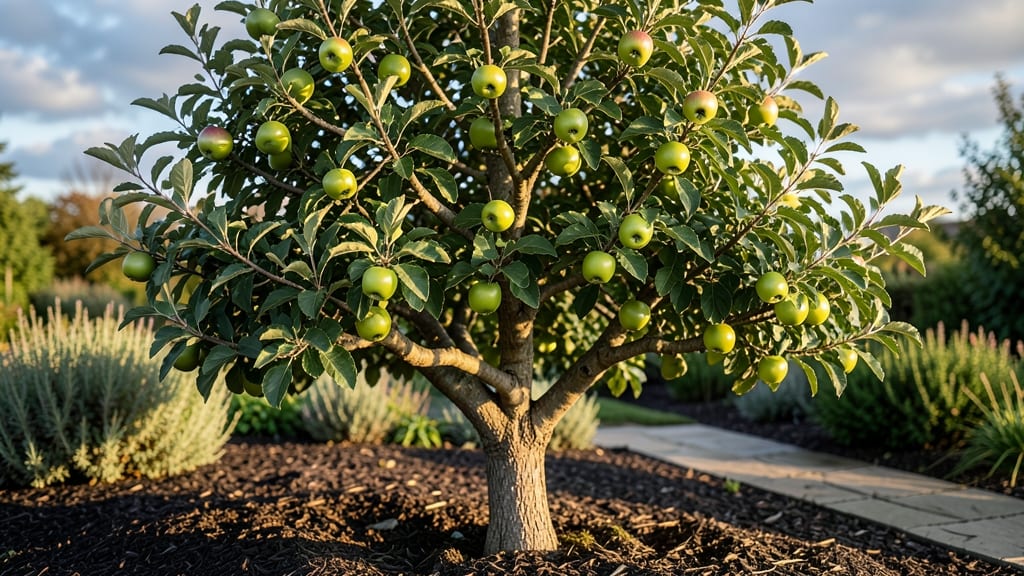
A Granny Smith apple tree can range from 6 feet tall to over 20 feet—depending entirely on the rootstock. 🌳 I planted mine on semi-dwarf rootstock last spring, and already the difference in size compared to standard trees is striking.
The right choice means the difference between a backyard tree and one that needs a whole orchard.
Rootstock determines everything: dwarf varieties stay under 8 feet, semi-dwarfs reach 12-15 feet, while standard trees can hit 20+ feet with proper care. This affects spacing (dwarfs need 6-8 feet apart; standards need 20+ feet), pruning frequency, and even whether you can grow them in containers.
My semi-dwarf now fits perfectly in my suburban yard where a standard would block the neighbor's view.
You'll end up with a tree perfectly sized for your space—whether that's a patio container, a small backyard, or a full orchard. The right choice means easier harvesting, less pruning, and fruit you can actually reach without a ladder.
For most home gardeners, semi-dwarf is the sweet spot: productive without overwhelming your yard.
Here's the kicker: even dwarf trees need proper pruning to maintain shape and health. The smaller the tree, the more critical good pruning becomes—so don't skip this step if you want years of fruit. I'll show you exactly how to keep yours compact and productive in the next section.
📚 In This Guide
- What you need
- Instructions
- Tips and common mistakes
- Wrapping up and next steps
What you need
- ● Granny Smith apple tree: 1–5 plants (depending on space and variety: dwarf for 6–12 ft, semi-dwarf for 12–16 ft, or standard for 20+ ft)
- ● Bare-root or container-grown (check root flare for health!)
- ● Well-draining soil: Test pH (ideal: 6.0–6.5) and amend with compost if needed.
- ● Organic mulch: 2–3 inches of wood chips or straw (keep 6+ inches from trunk).
- ● Fertilizer: Balanced 10-10-10 or organic options like worm castings (follow package rates).
- ● Support system: Dwarf/semi-dwarf: 4–6 stakes (4–6 ft tall) + tree ties.
- ● Standard: 2–4 stakes (8+ ft tall) + strong ties.
- ● Hand trowel (for planting).
- ● Pruning shears (bypass type, sharp and sterilized).
- ● Loppers (for thicker branches, if needed).
- ● Shovel (broadfork for minimal root disturbance preferred).
- ● Watering can or hose (with gentle spray nozzle).
- ● Measuring tape (to track tree height and spacing).
- ● Gloves (gardening or work gloves for protection).
- ● Tree guards: Wire mesh or plastic to protect young trunks from critters.
- ● Drip irrigation kit (for consistent watering).
- ● Pest control: Neem oil or insecticidal soap (preventative measure).
- ● Soil moisture meter (to monitor water needs).
- ● Pollination aid: If growing a single tree, consider hand-pollinating with a paintbrush!
Granny Smith apple tree size: how to choose the right variety for your space
Selecting the perfect Granny Smith apple tree starts with understanding how size impacts your garden layout and long-term care.
🌱 Step 1: Understand Dwarf, Semi-Dwarf, and Standard Size Categories
Granny Smith apple trees come in three primary size classifications, each with distinct space requirements. Dwarf varieties typically reach 6-8 feet tall and wide, making them ideal for small backyards, containers, or urban gardens. Semi-dwarf trees grow to 10-12 feet, offering a balance between manageability and fruit production. Standard trees can soar to 15-25 feet, requiring ample yard space and professional pruning.
Here's the key difference: dwarf trees produce fruit at the same rate as standard trees but on a smaller frame. This means you can harvest 100-200 pounds of apples annually from a dwarf tree in the same space a standard tree would need for just 50-100 pounds. The trade-off is slightly smaller fruit size, but the flavor remains identical.
☀️ Step 2: Match Tree Size to Your Available Space
Measure your planting area before selecting a variety. Dwarf trees thrive in 8x8-foot spaces and can even be grown in 15-gallon containers with proper root pruning. Semi-dwarf trees need 12x12 feet of clearance for branches to spread naturally without crowding. Standard trees require 20x20 feet minimum, plus additional space for their extensive root systems.
Consider future growth when placing trees. A dwarf tree planted 10 feet from a fence will eventually touch it, while a standard tree needs 25 feet of clearance. I always recommend planting dwarf trees 6-8 feet apart in rows to maximize sunlight exposure and airflow between plants.
✂️ Step 3: Choose Rootstock for Desired Size Control
The rootstock determines the final size of your Granny Smith tree. Dwarfing rootstocks like M.9 or M.26 produce trees that stay 6-10 feet tall, while semi-dwarf rootstocks such as MM.106 or MM.111 result in 12-15 foot trees. Standard rootstocks like seedling or Paradise create full-size trees.
Here's my pro tip: graft the Granny Smith scion onto your chosen rootstock yourself for complete control. Nurseries often pre-graft trees, but doing it yourself ensures you're getting exactly what you want. The grafting window is late winter to early spring when the tree is still dormant but beginning to show signs of bud swell.
🪴 Step 4: Plan for Long-Term Maintenance Based on Size
Dwarf trees require annual pruning to maintain their compact shape, while standard trees need heavy pruning every 2-3 years to control height and shape. Semi-dwarf trees fall in between, requiring light pruning annually with occasional structural pruning every few years. All varieties benefit from summer pruning to control growth and improve fruit quality.
Watch for these size-related signs: if your dwarf tree starts growing taller than 9 feet, it's outgrowing its rootstock. Standard trees that exceed 20 feet in height may need professional arborist intervention. The key is consistent pruning—removing 1/3 of the canopy annually keeps trees healthy and productive regardless of their mature size.
⏰ Step 5: Consider Pollination Requirements by Tree Size
All Granny Smith varieties are self-pollinating, but planting multiple trees—even dwarf ones—can increase fruit set. For best results, plant two dwarf trees 15-20 feet apart or one dwarf and one semi-dwarf in close proximity. The larger the tree, the more pollinators it attracts, which translates to better fruit development.
Here's what to watch for: if your single dwarf tree produces fewer apples than expected, it's likely due to insufficient pollination. Adding even a small pollinator-friendly plant nearby can make a noticeable difference. I've seen dwarf trees double their production simply by planting a few bee-friendly flowers within 10 feet of the tree.
Tips & tricks for perfect Granny Smith apple tree Selection
Choosing the right Granny Smith apple tree size can transform your garden from a cramped struggle to a thriving orchard. Here's what I've learned from years of working with these varieties.
Space Planning: When mapping out your planting area, remember that dwarf trees need 8x8-foot spaces but can be grown in 15-gallon containers with regular root pruning. The key is to visualize the tree's mature height—dwarf trees reaching 6-8 feet will eventually touch fences or structures if planted too close. I always recommend adding 2-3 feet of extra clearance beyond the stated mature height for proper airflow and sunlight penetration.
Rootstock Selection: The rootstock you choose determines everything about your tree's final size and productivity. For example, M.9 rootstock typically produces trees that stay under 8 feet tall, while MM.111 semi-dwarf rootstock results in 12-15 foot trees. Here's what nobody tells you—some nurseries sell "dwarf" trees that are actually semi-dwarf on MM.106 rootstock. Always verify the rootstock before purchasing to ensure you get the exact size you need.
Maintenance Strategy: The pruning schedule changes dramatically between sizes. Dwarf trees need annual pruning to maintain their compact shape, while standard trees require heavy pruning every 2-3 years to control their massive growth. I've found that summer pruning—removing 1/3 of the canopy—works best for all sizes to control growth and improve fruit quality. This technique prevents overgrowth while encouraging better air circulation through the branches.
Pollination Boost: Even though Granny Smith trees are self-pollinating, planting two dwarf trees 15-20 feet apart can double your fruit production. The larger the tree, the more pollinators it attracts naturally. For container-grown dwarf trees, I recommend placing a small pollinator-friendly plant within 10 feet to compensate for limited space. Lavender or borage work beautifully and provide additional benefits for your garden ecosystem.
Pro Tips for Granny Smith Apple Tree Size
- Choosing the right Granny Smith apple tree size can transform your garden from a cramped struggle to a thriving orchard.
- Space Planning: When mapping out your planting area, remember that dwarf trees need 8x8-foot spaces but can be grown in 15-gallon containers with regular root pruning.
- Rootstock Selection: The rootstock you choose determines everything about your tree's final size and productivity.
Frequently asked questions
Got questions about Granny Smith apple tree sizes? You’re not alone! Whether you’re planning a backyard orchard or just curious about care, here are answers to the most common queries—plus a few pro tips to keep your tree thriving.
How tall does a mature Granny Smith apple tree grow?
A standard Granny Smith apple tree can reach 20–30 feet tall with a spread of 15–25 feet. Dwarf varieties stay compact at 6–10 feet tall, while semi-dwarf trees grow to 12–16 feet. Choose based on your space—dwarf trees are perfect for containers or small yards!
What’s the best Granny Smith apple tree size for a container?
For containers, opt for a dwarf or columnar Granny Smith (like ‘Granny Smith Compact’). These stay under 6 feet tall and thrive in 15–25 gallon pots with proper drainage. Just ensure full sun (6+ hours/day) and regular pruning to control growth!
How long does it take for a Granny Smith tree to bear fruit?
Dwarf varieties may fruit in 2–3 years, while standard trees take 5–7 years. Patience pays off—young trees focus on root growth first! Pro tip: Use root stimulator when planting to speed up maturity.
How do I prune a Granny Smith tree to control its size?
Prune in late winter (dormant season) to shape the tree and remove dead wood. For dwarfs, cut back 1/3 of new growth annually. Avoid over-pruning—leave 3–5 main branches for airflow and fruit production. Warning: Never prune more than 25% of the canopy in one year!
Why aren’t my Granny Smith apples growing, even though the tree is healthy?
Common culprits: lack of pollination (plant 2+ trees), poor soil (test pH; aim for 6.0–7.0), or over-fertilizing with nitrogen (which boosts leaves, not fruit). Try hand-pollinating with a paintbrush if bees are scarce!
Wrapping up and next steps
Choosing the right Granny Smith apple tree size depends on your space, goals, and long-term care commitment—but no matter which variety you pick, you’re setting the stage for a bountiful harvest!
From compact columnar trees to towering standard varieties, each offers unique rewards, whether you’re a city dweller or a backyard enthusiast. 🍏
Now that you’re armed with the facts, take the next step! Sketch a quick layout of your garden or balcony, measure your space, and pick the perfect tree size for your lifestyle.
And remember—healthy pruning and consistent care will turn your tiny sapling into a fruit-bearing superstar in no time!