
Pruning
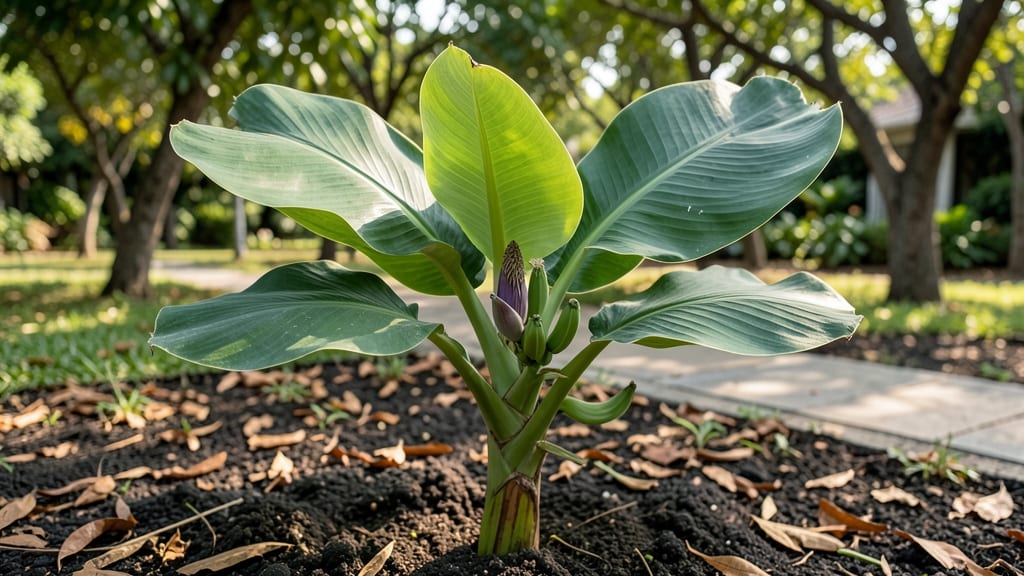
Your dwarf banana tree might grow taller than expected—unless you manage its height right. 🌱 I’ve watched mine reach 6-8 feet in just two years, but with strategic cuts, we’ve kept them between 4-6 feet, perfect for patios and small yards.
The key lies in timing, technique, and understanding which varieties stay naturally compact.
Most dwarf banana trees (like ‘Dwarf Cavendish’ or ‘Ice Cream’) top out at 6-10 feet without pruning, but sunlight, soil nutrients, and watering habits push them taller. Overwatering or rich soil sends them into growth spurts, while pruning back 1/3 of the fronds in early spring keeps them in check.
I’ve even grown ‘Sander’s Dwarf’ in 15-gallon containers—it stayed under 4 feet with regular maintenance.
By pruning correctly, you’ll get more fruit (bananas form on new growth) and a bushier shape. Just avoid cutting into the trunk—focus on the outer fronds and any suckers at the base. With this method, my trees produce year-round while staying the height I want, even in tight spaces.
For container growers, choose ‘Sander’s Dwarf’ or ‘Red Dwarf’—they’re the most compact. If you’re in a warm climate, expect faster growth and prune more aggressively. Cool zones? Growth slows, so prune lightly to avoid stress. Either way, you’re in control.
Root Causes of Stunted Growth
If your dwarf banana tree isn’t reaching its expected height, the issue likely stems from one (or more) of these key factors. Understanding the science behind each will help you diagnose—and fix—the problem before it’s too late.
Let’s dig into the soil (literally!) to uncover why your banana tree might be playing the role of a tiny, underachieving plant.
A dwarf banana tree’s height is directly tied to its root system, and if the soil isn’t up to par, growth will suffer. Here’s why:
- Compacted or clay-heavy soil: Banana trees thrive in well-draining, loose soil with high organic matter. Compacted soil restricts root expansion, limiting nutrient and water uptake. Result? Stunted shoots and slower growth.
- Low fertility or nutrient deficiencies: Bananas are heavy feeders, especially in dwarf varieties that pack growth into a smaller frame. A lack of potassium (K), phosphorus (P), or nitrogen (N) can halt vertical growth. Magnesium and calcium deficiencies also weaken cell division in stems.
- pH imbalances: Banana trees prefer a slightly acidic to neutral soil pH (5.5–7.0). If the soil is too acidic (<5.0) or alkaline (>7.5), essential nutrients like iron, zinc, and manganese become locked away, starving the plant.
Actionable fix: Test your soil’s pH and nutrient levels with a DIY kit or lab analysis. Amend with compost, aged manure, or a balanced fertilizer (like 10-10-10) to restore balance. For clay soil, mix in perlite or coconut coir to improve aeration.
Banana trees are tropical powerhouses—they need bright, indirect light (6+ hours daily) to fuel photosynthesis and growth. Without it, they’ll stretch weakly or stop growing altogether.
- Insufficient sunlight: If placed in shade (e.g., under trees or in north-facing windows), the plant will etiolate—elongate stems in a desperate bid for light, but at the cost of strength and compactness.
- Temperature extremes: Dwarf bananas prefer 70–90°F (21–32°C). Below 50°F (10°C), growth stops, and leaves may yellow. Heat stress above 95°F (35°C) can also stunt development.
- Cold drafts or frost: Even a single night below 40°F (4°C) can damage roots and shoots, triggering a survival mode that prioritizes leaf production over height.
Actionable fix:
- Move potted trees to a sunny, sheltered spot (e.g., south or west-facing patio). Use a grow light for 12–14 hours/day if indoors.
- In cold climates, bring containers indoors or wrap the pot in bubble wrap to insulate roots.
- Mulch garden-planted trees with straw to regulate soil temperature.
Banana trees have huge appetites for water, but their roots are sensitive to both drought and waterlogging. Get the balance wrong, and growth will stall.
- Underwatering: Roots need consistent moisture to transport nutrients. Wilting or crispy leaf edges signal dehydration, which triggers abscisic acid (a stress hormone) that halts growth.
- Overwatering: Soggy soil cuts off oxygen to roots, leading to root rot (from Pythium or Phytophthora fungi). A rotting root system can’t support upward growth.
- Inconsistent watering: Bananas hate dry spells followed by sudden soaking. This disrupts nutrient uptake and causes osmotic stress, where cells struggle to absorb water and grow.
Actionable fix:
- Water when the top 2–3 inches of soil are dry (stick your finger in to check!). Aim for 1–2 inches of water per week.
- Use well-draining pots with drainage holes and a moisture-retentive mix (e.g., 60% potting soil, 20% perlite, 20% compost).
- Mulch garden beds to retain moisture and prevent temperature swings.
Not every "dwarf" banana tree is a true genetic dwarf—some are simply immature or cultivar-specific. Here’s how to tell the difference:
- True dwarf varieties: Some bananas, like Musa acuminata ‘Dwarf Cavendish’ or Musa balbisiana ‘Chinese Dwarf’, are bred to stay compact (<6–10 ft tall). These won’t grow tall no matter what you do.
- Slow starters: Young banana trees (under 1 year) focus energy on root and leaf development before shooting upward. Patience is key!
- Miniature hybrids: Some crosses (e.g., Musa ‘Red Dwarf’) are naturally petite but may still need ideal conditions to reach their maximum height.
Actionable fix:
- Research your specific variety—check the USDA plant database or seed supplier for expected mature heights.
- If it’s a slow starter, avoid pruning the first year to encourage vertical growth.
- For true dwarfs, focus on horizontal growth (e.g., multiple pseudostems) rather than height.
Hidden invaders can drain your banana tree’s energy before it even gets a chance to grow tall. Watch for:
- Root-knot nematodes: These microscopic worms burrow into roots, disrupting nutrient absorption and causing stunted, yellowing leaves.
- Banana aphids or mealybugs: They suck sap from new shoots, weakening growth points and causing curled or deformed leaves.
- Fungal diseases like Sigatoka or Panama wilt: These destroy leaf tissue, reducing the tree’s ability to photosynthesize and grow.
Actionable fix:
- Inspect leaves and soil for pests or lesions weekly. Use neem oil or insecticidal soap for soft-bodied bugs.
- Apply copper fungicide preventatively if your area has fungal disease risks.
- For nematodes, solarize soil (cover with clear plastic for 4–6 weeks) or plant marigolds nearby as a natural repellent.
Fixing Your Dwarf Banana Tree’s Growth
Now that you understand why your dwarf banana tree might not be reaching its ideal height—or growing too tall—it’s time to take action! The good news? With the right techniques, you can guide its growth effectively.
Below are practical, step-by-step solutions tailored to common causes, along with prevention tips to keep your banana tree thriving at the perfect height.
Cause: Poor nutrition, lack of sunlight, or root-bound stress.
🍃 Boost Growth with Proper Nutrition
Dwarf banana trees need balanced fertilization to encourage upward growth.
Use a low-nitrogen, high-potassium fertilizer (like 5-10-10) to promote stem elongation without excessive leafy growth. - When to apply: Spring and early summer (growth seasons). - How much: Follow package instructions, but half the dose if repotting soon. - Pro tip: 💡 Mix in banana peel compost (rich in potassium) for a natural boost!
☀️ Maximize Sunlight Exposure
Dwarf bananas thrive in bright, indirect light (6+ hours daily).
- Indoor fix: Place near a south-facing window or use a grow light (12-14 hours/day).
- Outdoor fix: Ensure it’s in a sheltered spot (avoid harsh midday sun, which can scorch leaves).
- Warning: ⚠️ Yellowing leaves?
It may be too much sun—move to partial shade.
🌿 Repot for Root Health
If roots are circling or cramped, repot every 2-3 years into a slightly larger container (just 1-2 inches wider).
- Best soil mix: Chunky, well-draining blend (60% potting soil + 30% perlite + 10% compost).
- Prevention tip: ✨ Use self-watering pots to avoid root rot from overwatering.
Cause: Over-pruning, excessive nitrogen, or lack of structural support.
🔪 Prune Strategically for Compact Growth
Dwarf bananas grow from suckers (side shoots). To control height:
- Identify the strongest sucker (closest to the base, with thick stems).
- Remove weaker suckers (thin, leggy, or competing growth) with clean, sharp pruners.
- Pinch back new growth (if indoors) to encourage bushier habits. - When to prune: Late winter or early spring (before new growth starts). - Pro tip: 🌡️ Wait until the soil is slightly dry before pruning to reduce stress.
🌿 Balance Fertilizer for Controlled Growth
Too much nitrogen = tall, weak stems.
Switch to a low-nitrogen formula (like 2-4-4) to promote sturdier, shorter growth. - Alternative: Use fish emulsion (rich in micronutrients) for balanced growth. - Prevention tip: ⏰ Fertilize every 6-8 weeks (not monthly) to avoid overfeeding.
🪑 Provide Support for Stability
Tall dwarf bananas can flop over without support. Use:
- A small bamboo stake (inserted gently near the stem).
- A lightweight trellis (for indoor varieties).
- Prevention tip: 🎯 Start supporting early—once the stem is thick, it’s harder to train.
| Issue | Quick Fix | Prevention Tip |
|---|---|---|
| Leggy growth | Move to brighter light + prune tips | Rotate pot weekly for even sunlight |
| Stunted growth | Repot + fertilize with potassium | Check drainage holes (avoid soggy soil) |
| Overcrowded suckers | Remove 2/3 of weak shoots | Thin out suckers every 3-4 months |
| Yellow leaves | Reduce water + check for pests | Mist leaves (but avoid waterlogging roots) |
Final Thought: 🌿 Dwarf banana trees are forgiving—experiment with these fixes and observe how your plant responds. Patience is key—some adjustments (like repotting or sunlight changes) may take a few months to show results.
Now grab your pruners and let’s shape that perfect-sized banana tree! 🍌✨
Frequently asked questions
What’s the smallest dwarf banana tree variety I can grow in a container?
‘Sander’s Dwarf’ stays under 4 feet tall and thrives in 15-gallon pots. For even smaller options, try ‘Red Dwarf’ (3–5 feet) or ‘Chinese Dwarf’, which rarely exceed 6 feet. These varieties are perfect for patios or windowsills with 6+ hours of sunlight daily.
How often should I prune to keep my dwarf banana tree compact?
Prune once a year in late winter to remove 1/3 of the oldest fronds and thin out weak suckers. For faster height control, pinch back new growth tips in spring. Avoid heavy pruning—banana trees grow from the base, so focus on outer fronds and suckers only.
Can I grow a dwarf banana tree indoors year-round?
Yes, but you’ll need bright, indirect light (south-facing window or grow lights) and humidity levels above 50%. Use a self-watering pot to prevent root rot, and keep temperatures between 65–85°F. Expect slower growth indoors—most dwarf varieties grow 1–2 feet per year compared to 3–5 feet outdoors.
Why is my dwarf banana tree growing taller than expected?
Overwatering, excessive nitrogen fertilizer, or insufficient sunlight trigger rapid vertical growth. Check your soil—if it’s soggy or you’ve used a high-nitrogen fertilizer (like 20-10-10), switch to a low-nitrogen, high-potassium blend (like 5-10-10) and move the plant to a sunnier spot.
Do dwarf banana trees produce fruit, and how does pruning affect it?
Dwarf varieties like ‘Dwarf Cavendish’ bear smaller but sweet bananas. Pruning actually boosts fruit production—when you remove old fronds, the plant redirects energy to new growth (where bananas form). Just avoid cutting into the trunk or removing all suckers at once, as this can reduce fruiting.