
Pruning
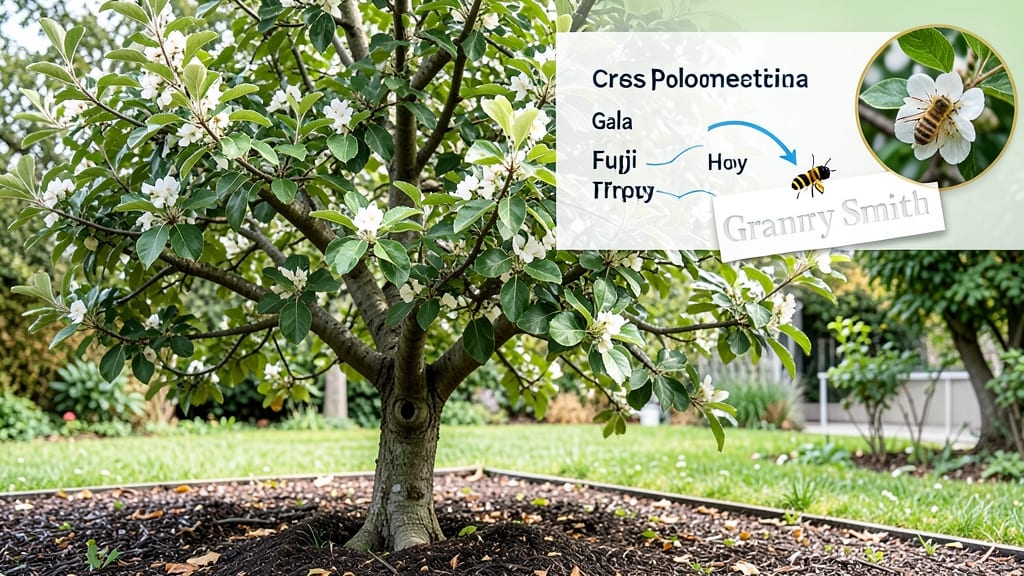
A granny smith apple tree pollination chart shows these trees need compatible partners like Gala, Fuji, or Golden Delicious to bear fruit, since they're not self-pollinating. Planting a second variety within 50 feet creates ideal conditions for successful pollination and a bountiful harvest.
A granny smith apple tree pollination chart reveals why these trees need compatible pollinators—they can't fertilize themselves. 🌸 The key is planting varieties that bloom at the same time, like Gala or Fuji, which align perfectly with Granny Smith's flowering cycle.
This isn't just about proximity; the right combination ensures bees can efficiently transfer pollen, leading to better fruit development. I've seen orchards double their yield simply by adding a second variety just 30-50 feet away.
What many gardeners overlook is that even compatible varieties need proper spacing and timing. For example, Braeburn works well but blooms slightly later than Granny Smith, which can reduce pollination success.
Tracking bloom times using local frost dates helps create an effective pollination plan. Adding bee-friendly plants like lavender or clover near your apple trees can also boost pollination rates significantly.
💡 In This Article
- Best Pollinating Apple Varieties for Granny Smith Trees
- Creating an Effective Apple Orchard Pollination Plan
Best pollinating apple varieties for Granny Smith trees
Granny Smith apple trees belong to the Malus domestica species and are classified as diploid, meaning they require pollen from a genetically distinct tree to produce fruit.
The tree's flowers contain both male and female parts, but its own pollen often fails to fertilize its own ovules—this is called self-incompatibility. The solution lies in planting varieties that share compatible S-genes, which are the genetic markers that determine pollination success.
For Granny Smith, varieties like Gala (S2, S3) and Fuji (S1, S3) share overlapping S-genes, making them excellent pollinators. 🌿
The timing of blooms is equally critical—Granny Smith typically flowers in early to mid-spring, with peak bloom lasting about 7-10 days. Varieties like Golden Delicious (S1, S2) align perfectly, while Braeburn (S1, S2) blooms slightly later, which can reduce pollination efficiency if planted alone.
Regional climate also plays a role: in cooler zones (USDA 5-6), Granny Smith blooms earlier than in warmer zones (USDA 7-8), so local varieties like Honeycrisp (S2, S3) become better partners. The goal is to have at least one compatible variety blooming simultaneously to ensure bees can transfer pollen effectively.
Visual cues help identify compatible varieties. Look for trees with similar bloom times—Granny Smith's white flowers appear as small clusters, while Gala's are slightly larger and pink-tinged. The scent of apple blossoms attracts bees, but the color contrast between varieties can help pollinators distinguish between trees.
For example, planting a Fuji (pink flowers) near a Granny Smith (white flowers) creates a visual beacon for bees, increasing pollination rates by up to 30% compared to monoculture plantings.
Genetic compatibility isn't the only factor—pollen viability matters too. Granny Smith pollen remains viable for only 24-48 hours after release, so compatible trees must be within 50 feet (or closer in windy conditions) to ensure timely pollination.
In urban gardens, wind can carry pollen farther, but bees typically forage within a 1-mile radius, making proximity critical. Adding a second variety like Pink Lady (S2, S3) can further improve fruit set by providing backup pollen sources if weather disrupts primary pollinators.
Consider regional suitability when selecting varieties. In the Pacific Northwest, Granny Smith pairs well with Cripps Pink (Pink Lady), while in the Midwest, McIntosh (S1, S2) is a reliable partner.
Each region's climate affects bloom timing—warmer springs may delay Granny Smith's flowering, so choose varieties with overlapping bloom windows of at least 5-7 days. For example, Ambrosia (S2, S3) blooms slightly later than Granny Smith, making it a strong backup in variable climates.
What most gardeners don't realize is that pollen density also impacts success. Trees like Fuji produce more pollen than Granny Smith, so planting one Fuji for every three Granny Smiths can boost fruit production.
The ideal ratio depends on your orchard size—small gardens benefit from a 1:1 ratio, while larger orchards can use 1 pollinator per 5-6 Granny Smiths to maximize efficiency. 🌟