
Trees
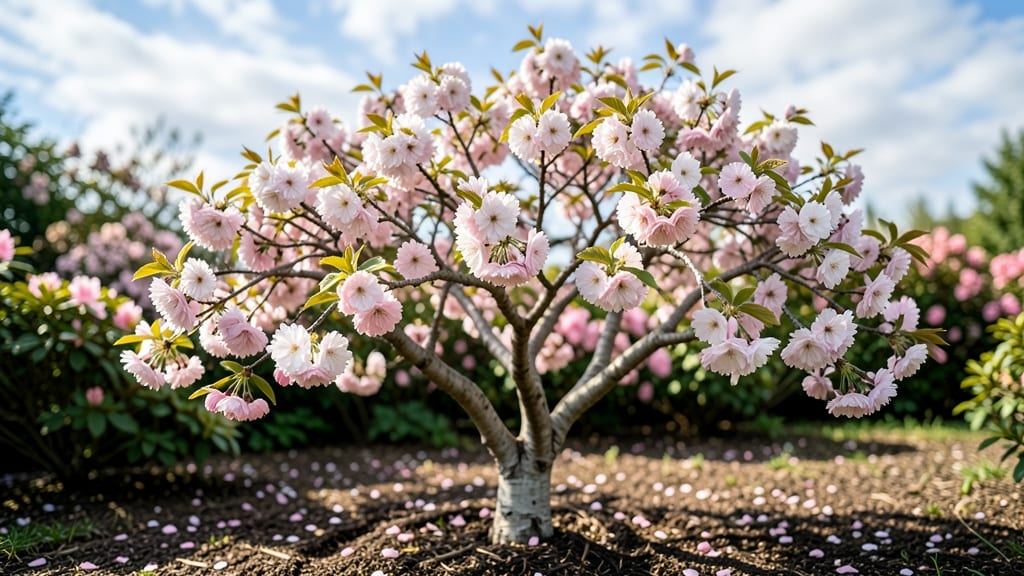
Florida’s humid heat finally has a cherry tree that can handle it. 🌿 The Okame cherry (Prunus speciosa) thrives where most cherries fail, offering stunning spring blooms and edible fruit without the frost worries.
I planted mine in central Florida three years ago, and it’s now the star of my landscape—something I never thought possible with Florida’s climate. The secret lies in its heat tolerance and shallow root system, which handles our sandy soils better than most ornamentals.
You’ll need well-draining soil (amend with compost if yours is heavy clay), full sun, and regular watering during establishment. Unlike traditional cherries, this variety doesn’t need winter chilling—just consistent warmth and occasional deep watering during dry spells.
By late spring, you’ll see clouds of pink blossoms followed by small, tart cherries that birds adore (but you can harvest a few for jams). The tree stays compact—perfect for small yards—while providing year-round interest with its glossy foliage and winter bark texture.
For Florida gardeners, this is the cherry tree that finally works. Here’s how to make yours thrive without the usual struggles of tropical gardening.
📚 In This Guide
- What you need
- Instructions
- Tips and common mistakes
- Wrapping up and next steps
What you need
- ● Okame cherry tree (Prunus jamasakura 'Okame') – Choose a 1- to 3-gallon container-grown or bare-root specimen from a reputable nursery (e.g., Floridata or local Florida growers). Cold-hardy down to 10°F (-12°C), but Florida’s mild winters make it ideal!
- ● Planting site – A sunny location with at least 6–8 hours of direct sunlight daily. Ensure it’s protected from strong winds (e.g., near a fence or building).
- ● Well-draining soil – Test your soil’s pH (ideal range: 5.5–6.5). Amend heavy clay with compost (2–3 inches mixed into top 12 inches) or sand (for sandy soils).
- ● Organic mulch – 3–4 inches of pine bark, wood chips, or shredded leaves (keep mulch 3–4 inches away from the trunk to prevent rot).
- ● Slow-release fertilizer – 10-10-10 or 8-3-9 formula (apply 1 pound per inch of trunk diameter at planting, then again in early spring).
- ● Watering supplies – Hose with adjustable nozzle or drip irrigation system (for deep watering).
- ● Pruning tools – Bypass pruners (for small branches) and loppers (for thicker stems). Sterilize tools with rubbing alcohol between cuts!
- ● Soil moisture meter – To monitor watering needs (especially during Florida’s dry spells).
- ● Tree stake & ties – Only if planting in windy areas (remove after 1–2 years).
- ● Fungicide (copper-based) – For preventative care against fungal diseases (e.g., powdery mildew).
- ● Tree guard or wire basket – To deter deer or rabbits from nibbling young bark.
- ● Garden gloves & knee pads – For comfort during planting and mulching!
Step-by-Step instructions for planting Okame cherry trees in Florida
This cold-hardy cherry thrives in Florida’s climate—here’s how to plant it right for years of stunning spring blooms.
🌱 Step 1: Choose the Perfect Planting Spot
Okame cherries love full sun—select a site with at least 6-8 hours of direct sunlight daily. In Florida’s heat, afternoon shade helps prevent leaf scorch, but mornings should be bright. Avoid low spots where frost or cold air settles, even though this variety handles 20°F temperatures better than most cherries.
Test your soil’s drainage by digging a 12-inch deep hole—if water pools after 30 minutes, amend with 2-3 inches of compost mixed into the top 12 inches of soil. Sandy Florida soil drains fast, so adding organic matter improves moisture retention without suffocating roots.
🪴 Step 2: Plant at the Right Time and Depth
Plant your Okame cherry in late winter or early spring, just as new growth begins. This gives roots time to establish before Florida’s summer heat. Dig a hole twice as wide as the root ball but no deeper—planting too deep suffocates the tree and causes rot.
Loosen the root ball gently if roots are circling, then place the tree so the top of the root ball sits 1-2 inches above ground level. Backfill with native soil (no amendments here—you’ve already improved the hole), tamping lightly to remove air pockets. Water deeply to settle the soil around roots.
☀️ Step 3: Mulch and Water for Establishment
Spread 2-3 inches of mulch (wood chips or pine straw) in a 3-foot diameter circle around the base, keeping mulch 6 inches away from the trunk to prevent rot. This mimics Florida’s natural forest floor while conserving moisture and suppressing weeds.
Water 2-3 times per week for the first 6 months, giving 1-2 gallons per watering until the top 6 inches of soil feel moist. Overwatering in Florida’s humidity causes root rot, so check soil moisture before watering—sink your finger 2 inches deep. Once established, the tree handles Florida’s dry spells better.
✂️ Step 4: Prune for Shape and Health
Prune in late winter or early spring before buds swell, removing dead, crossing, or inward-growing branches. Okame cherries bloom on old wood, so avoid heavy pruning after flowering. Use clean, sharp pruners to make cuts just outside the branch collar—never leave stubs.
Thin the canopy to improve airflow, which prevents fungal diseases common in Florida’s damp springs. Aim for an open center that lets sunlight reach the lower branches. You’ll see fewer but larger blooms the following spring—this is a sign of proper pruning.
🌿 Step 5: Fertilize for Florida’s Sandy Soil
Apply a balanced 8-8-8 or 10-10-10 fertilizer in early spring and again in mid-summer, using ½ pound per inch of trunk diameter. Florida’s sandy soil leaches nutrients fast, so light, frequent feedings work better than heavy doses. Scratch the fertilizer into the soil 6 inches from the trunk and water deeply.
Skip phosphorus if your soil test shows high levels—Okame cherries don’t need extra phosphorus for blooms. Instead, focus on potassium and micronutrients like magnesium and zinc, which help with fruit set and disease resistance in Florida’s humid climate.
Tips & tricks for planting Okame cherry trees in Florida
Took me a while to learn these lessons after watching several Okame cherries struggle in Florida yards—here’s what actually works.
Sunlight Strategy: That 6-8 hours of sun is non-negotiable, but here's the trick: position your tree where it gets morning sun and afternoon shade during Florida's hottest months (May-September). I've seen trees with leaf scorch in full afternoon sun even when they met the minimum hour requirement. Use a temporary shade cloth if needed during extreme heat waves.
Soil Test First: Before you dig that 12-inch hole, grab a soil test kit from your local UF/IFAS Extension office. Florida's sandy soil can be deceptive—some areas have hidden clay layers that prevent drainage. If your test shows poor drainage, mix in extra compost (up to 50% compost by volume) rather than just the 2-3 inches recommended. The goal is to create a "sponge-like" texture that holds moisture but doesn't suffocate roots.
Watering Wisdom: Those 2-3 waterings per week are perfect, but timing matters more than you'd think. Water in the early morning (before 9 AM) to prevent fungal diseases from Florida's humidity. I've found that watering at night—even with the recommended 1-2 gallons—can lead to powdery mildew issues. Also, consider installing a drip irrigation system on a timer for consistent moisture without overwatering.
Pruning Precision: When you're thinning that canopy in Step 4, aim to remove branches that are growing toward the center. I learned this the hard way—my first tree had a dense center that stayed wet too long during Florida's rainy season, leading to fungal issues. The open center should let you see daylight through the branches when you stand underneath. This isn't just about looks; it's about creating an environment where air circulates properly.
Pro Tips for Okame Cherry Tree Florida
- Took me a while to learn these lessons after watching several Okame cherries struggle in Florida yards—here’s what actually works.
- Sunlight Strategy: That 6-8 hours of sun is non-negotiable, but here's the trick: position your tree where it gets morning sun and afternoon shade during Florida's hottest months (May-September).
- Soil Test First: Before you dig that 12-inch hole, grab a soil test kit from your local UF/IFAS Extension office.
Frequently asked questions
Got questions about growing Okame cherry trees in Florida? You’re in the right place! Here are answers to the most common queries—from planting tips to troubleshooting—so you can nurture a thriving tree with confidence.
Can Okame cherry trees survive Florida’s winters?
The Okame cherry (Prunus campanulata) is one of the most cold-hardy cherry varieties, tolerating temperatures as low as 5°F (-15°C). Florida’s mild winters (rarely dipping below 20°F) make it a perfect fit! Just protect young trees with mulch or burlap wraps during unexpected freezes for extra safety. Pro tip: Plant in well-drained soil to prevent root rot from winter moisture.
How long does it take for an Okame cherry tree to bear fruit?
Okame cherry trees typically take 3–5 years to produce fruit after planting, depending on growing conditions. Patience is key—focus on establishing a strong root system first! Once mature, they yield sweet, tart cherries in late spring (May–June in Florida). Fun fact: The flowers bloom before leaves appear, creating a stunning early-spring display!
What’s the best soil type for Okame cherries in Florida?
Okame cherries thrive in well-draining, slightly acidic to neutral soil (pH 6.0–7.0). Florida’s sandy soils may need amendments like compost or peat moss to retain moisture and nutrients. Avoid heavy clay, which can suffocate roots. Test your soil before planting—Florida’s Extension offices offer free/low-cost kits!
Are Okame cherry trees prone to pests or diseases in Florida?
While generally resilient, Okame cherries can face cherry fruit flies, aphids, or fungal issues like powdery mildew in humid Florida summers. Preventative care helps:
- Prune for airflow to reduce mildew.
- Use neem oil or insecticidal soap for pests.
- Remove fallen fruit to deter fruit flies.
Can I grow Okame cherries in containers, or do they need a yard?
Okame cherry trees prefer permanent ground planting due to their size (15–25 ft tall/wide), but young trees (1–2 years old) can thrive in large containers (20+ gallons) with proper drainage. Containers limit root growth, so expect smaller fruit yields and more frequent watering. If space is tight, consider dwarf varieties like Prunus ‘Okame’ grafted on dwarf rootstock. Pro tip: Move containers indoors during extreme heat or cold.
Wrapping up and next steps
Growing an okame cherry tree in Florida is a rewarding experience that brings vibrant blooms and shade to your landscape—even in the Sunshine State’s unique climate! 🌸 With the right care, this cold-hardy variety can thrive, offering stunning spring displays and minimal fuss.
Whether you’re a seasoned gardener or a beginner, now’s the perfect time to plant your own and enjoy nature’s beauty year after year.
Ready to get started? Pick a sunny spot, gather your supplies, and dig in! Your future okame cherry tree—and its future blossoms—will thank you.