
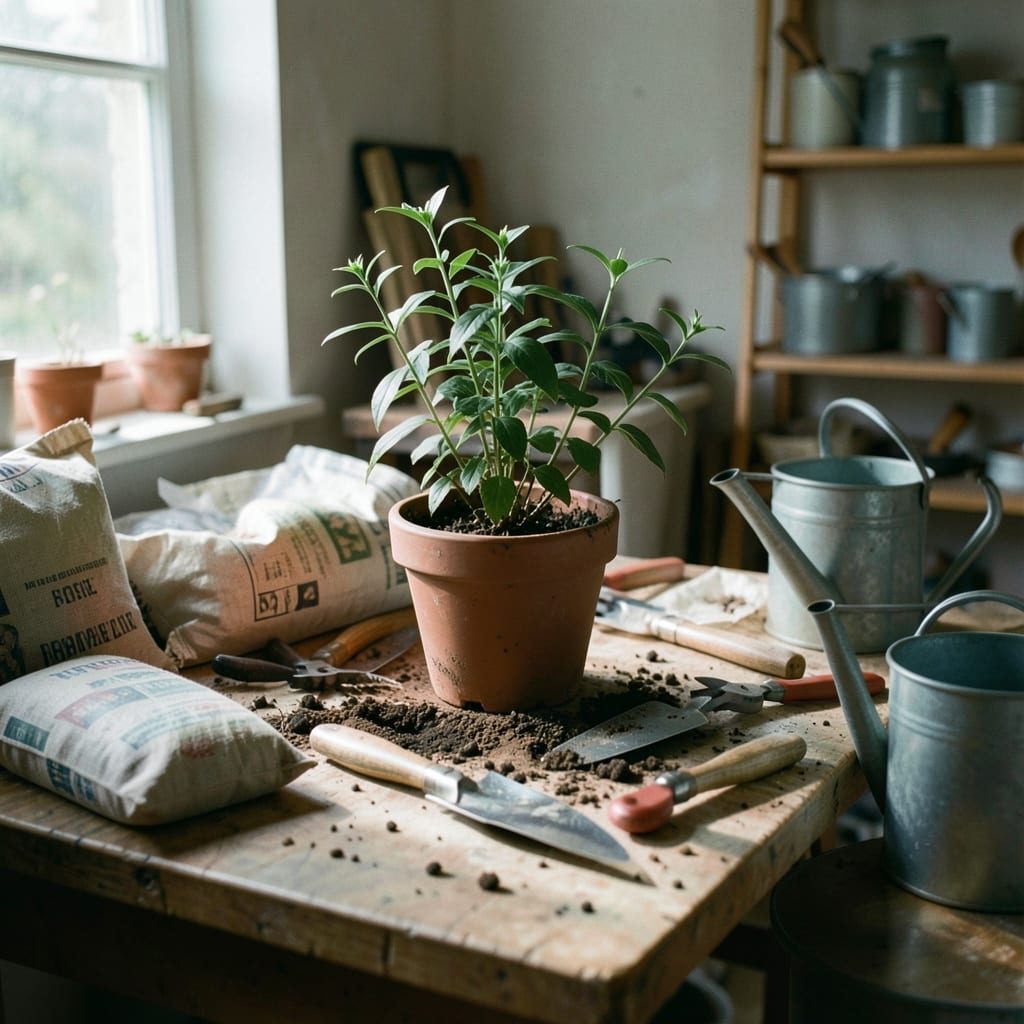

What this site is
This site is for gardeners who want to understand the quiet work of soil, the patience of seeds, and the small victories of watching something grow.
It covers the practical—how to prune a rose, why your tomatoes split, how to turn a shady corner into a thriving space—and the philosophical: why some plants refuse to thrive, and what that says about the land (and the gardener) beneath them.
It is not a catalog of rare specimens or a showroom for perfect blooms. No before-and-after transformations of manicured lawns. The focus is on the everyday: the mistakes, the adaptations, and the slow, stubborn joy of working with what you’ve got.
| What you will find here | What you will not |
|---|---|
| Tips for saving wilting houseplants | Garden center product reviews |
| Seasonal planting guides for your climate | Competitive growing records |
| Troubleshooting guides for pests and diseases | Contests or giveaways |
| Stories of what grew—and what didn’t | Advice that assumes a perfect garden |
Meet the gardener
Jamal Calderon is the founder and editor—someone who still checks the soil pH before planting, even after twenty years.
A day in the garden
- 15:40 a.m.
The first light hits the compost heap, and I’m already sorting through last year’s prunings—still damp, still useful. The bin smells like old wood and rain, but there’s a sharp tang of mold in one corner that means I’ll have to turn it twice this week. The dog barks at a squirrel, and I swear at it under my breath before remembering she’s not allowed in the garden yet.
- 2Just after the school run
I kneel in the shade of the pear tree to check the new strawberry runners, poking at the soil with a finger. The earth is still too dry; the irrigation dripper must’ve clogged again. I’ll fix it later. Right now, I’m distracted by the way the light filters through the leaves—golden, like the first day I saw this tree, when I was eight and my grandmother told me it would outlive us both.
- 3The hour before dinner
I’m supposed to be weeding the raised beds, but the basil is flowering, and I’m too busy pinching off buds to remember why I hate them. The neighbors’ cat has been here again; I spot its tracks near the marigolds, and the thought of another scratched-up tomato plant makes me want to scream. Instead, I water the bed extra hard, hoping the scent will mask the scent of fear.
- 4Dusk
The last thing I do is drag the old wheelbarrow to the back corner, where the soil is always too hard to dig. I’ve been meaning to amend it for months, but the bag of compost sits unopened by the shed. Tonight, I just dump a handful of worm castings on top and call it progress. The crickets start up as I walk inside, and for a second, I wonder if I’ve done enough.
- 5Midnight
I wake to the sound of something rustling in the mulch. The garden’s fine—it’s just the wind, or maybe a possum. I lie there listening, half-convinced I’ll see the ghost of last summer’s zucchini plants, the ones that bolted before they ever ripened. Then I remember: the seeds are still in the jar by the window, waiting for spring.
I keep a small notebook by the back door. Every time I dig up a failed plant, I write down why—too much sun, not enough water, the wrong soil. The pages are half guesswork, half confession. Some entries are crossed out; others are dog-eared.
I refuse to buy a soil meter. If I can’t tell by touch and smell, I don’t need the numbers.
The rules we hold ourselves to
These are the things we won’t compromise on, even if they make the work slower or harder.
Every planting guide or troubleshooting tip starts with the soil. If we don’t know what’s in it—pH, texture, life—we don’t write about the plants. This means more digging, more patience, and sometimes leaving a post unfinished until the lab results come back. But a plant’s health begins below the surface, and we won’t ignore that.
If a tip can’t be tested with your hands—feeling soil moisture, counting nodes on a stem, or comparing leaf colors to a chart—it’s not worth writing. This keeps the advice practical, even if it means skipping fancy tools or jargon. Readers should be able to try it tomorrow, not just admire it from a photo.
Some stories get left out because they don’t fit the rules. A post about ‘miracle-grow’ fertilizers, no matter how popular, won’t run here. A guide to ‘easy’ annuals that ignores their root systems won’t either. The site moves slower for it, but we’d rather have fewer well-researched pieces than a feed full of half-truths.
What we still get wrong
We over-explain the obvious. A reader once wrote in to say, ‘I know what a seed looks like,’ and they were right—we spend too much time describing what should be visible. Now, we’re cutting those sections, trusting readers to recognize a tomato seed or a dandelion leaf. The trade-off?
Some beginners might miss context, but the site stays sharper for those who already know the basics.
We under-represent cold climates. Most of our early guides focused on the mild zones where we garden, leaving out the readers who fight frost heaves and short seasons. This year, we’re adding a ‘survival gardening’ series, with input from contributors in Alaska, the Rockies, and the Northeast.
The delay cost us a season’s worth of questions, but the answers will be better for it.
How to reach us
We love hearing about the plants that outsmarted you, the soil that surprised you, or the garden mistake that turned into a lesson. Send a photo of your ‘ugly’ harvest—the ones that split, bolted, or grew the wrong shape.
And if you’ve got a question about what’s already in the ground (not what *should* be), the contact page is the place to ask.
The guides are grouped by category: Advice, Aphids, Blooming, How To, Landscaping and Lawn.