
How To
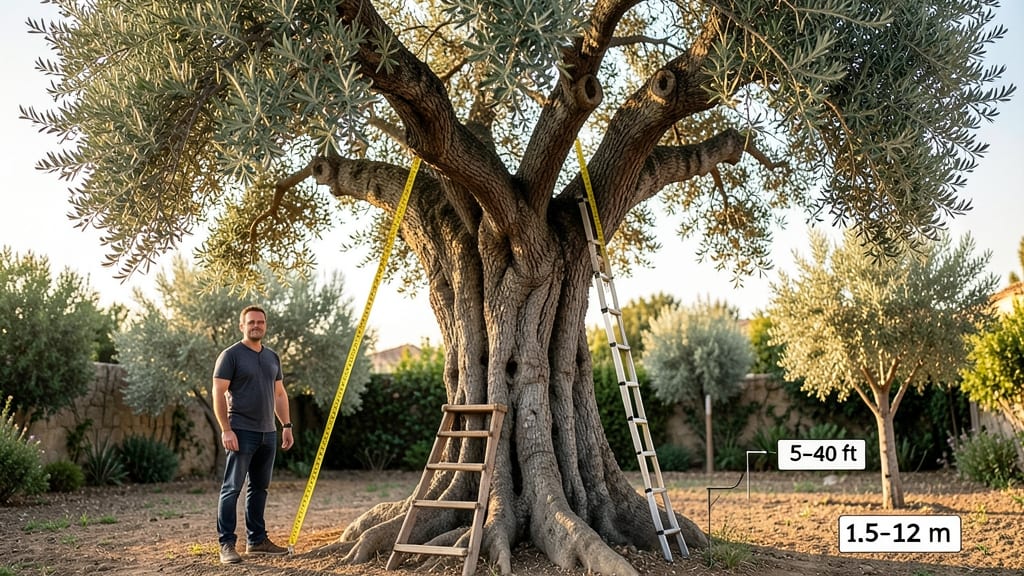
An olive tree 🫒 can grow anywhere from 10 to 50 feet tall, depending on the variety and growing conditions you provide.
If you're dreaming of a Mediterranean-style garden but worried about space, understanding olive tree growth habits—from dwarf varieties to towering giants—will help you choose the perfect fit for your yard.
Standard olive trees like Arbequina or Manzanillo reach heights of 20 to 50 feet when mature, making them a stunning centerpiece for large properties or rural landscapes.
But if you’re working with limited space, dwarf varieties like Little Ollie or Arbequina Compacta stay between 6 and 12 feet, perfect for urban patios or small gardens.
Below, I’ll break down how to control height through pruning, which varieties grow fastest, and the long-term care tips that keep your olive tree thriving—no matter how tall you want it to be.


Olive tree height by variety: full-sized vs dwarf growth charts
Choosing an olive tree for your garden starts with understanding its mature height. Standard varieties can reach 20-50 feet, while dwarf cultivars stay under 12 feet.
Your yard's size and layout will determine which variety fits best, so let's compare the most popular options to help you decide.
Olive trees are long-lived, with some varieties growing 1-2 feet per year in ideal conditions. However, their final height depends heavily on the cultivar you select. Mediterranean classics like Manzanillo and Arbequina offer dramatic heights, while newer dwarf hybrids bring that rustic charm to small spaces.
🌱
Dwarf varieties like Little Ollie or Arbequina Compacta are perfect if you're working with limited space. These trees typically reach 6-12 feet at maturity, making them ideal for containers or small urban gardens. Their slower growth rate also means less frequent pruning compared to their taller counterparts.
For those with ample yard space, standard varieties like Manzanillo or Frantoio will create a stunning focal point. These trees can grow 30-50 feet tall, providing shade and a dramatic Mediterranean aesthetic. Just be prepared for regular pruning to manage their size and shape over time.
🪴
One key factor influencing height is pruning practices. Even standard varieties can be kept smaller with consistent pruning, while dwarf trees may occasionally need light shaping to encourage bushier growth. Always prune in late winter or early spring before new growth begins to avoid damaging the tree.
Growth rates also depend on your climate zone. In USDA Zones 8-10, olive trees thrive year-round, while those in cooler zones may experience slower growth until established. Providing well-draining soil and full sun exposure will maximize growth potential regardless of variety.
🌡️
If you
How to control olive tree height: pruning techniques for space constraints
If your olive tree is outgrowing its space, don't panic—pruning is the key to maintaining a manageable height while keeping your tree healthy. Olive trees are naturally slow-growing, but without proper pruning, they can reach 20-50 feet tall, making them unsuitable for small yards or containers.
The good news? With the right techniques, you can shape your tree to fit your space without harming its growth potential.
Pruning isn't just about cutting branches—it's about encouraging balanced growth and directing energy to where you want it. Whether you're dealing with a standard variety or a dwarf olive tree, the principles remain the same.
The best time to prune is late winter or early spring, just before new growth begins. This timing ensures your tree has plenty of time to heal before summer heat stress sets in.
Before you grab your pruners, gather the right tools: bypass pruners for smaller branches, loppers for thicker limbs, and a pruning saw for larger cuts. Don’t forget rubbing alcohol or pruning sealant to sterilize tools and prevent disease spread.
Safety first—wear gloves and eye protection, especially when working with larger branches that may drop unexpectedly.
One of the biggest mistakes gardeners make is over-pruning in a single session. Olive trees are resilient, but removing too much foliage at once can shock the tree and reduce fruit production.
Another common error is pruning at the wrong time, such as during summer or fall, which can expose the tree to pests or disease. Always avoid cutting into old wood—new growth comes from the tips of branches, so focus your cuts there.
For container-grown olive trees, pruning is even more critical. Since roots are confined, the tree will grow taller and leggier if not pruned regularly. Use a topiary approach to encourage bushier growth, and don’t forget to repot every 2-3 years to refresh the soil and roots.
With the right pruning habits, you can enjoy a compact olive tree that fits your space while still producing delicious fruit.
Remember, pruning isn’t just about height control—it’s about encouraging healthy growth and maximizing your tree’s potential. Whether you’re shaping a dwarf variety for a patio or managing a standard tree in a larger garden, these techniques will keep your olive tree thriving for years to come. 🪴