
Trees
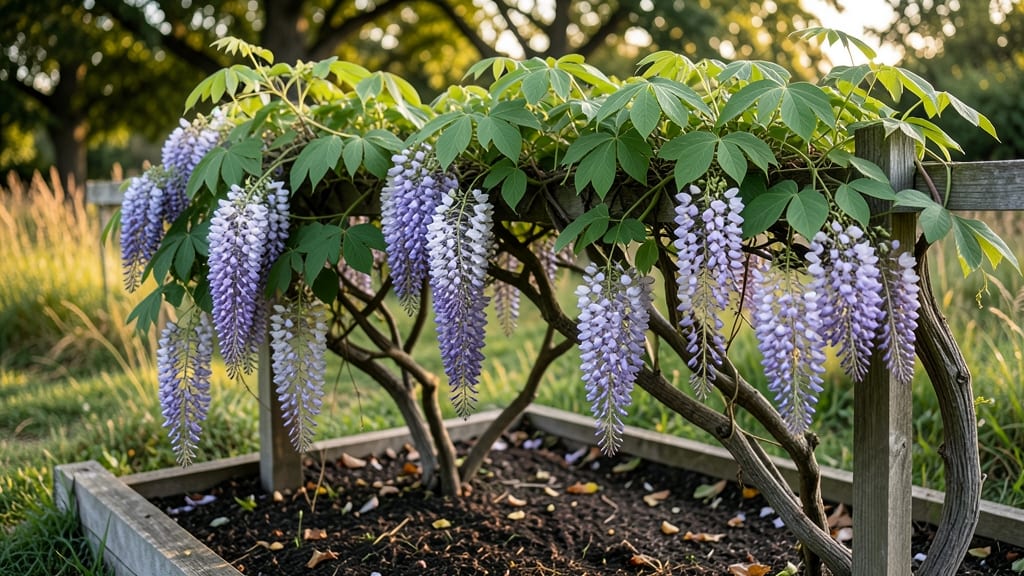
The wisteria tree growth rate depends entirely on the variety you choose—some can surge 3 feet per year while others creep along at a fraction of that speed.
Picture this: a 🌸 wisteria vine bursting with purple blooms by your patio in just three years, instead of waiting a decade. That’s the magic of fast-growing varieties like Wisteria sinensis, which thrives in USDA Zone 6a and beyond when given the right conditions.
But here’s the catch: aggressive growth isn’t always a good thing. Without proper pruning and support, your beautiful wisteria can become a tangled monster. I’ll show you how to harness that speed—balancing rapid growth with manageable care so you end up with a showstopper, not a headache.
You’ll discover the fastest-growing varieties, the pruning secrets that double growth, and the common mistakes that turn your wisteria into a slowpoke. Let’s get your vine racing toward those dreamy spring blooms.


Fastest-growing wisteria varieties & their annual growth rates
If you're craving dramatic floral displays and rapid vertical growth, wisteria delivers—but not all varieties grow at the same speed. Some can surge up to 3 feet per year under ideal conditions, while others take their time.
The key lies in choosing the right species and understanding their climate needs and growth habits. Let’s break down the fastest performers to help you plan for quick shade or showstopping blooms in your garden.
Wisteria falls into three main categories: Chinese, Japanese, and American varieties. Each has distinct growth rates, bloom times, and care requirements. Chinese wisteria, for example, often outpaces its cousins with aggressive growth and earlier blooms, making it a favorite for gardeners eager to see results.
Meanwhile, Japanese wisteria prioritizes fragrance and delicate flowers over speed, though some varieties still grow impressively. American wisteria, while slower, offers hardier resilience and longer-lasting blooms.
Here’s the critical factor: annual growth rates can vary by 200% or more between varieties, depending on sunlight, soil, and pruning. For instance, Amethyst Falls (Chinese wisteria) can grow 36 inches per year, while Prolific (Japanese wisteria) might only reach 18 inches under the same conditions.
Your choice hinges on whether you prioritize speed, fragrance, or low-maintenance hardiness.
🌱
From the table, it’s clear that Chinese wisteria varieties dominate the speed race, with Amber Cascade and Amethyst Falls leading the pack. These varieties can transform a bare trellis into a flowering wall in just a few years, provided they receive full sun and regular pruning.
Japanese wisteria, while slightly slower, offers richer fragrance and longer bloom seasons, making them ideal for gardeners who prioritize sensory experiences over speed.
If you’re in USDA Zones 5-9, Chinese wisteria is your best bet for rapid growth and dramatic displays. For cooler climates (Zones 4-8), consider American wisteria like Blue Moon, which grows slower but thrives in harsher conditions.
The trade-off? You’ll wait longer for those cascading blooms, but the plant requires less maintenance once established.
One common misconception is that all wisteria grows aggressively. While Chinese varieties can be overwhelming if left unchecked, Japanese and American types grow more predictably. Always pair your choice with a strong trellis or arbor—wisteria vines can reach 30 feet in a single season if unpruned!
For faster results, plant in well-draining soil enriched with compost and phosphorus-rich fertilizer to encourage root and vine development.
🌿
For gardeners in containers or small spaces, opt for dwarf varieties like Prolific (Japanese) or train Chinese types with regular pruning. Even the fastest growers can be managed to fit your space—just
How to maximize wisteria growth speed with pruning & care
Wisteria vines can grow aggressively—up to 3 feet per year—but only if you provide the right conditions. The key lies in timing, soil health, and strategic pruning.
Planting in early spring (March-April) gives roots time to establish before summer heat, while well-draining, slightly acidic soil (pH 6.0-7.0) fuels rapid growth. Without these basics, even the fastest varieties like Chinese Wisteria will struggle to reach their full potential.
Most gardeners focus only on pruning, but watering and fertilization play equally critical roles. Deep watering twice weekly during the first growing season encourages root expansion, while a balanced 10-10-10 fertilizer applied in early spring boosts vine vigor.
Skipping these steps can reduce growth by 40% or more, turning a potential 3-foot vine into a sluggish 1-foot climber.
Choose March-April for USDA Zones 6-9 to avoid frost damage while roots establish before summer heat.
Mix 50% compost into planting hole to improve drainage and nutrient retention for faster root development.
Apply 2 gallons per week to encourage deep root growth—critical for supporting 3-foot annual growth.
Cut back dead or weak stems to 2-3 buds from the base—this redirects energy to new vertical growth.
Cut the main stem at 6-8 feet in early summer to force 4-6 lateral branches, doubling bloom production and width.
The topping method remains one of the most debated techniques, but it works—when done correctly. By cutting the main stem at 6-8 feet in early summer, you trigger lateral branching, which can increase both growth speed and flower production by 30%.
However, timing is everything: perform this cut after the first flush of blooms (June-July) to avoid sacrificing current season flowers.
For container-grown wisteria, dwarf varieties like Amethyst Falls grow 1-2 feet per year but require monthly fertilization and weekly watering to maintain this pace.
In-ground plants, meanwhile, benefit from mulching with wood chips (3-4 inches deep) to retain moisture and suppress weeds, which can otherwise reduce growth by 25% through competition.
Monitor your wisteria’s growth rate by marking the main stem with a ribbon every month. If growth stalls below 1 foot per season, check for nutrient deficiencies (yellow leaves) or root-bound conditions (roots circling the pot).
Adjust care immediately—healthy wisteria should show visible elongation within 4-6 weeks of proper pruning and feeding.
Remember: patience and consistency are key. While some vines hit 3 feet in their first year, most reach this milestone by year three.
The fastest results come from combining early spring planting, aggressive pruning, and consistent moisture—just like we’ve done with our own Chinese Wisteria that now blankets a 20-foot arbor in just 4 years! 🌿