
Pruning
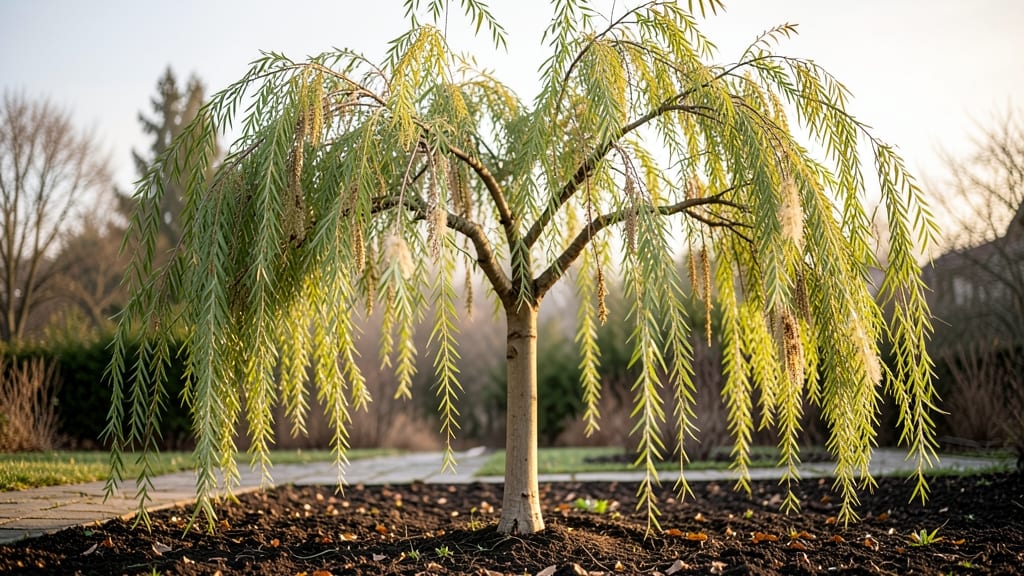
Spring is the perfect time to shape your willow tree into a storm-resistant powerhouse. ✂️ I’ve learned that strategic pruning now—before new growth bursts—transforms weak branches into a sturdy, lush canopy that bends instead of snaps in wind.
The key? Cutting at the right angles and timing those snips just as buds swell but before leaves unfurl.
You’ll need sharp pruners, a ladder (for taller branches), and a clear day to work—willow sap flies when you cut, so wear gloves and old clothes. Focus on removing dead wood first, then thin out crowded branches to let sunlight reach the center.
This isn’t about drastic cuts; it’s about guiding growth so your tree stays healthy and strong through summer storms.
By summer, you’ll see the difference: fewer weak limbs, more vibrant green foliage, and a tree that looks like it’s been professionally landscaped. The best part? You’ll save time on cleanup later, because willows pruned this way grow thicker, not taller, and resist disease better.
It’s the kind of work that makes your yard feel like a well-tended sanctuary.
Works for weeping willows, pussy willows, or any variety—just adjust the timing slightly for late-spring bloomers. Here’s how to do it without overcomplicating things, even if you’ve never pruned a willow before.
📚 In This Guide
- What you need
- Instructions
- Tips and common mistakes
- Wrapping up and next steps
What you need
- ● Pruning shears: Bypass pruners (for cuts under ½ inch thick) or loppers (for branches ½–2 inches thick). Choose sharp, stainless-steel blades to avoid crushing branches.
- ● Pruning saw: A curved-tooth handsaw or folding pruning saw for branches thicker than 2 inches. Look for a 7–10-inch blade for willow’s dense wood.
- ● Gloves: Heavy-duty, cut-resistant gloves (e.g., mechanics’ or chainmail gloves) to protect against thorns and splinters.
- ● Safety gear: Safety glasses or goggles (willow debris flies fast!).
- ● Long sleeves/pants (willows can have sharp bark edges).
- ○ Ear protection (optional, if using a chainsaw for large branches).
- ● Ladder or extension pole: A stable, 20–30-foot ladder (for tall willows) or a pruning pole with a saw attachment (for high branches).
- ● Disinfectant: Rubbing alcohol (70%+) or a pruning sealant (to sterilize tools between cuts and prevent disease).
- ● Heavy-duty trash bags: 2–3 large bags (willows produce tons of debris!).
- ● Marking twine or flags: Colored twine or biodegradable flags to tag branches for removal (helps visualize cuts before hacking!).
- ● Chainsaw: For very thick branches (3+ inches). Use a 14–16-inch bar and chainsaw chaps for safety.
- ● Pruning paint/sealant: Tree wound dressing (controversial but useful for large cuts >2 inches to reduce sap loss).
- ● Wheelbarrow or tarp: To haul away debris efficiently (especially if pruning multiple willows).
- ● First-aid kit: In case of splinters, scrapes, or allergic reactions (willow bark can irritate some skin).
- ● Camera/phone: To document before/after shots—great for tracking growth progress!
How to prune a willow tree in spring for stronger growth
Spring is the perfect time to shape your willow tree—here's how to do it right for a healthy, storm-resistant canopy.
🌿 Step 1: Assess the Tree's Structure and Health
Start by examining the willow tree from all sides, looking for dead, diseased, or crossing branches. Willows grow fast, so their structure can become tangled or overcrowded. Focus on removing branches that are rubbing against each other—they create wounds that invite pests and rot.
Check for any branches that have died over winter (they’ll be brittle and snap easily when bent). These should come out first. I always scan for signs of disease like discolored leaves or oozing sap—these branches need removal to protect the whole tree. Use a sharp pair of pruning shears to make a clean cut just outside the branch collar, the swollen area where the branch meets the trunk.
✂️ Step 2: Prune for Light and Airflow
Willows thrive when their branches receive plenty of sunlight and air circulation. Start by thinning out the canopy, removing about 20-30% of the smaller branches to let light reach the inner growth. Focus on branches growing inward or downward—they compete with stronger, upward-growing branches and create a weak structure.
Make your cuts at the branch collar, angling the cut slightly away from the trunk to prevent water from pooling. Avoid leaving stubs, as they can rot and invite pests. If a branch is thicker than 4 inches, use a pruning saw instead of shears. Step back occasionally to visualize how the tree’s shape is improving—you want an open, vase-like structure that lets wind pass through easily.
🌱 Step 3: Shape the Tree for Storm Resistance
Willows are flexible but can snap in strong winds if their structure isn’t balanced. Look for branches that are too long or heavy—they act like sails in storms. Shorten these by one-third to one-half their length, cutting just above a lateral branch or bud that’s growing outward. This encourages fuller growth while reducing wind resistance.
Pay special attention to the lower branches. If they’re too dense, they can weigh down the tree and make it top-heavy. Remove or shorten them to distribute weight more evenly. Avoid over-pruning—willows recover well, but removing too much foliage weakens the tree’s ability to photosynthesize and grow strong.
💧 Step 4: Clean Up and Protect the Tree
After pruning, gather all the cuttings and dispose of them properly. If disease was present, bag the infected branches and remove them from your property to prevent spreading spores. Sterilize your pruning tools with rubbing alcohol or a bleach solution to avoid transferring pathogens between cuts.
Apply a thin layer of pruning sealant to cuts larger than ½ inch to protect the tree from pests and rot. Water the base of the tree deeply to help it recover from the stress of pruning. Mulch around the trunk with 2-3 inches of organic mulch, keeping it a few inches away from the trunk to prevent rot. This helps retain moisture and encourages strong root growth.
Tips & tricks for perfect willow tree pruning in spring
Here's what nobody tells you about pruning willows—these tricks will make all the difference for a healthier tree.
Timing is Everything: Spring is ideal, but don't wait too late! Aim for late March to early April when buds are swelling but before new leaves emerge. This timing lets the tree heal quickly while avoiding stress during active growth. I've seen willows struggle when pruned too early in cold snaps or too late when sap starts flowing heavily.
The Branch Collar Rule: Never cut flush with the trunk—always leave the branch collar intact. This swollen area contains healing cells that protect the tree from disease. If you accidentally cut into it, the wound won't seal properly and invites rot. I've made this mistake twice and learned the hard way that small details like this make a huge difference in long-term tree health.
Storm-Proofing Secret: When shortening branches for wind resistance, always cut just above a lateral bud growing outward. This encourages new growth in the right direction. I like to visualize the tree's future shape while pruning—imagine how wind will flow through it. For heavy branches, make the cut at a 45-degree angle to reduce weight while maintaining structural integrity.
Seasonal Recovery Tip: After pruning, monitor your tree closely for the first month. Look for signs of stress like yellowing leaves or wilting—these could mean you removed too much foliage. Willows are resilient, but even they need time to adjust. I've found that a light feeding with balanced fertilizer in early summer helps them bounce back faster after pruning.
Pro Tips for Willow Tree In Spring
- Here's what nobody tells you about pruning willows—these tricks will make all the difference for a healthier tree.
- Timing is Everything: Spring is ideal, but don't wait too late!
- The Branch Collar Rule: Never cut flush with the trunk—always leave the branch collar intact.
Frequently asked questions
Got questions about pruning your willow tree in spring? You’re not alone! Here are some of the most common queries—plus straightforward answers to help you tackle the task with confidence.
When is the exact best time to prune a willow tree in spring?
Prune your willow tree after the first flush of new growth appears (typically late March to early April in most climates). Avoid pruning too early—willows bleed sap heavily in cold weather, and late pruning can stress the tree. Look for 1-2 inches of fresh green leaves as your cue!
How much can I safely trim off a willow tree without harming it?
Willows are resilient but don’t overdo it! For mature trees, remove no more than 20-30% of the canopy in one season. Focus on:
- Dead or diseased branches (cut to the base).
- Crossing or rubbing branches (prune back to a healthy side branch).
- Water sprouts (thin them out to improve airflow).
Will pruning in spring encourage faster or bushier growth?
Yes! Pruning willows in spring stimulates new shoots and promotes a fuller shape. However, willows grow aggressively—expect fast regrowth. To control vigor, prune young trees annually and older trees every 2-3 years. Mulch around the base to support recovery.
How do I prevent willow trees from becoming storm hazards after pruning?
Storm-proof your willow by:
- Removing weak or narrow-angle branches (they snap easily).
- Thinning the canopy to reduce wind resistance (aim for 50% light penetration).
- Avoiding heavy pruning in late summer/fall (new growth is less sturdy).
What if my willow tree doesn’t have leaves yet in spring—should I still prune?
If your willow is bare in late spring (after typical bud break), it may be dormant due to cold stress, disease, or root issues. In this case:
- Wait until new buds swell (usually May-June).
- If no growth appears by summer, check for root rot or borers.
- Prune only dead wood—avoid major cuts until the tree shows signs of recovery.
Wrapping up and next steps
Spring is the perfect time to transform your willow tree into a stronger, healthier, and more resilient** addition to your landscape.
By following strategic pruning techniques—like removing dead branches, shaping for airflow, and encouraging new growth—you’ll not only enhance its beauty but also prepare it to thrive through storms and seasons. 🌿✨
Now that you’re armed with the right tools and knowledge, grab those shears and get pruning! Start with one section at a time, and soon, your willow tree will be the showstopper of your garden. Happy gardening!