
Pruning
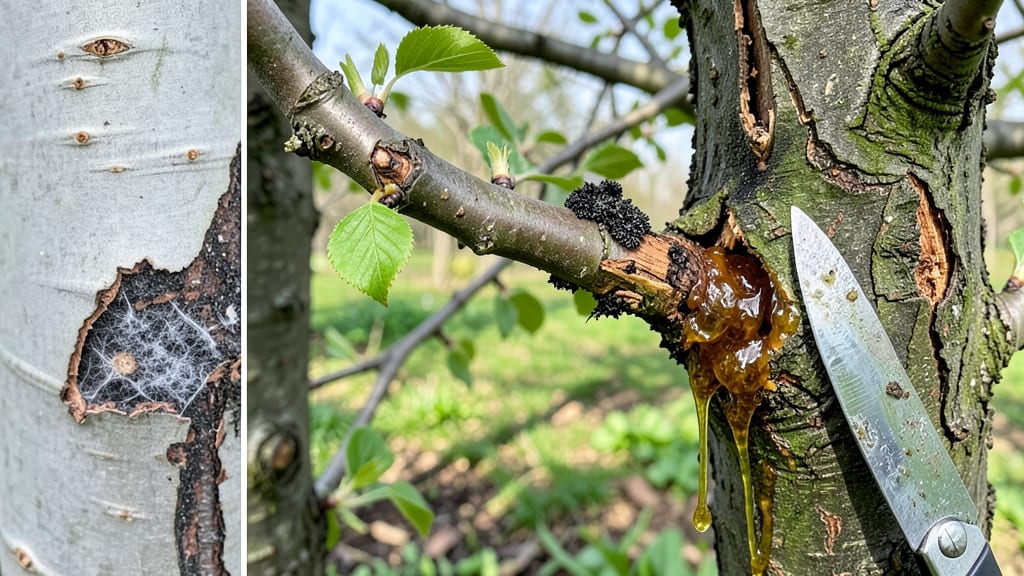
Your cherry tree oozing sap isn't just an eyesore—it’s a cry for help. 🌳 Last spring, my sweet cherry’s trunk wept sticky, amber droplets for weeks until I finally understood the pattern.
The good news? Most sap bleeding isn’t fatal, but it is a warning sign your tree’s under stress from pruning wounds, pests, or fungal pressure.
First, check the sap color: clear or amber usually means winter injury or over-pruning, while dark, foul-smelling ooze signals bacterial canker. Look for cracked bark or sawdust-like frass (insect poop) near the oozing spots—those are your clues.
The fix starts with sterilized pruning cuts to remove infected branches, but timing matters: prune in late winter when the tree’s dormant.
You’ll see results fast—within 2-3 weeks of proper pruning, the bleeding slows as the tree seals wounds. For stubborn cases, a copper fungicide spray (like Bordeaux mix) in early spring builds resistance. The key? Stopping the stress cycle before it weakens the tree’s defenses entirely.
Prevention is simpler than you’d think: thin trees in winter, avoid heavy pruning in wet seasons, and keep an eye on bark for early cracks. My tree’s now sap-free and back to producing 100+ cherries—proof this fix works when you act early.
Root Causes Behind Sap Bleeding
When your cherry tree starts oozing sap like a slow-motion syrup fountain, it’s not just an odd sight—it’s a stress signal from the tree. Understanding the why behind this sticky situation is the first step to fixing it.
Below, we break down the most common culprits, backed by science, so you can diagnose the issue and act fast.
Cherry trees are sensitive to rapid temperature swings, especially in early spring. When warm days follow a hard frost, the tree’s vascular system (xylem and phloem) gets confused. The sudden thaw causes root pressure to spike, forcing sap upward through damaged or weakened bark.
- How it happens: Frost cracks the bark or kills cambium cells (the tree’s growth layer), creating leaks.
- Science deep dive: The tree’s xylem vessels (water conduits) rupture under pressure, releasing sap as a byproduct of healing.
- Actionable fix:
- Apply tree wound dressing (like Tanglefoot) to seal minor cracks.
- Mulch the base to insulate roots and prevent future frost heave.
Even a clean pruning cut can trigger sap bleeding if the cut isn’t made correctly. Poor pruning severs the phloem (sugar-transport tissue), causing the tree to "bleed" as it tries to seal the wound. Pests, machinery, or even lawnmower strikes can also create entry points for pathogens.
- How it happens: A jagged cut or pruning too late in the season (when sap flow is high) leaves the tree vulnerable.
- Science deep dive: The tree’s callus tissue (natural healing layer) struggles to form over large or improperly cut wounds, leading to prolonged oozing.
- Actionable fix:
- Prune during the dormant season (late winter/early spring) to minimize sap flow.
- Use sharp, sterile tools and make cuts at a 45-degree angle just outside the branch collar.
- Apply pruning sealant (like Horticultural Sealant) to wounds wider than ½ inch.
Sap bleeding can be a symptom of infection, not just a standalone issue. Pathogens like Agrobacterium tumefaciens (crown gall) or Nectria canker weaken the tree’s bark, creating oozing lesions. These infections often start as small, watery spots that expand into sticky, foul-smelling wounds.
| Infection Type | Visual Clues | Risk Level |
|---|---|---|
| Crown Gall | Gummy, tumor-like growths at the base of the trunk. | High (spreads via tools, soil, or insects). |
| Nectria Canker | Sunken, oozing lesions with orange-red spores. | Moderate (common in stressed trees). |
| Silver Leaf Fungus | Shiny, metallic sheen on leaves + sap bleeding. | Low (mostly cosmetic but weakens tree). |
Actionable fix:
- Remove infected branches 6+ inches below the lesion and sterilize tools with rubbing alcohol.
- Apply copper fungicide (like Bordeaux mixture) to prevent spread.
- Improve air circulation by thinning dense foliage.
Too much water—or poor drainage—can suffocate a cherry tree’s roots, leading to oxygen deprivation and sap pressure buildup. Overwatering also creates the perfect environment for root rot, which forces the tree to "bleed" excess moisture through its bark.
- How it happens: Compacted soil or a soggy root zone prevents the tree from absorbing water efficiently, causing internal pressure.
- Science deep dive: Roots produce guttation fluid (a sap-like exudate) when they’re flooded, which then travels up the trunk.
- Actionable fix:
- Test soil moisture—stick your finger 2 inches deep. If damp, hold off on watering.
- Amend soil with compost or perlite to improve drainage.
- Ensure the tree has a well-aerated root zone (avoid heavy clay or mulch volcanoes).
💡 Pro Tip: If sap bleeding persists after addressing the above, consider a soil test—nutrient deficiencies (like potassium or calcium) can also trigger stress responses in cherry trees.
Quick Fixes for Bleeding Trees
When your cherry tree starts oozing sap, it’s often a sign of stress—but don’t panic! The right steps can stop the flow, protect your tree, and even prevent future issues.
Below, we’ve mapped out practical solutions based on the most common causes, along with prevention tips to keep your tree healthy long-term.
---
If your tree is weeping sap after a recent trim, it’s likely reacting to wound stress. Late winter pruning (especially in cold climates) can disrupt the tree’s natural healing process, leading to excessive sap flow.
#### 🍳 Step 1: Apply Wound Dressing (If Needed) - What to use: A high-quality pruning sealant (like Tanglefoot Tree Wound Pruning Sealer) or beeswax-based paste. - How to apply: 1. Clean the wound with a disinfectant (1 part bleach to 9 parts water).
2. Smooth the sealant over the cut within 24 hours to prevent bacterial entry. 3. Avoid thick layers—just enough to cover the wound. - Why it works: Sealants create a barrier that reduces sap loss and minimizes infection risk.
#### 👨🍳 Step 2: Prune Correctly Next Time - Best timing: Prune during dormancy (late fall to early winter) when the tree isn’t actively growing. - Cutting technique: - Make clean, angled cuts (about ¼” above a bud or branch collar). - Avoid tearing the bark—use sharp pruners. - Remove no more than 25% of the canopy in one season.
#### ⏰ Step 3: Give the Tree Time to Heal - Avoid pruning for at least 2–3 weeks after the initial oozing stops. - Monitor for pests: If sap attracts insects (like wasps or beetles), use yellow sticky traps nearby.
--- Rapid temperature swings (common in early spring) can cause internal pressure buildup, leading to sap leaks. This is especially true for young or newly transplanted cherry trees.
#### 💡 Pro Tip: Mulch & Water Strategically - Mulch properly: - Spread 2–4 inches of organic mulch (wood chips, straw) around the base, but keep it 6 inches away from the trunk. - Mulch retains moisture and stabilizes soil temperature. - Water deeply: - 1–2 inches per week (more in extreme heat/drought). - Morning watering prevents evening evaporation stress.
#### 🎯 Protect from Frost & Wind - Frost cloth: Drape frost protection fabric over the tree if a late frost is forecasted. - Windbreaks: If your tree is exposed, install a temporary windbreak (like a burlap screen) to reduce stress.
--- If sap oozing is accompanied by sawdust-like frass, holes, or fungal growth, pests (like borers) or diseases (like bacterial canker) may be the culprits.
#### 🛡️ Step 1: Identify the Problem | Symptom | Likely Cause | Quick Fix | |---------------------------|---------------------------|---------------| | Sticky, dark sap + holes | Sap-sucking insects (aphids, scale) | Spray with neem oil or insecticidal soap | | Oozing + cracked bark | Bacterial canker | Prune infected branches 12” below the wound, sterilize tools | | Sawdust-like frass + tunnels | Borer larvae | Apply beneficial nematodes or borer-specific spray |
#### 🌿 Step 2: Treat & Prevent Recurrence - For insects: - Neem oil spray (repeat every 7–10 days). - Encourage predators (ladybugs, lacewings) with daucus carota (queen anne’s lace) nearby. - For fungal/bacterial issues: - Copper fungicide (like Copper Soap) applied every 2 weeks during wet seasons. - Remove fallen leaves to reduce spores.
--- 1. 🌱 Choose the Right Location - Plant cherry trees in well-draining soil with partial sun (6+ hours/day). - Avoid low-lying areas where cold air pools (increases frost risk).
2. 💧 Maintain Consistent Moisture - Drip irrigation is ideal—it delivers water slowly and directly to roots. - Avoid overhead watering (can spread disease).
3. 🪓 Prune for Health, Not Aesthetics - Remove dead, crossing, or diseased branches year-round (but prioritize dormant season). - Thin the canopy to improve airflow and reduce stress.
4. 🍎 Monitor & Act Early - Inspect trees monthly for sap leaks, pests, or unusual growth. - Act within 48 hours if you spot oozing—delay = more damage.
--- By addressing the root cause (pun intended!) and following these steps, your cherry tree should stop bleeding sap and thrive. Most trees recover fully within 4–6 weeks with proper care—so stay patient and consistent! 🌿🔥
Frequently asked questions
Why is my cherry tree oozing clear sap instead of the dark, sticky kind?
Clear sap usually means frost damage or root pressure from rapid temperature changes. This happens when warm days follow hard freezes, causing the tree’s vascular system to overproduce sap. It’s not usually serious, but check for cracked bark or peeling near the oozing spots—those are signs the tree’s struggling to heal.
Is it safe to prune my cherry tree while it's still oozing sap?
No, wait until the bleeding stops completely. Pruning while oozing can worsen the wound and invite infections. Once the flow ceases (usually 2-3 weeks), prune during dormant season (late winter) with sterile, sharp tools and make clean cuts just outside the branch collar.
How can I tell if my tree's sap bleeding is from pests or disease?
Look for these clues: Sawdust-like frass (insect poop) or tiny holes mean borers; dark, foul-smelling sap with sunken cracks signals bacterial canker. If you see orange-red spores or metallic sheen on leaves, it’s likely fungal. Always sterilize tools between cuts to prevent spreading pathogens.
Will sealing the wound stop the sap bleeding permanently?
Sealants like Tanglefoot help reduce bleeding and protect wounds, but they’re not a permanent fix. The tree must heal naturally—focus on removing stress factors (proper pruning, watering, and pest control). Most trees stop oozing within 4-6 weeks if the root cause is addressed.
Can I use household items to treat sap bleeding?
For minor cases, beeswax mixed with turpentine makes a DIY sealant. Just melt the wax, mix in turpentine (1:1 ratio), and apply while warm. For infections, vinegar spray (1:1 with water) can help—but for serious issues, always use copper fungicide or neem oil for best results.