
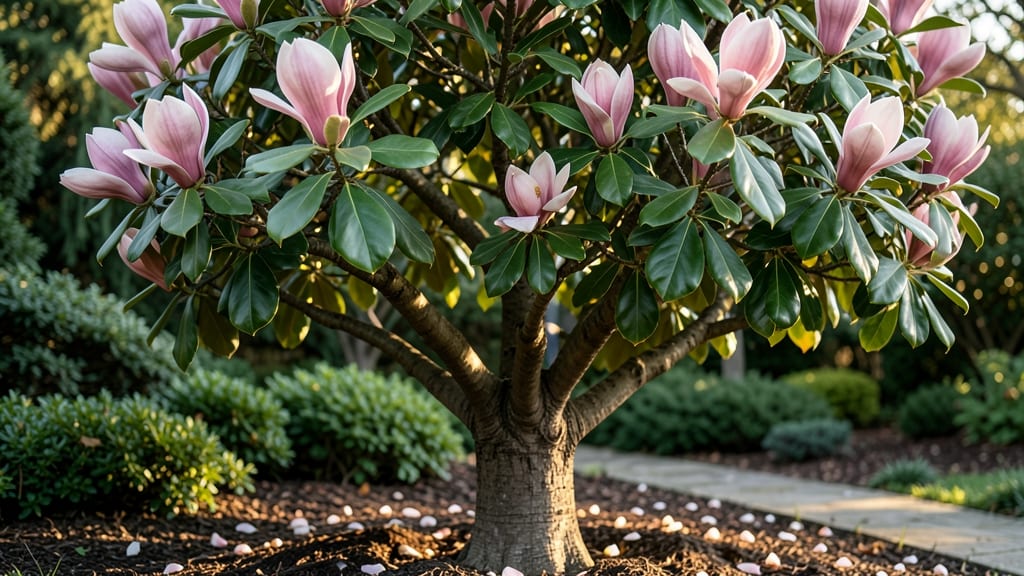
How Tall Do Magnolia Trees Grow: Exact Heights by Variety and Sunlight Needs

How To

How Tall Do Magnolia Trees Grow: Exact Heights by Variety and Sunlight Needs

How tall does a magnolia tree grow? The answer depends on the variety and growing conditions, with heights ranging from 8 feet to over 100 feet.

If you're dreaming of a majestic magnolia tree in your garden but unsure whether it’ll tower over your home or stay compact, you’re not alone.

These trees are famous for their stunning blooms, but their mature size can vary wildly—from a dwarf 'Little Gem' that stays under 25 feet to a towering Southern Magnolia that reaches the sky.

Sunlight plays a huge role in how tall your magnolia grows. Too much shade can stunt its height, while full sun encourages rapid vertical growth. Even the soil type and climate in your USDA Zone 6a area can shift the scale by decades.

In this guide, I’ll break down the exact height ranges by popular varieties, how sunlight affects growth, and 5 pro tips to manage size naturally—so you can pick the perfect magnolia for your space.

Dwarf
8-12 ft (e.g., 'Little Gem', 'Black Tulip')
Container friendly
Semi-Dwarf
15-25 ft (e.g., 'Ann', 'Jane')
Most popular
Standard
40-100 ft (e.g., 'Southern Magnolia', 'Sweetbay Magnolia')
Full orchard size

Magnolia tree height by variety: from dwarf to giant species

Choosing a magnolia tree for your garden means deciding between a delicate dwarf variety that fits in a container on your patio or a towering giant that will dominate your landscape.

The difference in height between the smallest and largest magnolias can be staggering—some stay under 6 feet while others reach 100 feet or more. Your selection depends on your space, vision, and willingness to manage growth over decades.

The height of a magnolia isn’t just about the variety—sunlight exposure, soil quality, and pruning habits all play critical roles. For example, a Southern Magnolia planted in full sun may grow 20% taller than one in partial shade.

Let’s explore the full spectrum of magnolia heights so you can pick the perfect fit for your garden.

Variety Mature Height Range Growth Rate (Annual) Best For Sunlight Needs
Little Gem 15–25 ft 12–18 in Small yards, containers Full sun to partial shade
Black Tulip 10–15 ft 6–12 in Patios, urban gardens Partial shade
Ann 20–25 ft 12–18 in Medium landscapes Full sun
Jane 25–30 ft 15–20 in Specimen planting Partial shade
Star Magnolia 20–30 ft 10–15 in Early spring blooms Full sun
Saucer Magnolia 25–40 ft 18–24 in Large gardens Full sun to partial shade
Sweetbay Magnolia 40–60 ft 24–36 in Woodland edges Partial shade
Southern Magnolia 60–80 ft 30–48 in Specimen trees Full sun
Korean Magnolia 30–50 ft 12–18 in Shade gardens

How sunlight exposure affects magnolia tree height and growth rate

Sunlight isn't just a preference for magnolia trees—it's the primary factor determining whether your tree grows into a towering giant or stays a manageable size. Magnolia grandiflora, for example, can reach 80+ feet in full sun, while Magnolia stellata (star magnolia) maxes out at 15-25 feet with partial shade.

The difference? Photosynthesis intensity and growth hormone production vary dramatically based on light exposure.

In Southern climates (USDA Zones 7-10), magnolias thrive with 6-8 hours of direct sun, growing 2-3 feet per year during their prime.

But in Northern climates (Zones 4-6), the same tree might grow just 1-2 feet annually due to shorter growing seasons. Partial shade (3-6 hours of sun) slows vertical growth by 30-50%, making it ideal for urban gardens where space is limited.

Sunlight Condition Annual Growth Rate Mature Height Range Pruning Needs
Full Sun (6+ hrs) 2-3 ft/year 40-100 ft (standard varieties) Minimal (structural pruning)
Partial Shade (3-6 hrs) 1-2 ft/year 20-40 ft (dwarf/semi-dwarf) Moderate (shape control)
Deep Shade (<3 hrs) 0.5-1 ft/year 10-20 ft (stunted growth) Heavy (rejuvenation pruning)
🌳 Growth Rate Impact by Sunlight

Here's the science: Magnolias produce auxin hormones in response to sunlight, which drives vertical growth. Full sun triggers rapid cell elongation, while partial shade redirects energy to leaf and flower production instead.

For example, a Southern magnolia in Atlanta (Zone 8) with full sun may hit 50 feet in 20 years, but the same tree in Boston (Zone 6) with partial shade might only reach 30 feet in the same time.

Pruning plays a critical role in managing height. In full sun, prune only dead or crossing branches—over-pruning can stress the tree and reduce flowering.

In partial shade, you can safely prune up to 25% of the canopy annually to encourage bushier growth. Never prune in late summer (August-September), as this triggers vigorous late-season growth that won't harden off before winter.

Regional microclimates also matter. In humid Southern states, magnolias grow faster due to longer growing seasons and higher humidity, which reduces water stress.

In dry Western states (e.g., Arizona or California), growth slows unless you deep-water weekly during the first 3 years. Mulch with 3-4 inches of organic matter to retain moisture and regulate soil temperature.

If you're planting near a power line or roofline, choose a dwarf variety like 'Black Tulip' (15-20 ft) or 'Teddy Bear' (8-10 ft) and place it in partial shade.

For maximum height, plant Southern magnolia or Kadota hybrid in full sun—just be prepared for regular limb removal as it matures. The trade-off? Bigger flowers and faster growth in optimal conditions.

Pro tip: Use a succession planting strategy if space is tight. Plant a fast-growing shrub (like hydrangea) near your magnolia's base to block low-light competition and encourage upward growth. Just keep it 3-4 feet away to avoid root conflict. 🌿

★★★★★4.5(15 reviews)
Categories How To