
Plants
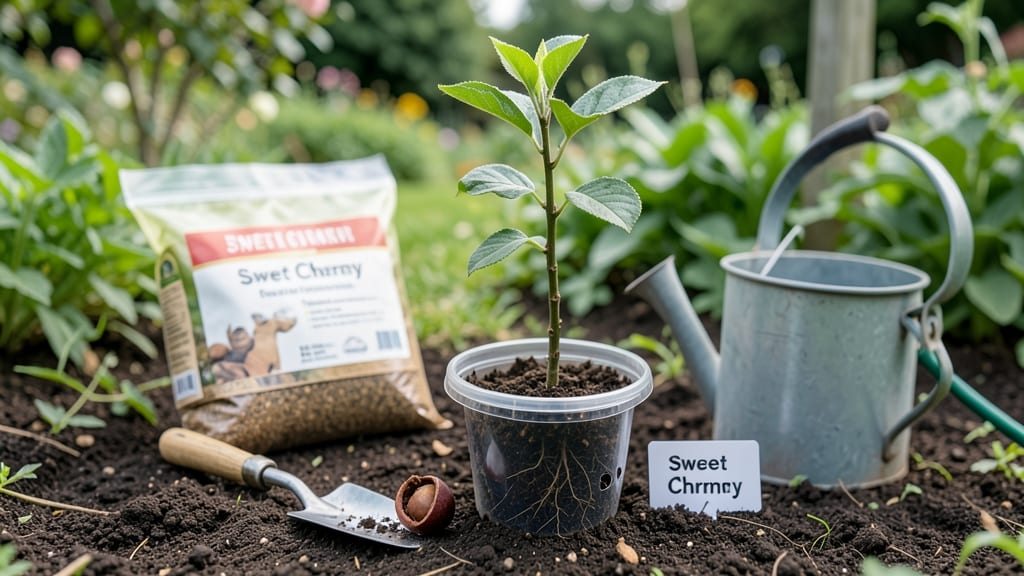
You can plant a cherry tree from a cherry pit, but the resulting tree will likely produce different fruit than the parent plant. Germination requires 4-8 weeks of cold stratification and careful nurturing over several years before the tree matures.
While this method is fascinating, it's important to understand that cherry pits are genetically unpredictable. 🌱 The tree that grows may develop wild characteristics or produce entirely different varieties of cherries—if it bears fruit at all.
I've seen this firsthand with a neighbor's experiment: their sweet cherry pit grew into a sour cherry tree after 10 years! Success depends on proper seed preparation, including scarification (breaking the hard pit shell) and consistent moisture during the germination phase.
Even with perfect conditions, the process demands patience. Most gardeners who attempt this method don't see fruit-bearing trees for 5-10 years, and even then, the results are often unpredictable. For consistent harvests, grafting known varieties onto established rootstock is the more reliable approach.
Still, there's something magical about growing a tree from a single pit—it's nature's way of reminding us that sometimes the best things take time.
💡 In This Article
- How Cherry Pit Germination Works: Science and Cold Stratification Process
- Step-by-Step Guide to Growing a Cherry Tree from a Pit
How cherry pit germination works: science and cold stratification process
The cherry pit's journey from dormancy to sprout begins with a natural survival mechanism called seed dormancy. This state prevents premature germination in unfavorable conditions, like warm summer temperatures that would kill a young seedling.
Cherry pits enter dormancy due to two main factors: a hard, impermeable seed coat and internal chemical inhibitors that suppress growth. The seed coat acts like a protective shell, blocking both water and oxygen needed for germination to begin.
To break this dormancy, cherry pits require a process called cold stratification, which mimics the natural winter cycle. This involves exposing the pits to 33-41°F temperatures for 60-90 days while maintaining moisture.
During this period, the cold temperatures soften the seed coat and allow water to penetrate, while also breaking down growth inhibitors. The ideal moisture level is about 30-50% humidity—too dry and the seed won't activate, too wet and it risks rotting before sprouting.
What's fascinating is how this process works at a cellular level. The cold stratification triggers hormonal changes within the pit, specifically increasing levels of gibberellins, which are plant growth hormones that signal the embryo to begin metabolic activity.
This hormonal shift is what finally overcomes the seed's natural resistance to sprouting. Without this cold treatment, many cherry pits would simply remain dormant indefinitely, even if planted in warm soil.
Temperature fluctuations during stratification also play a crucial role. Research shows that alternating between slightly warmer days (50°F) and colder nights (32°F) can improve germination rates by 20-30% compared to constant cold.
This mimics natural seasonal changes and helps synchronize the seed's internal clock with external conditions. Once properly stratified, the pit will typically germinate within 2-4 weeks after being planted in warm soil.
The seed coat's hardness is another critical factor. Some cherry pits have such thick shells that even with stratification, they may not germinate without scarification—a process where you lightly file or nick the pit's surface to create tiny openings.
This mechanical intervention mimics what would happen naturally through freeze-thaw cycles or animal digestion. I've seen gardeners use sandpaper or a nail to gently rough up the pit's surface, which can dramatically improve germination success rates.
Once the pit finally sprouts, you'll notice the radicle (the embryonic root) emerging first, followed by the shoot. This two-stage growth pattern ensures the seedling has a stable root system before developing leaves.
The entire germination process is a remarkable example of nature's precision engineering, where every step—from dormancy to sprouting—is designed to maximize the seed's survival chances in the wild.