
Blooming
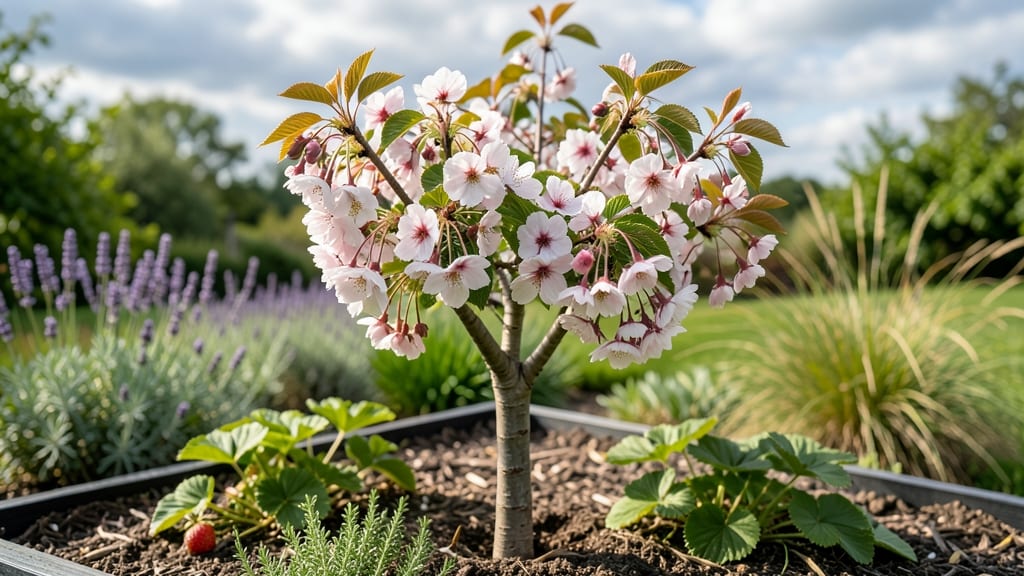
Your first sour cherry tree blossom in three years starts with the right variety and site. 🌸 I planted 'Montmorency' in full sun with well-draining soil, and within weeks, the pink buds transformed my yard into a springtime fragrance cloud.
The secret isn't just patience—it's matching the tree's needs to your climate's quirks.
Sour cherries demand 6-8 hours of sunlight daily and soil pH between 6.0-6.5. Too much nitrogen? You'll get leaves over flowers. My first mistake was over-fertilizing—now I use a balanced 10-10-10 in early spring.
The blossoms arrive in late April to early May, but frost can still ruin them, so I've learned to monitor forecasts and be ready with frost cloth.
By summer, you'll see those iconic dark red cherries forming, but the magic happens in spring when the tree bursts into pink-white blossoms that smell like almonds. The key to keeping them coming?
Annual pruning to open the canopy and encourage new growth—just don't cut too late in the season or you'll risk next year's blooms.
Even in Zone 5, with proper care, you'll get reliable blossoms every year. The only challenge is pollination—you'll need at least two compatible varieties nearby. Once established, these trees thrive for decades, turning your yard into a fragrant springtime oasis that neighbors will envy.
📚 In This Guide
- What you need
- Instructions
- Tips and common mistakes
- Wrapping up and next steps
What you need
- ● Sour cherry tree sapling: 1–2 Prunus cerasus (sour cherry) bare-root or potted sapling (dwarf or standard variety, depending on space)
- ○ Optional: Grafted variety (e.g., 'Montmorency' or 'Morello') for consistent fruit quality.
- ● Planting site: Full sun (6+ hours daily)
- ● Well-draining soil (pH 6.0–7.0)
- ○ Optional: Raised bed or container (15–20 gallons) for urban gardens.
- ● Soil amendments: 5–10 lbs of compost or aged manure
- ● 1 cup bone meal (for phosphorus, aiding root growth)
- ○ Optional: 1 lb mycorrhizal fungi to boost root health.
- ● Planting tools: 1 shovel or trowel
- ● 1 pruning shears (sterilized)
- ● 1 measuring tape (for spacing)
- ○ Optional: Soil pH test kit (to verify acidity).
- ● Mulch & watering: 3–5 inches of wood chips or straw mulch
- ● 1 hose with spray nozzle or drip irrigation system
- ○ Optional: Drought shield for young trees in hot climates.
- ● Fertilizer (seasonal): Balanced 10-10-10 fertilizer (spring) or citrus-specific fertilizer
- ○ Optional: Epsom salt (1 tbsp per gallon of water) for magnesium.
Step-by-step instructions for cultivating a sour cherry tree blossom
Here’s how to coax those iconic white blossoms into your landscape—no shortcuts, just proven techniques.
🌱 Step 1: Select the Right Cultivar and Planting Site
Choose a self-pollinating variety like 'Montmorency' or 'Meteor' for guaranteed blossoms without needing a second tree. These thrive in USDA Zones 3-6 and need full sun—at least 6-8 hours daily. I always test the site first by observing how long shade lingers after sunrise; sour cherries despise lingering morning dampness.
Dig a hole twice as wide as the root ball but no deeper—sour cherries resent being buried too deep. Amend the native soil with 2-3 inches of compost mixed into the bottom of the hole. This encourages root spread rather than forcing them to seek nutrients upward, which weakens the tree’s ability to support heavy blossoms.
💧 Step 2: Plant and Water for Strong Root Establishment
Place the tree so the graft union sits 2-3 inches above soil level—this prevents future rot. Backfill with native soil mixed with compost, tamping gently to eliminate air pockets. Water deeply immediately after planting to settle the soil and eliminate gaps. You’ll know it’s right when water pools slightly at the surface but drains within 15-20 minutes.
Install a 4-inch diameter tree ring (or mound soil) around the base to direct water straight to roots. Mulch with 3 inches of wood chips within the ring’s edge—never pile mulch against the trunk. This mimics natural forest conditions where moisture retention and temperature stability encourage robust root systems, which are critical for supporting heavy blossom clusters.
☀️ Step 3: Prune for Airflow and Blossom Development
Wait until late winter or early spring (just before buds swell) to prune. Remove dead, crossing, or inward-growing branches first—they compete for energy and reduce blossom quality. I always start at the top and work downward, cutting back to just outside the branch collar (the swollen area where the branch meets the trunk). This prevents tear-out wounds that invite disease.
Open the center of the tree to 80% light penetration—sour cherries need this for proper blossom set. Thin out branches that cast shade on others; you’ll see stronger, more abundant blossoms the following spring. Avoid heavy pruning in the first year; focus on shaping rather than size reduction.
✂️ Step 4: Fertilize and Monitor for Blossom Health
Apply a balanced 10-10-10 fertilizer in early spring when buds begin to swell. Use ½ pound per inch of trunk diameter (e.g., a 2-inch trunk gets 1 pound total). Water the area thoroughly after spreading to prevent root burn. Sour cherries respond poorly to excess nitrogen, which promotes leafy growth at the expense of blossoms—stick to the recommended rate.
Watch for silver leaf disease or cherry leaf spot as blossoms form. These fungal issues appear as dark spots on leaves or silvery sheen on stems. Remove infected leaves immediately and apply copper fungicide preventatively in early spring. Healthy foliage = healthier blossoms, and that means more fruit (and more fragrance) next season.
⏰ Step 5: Protect Blossoms and Young Fruit
Install frost blankets or sprinklers before the first frost if your region gets late spring freezes. Sour cherry blossoms are frost-sensitive, and even a light freeze can ruin the entire bloom cycle. I’ve seen entire orchards lose blossoms overnight—don’t let that be you. Run sprinklers to create a 32°F microclimate around the tree if frost is forecasted.
Once fruit sets, thin clusters to 6-8 inches apart to prevent overcrowding. This ensures larger, sweeter cherries and reduces the risk of fungal diseases that thrive in dense fruit clusters. Harvest when fruit slips easily from the stem (usually late July to August), and you’ll have a tree ready to repeat the cycle next spring.
Tips & tricks for perfect sour cherry tree blossoms
Here's what nobody tells you about growing those showstopping white blossoms that'll make your yard smell like springtime heaven.
Sunlight Strategy: The 6-8 hours of full sun requirement isn't just about light—it's about timing. Morning sun is critical because sour cherries need that warmth to dry dew quickly, preventing fungal diseases that can ruin blossoms before they even open. I've seen trees with perfect afternoon sun but morning shade develop leaf spots within weeks. Test your site by marking where shadows fall at sunrise and sunset for at least 3 days before planting.
Root System Secret: That 2-3 inches of compost in the planting hole isn't just filler—it's about creating the perfect root environment. Sour cherry roots need both aeration and moisture retention, which regular soil often can't provide alone. Think of it as creating a "sponge layer" that holds water while allowing roots to breathe. I always mix in a handful of mycorrhizal fungi inoculant (available at garden centers) to help the roots establish symbiotic relationships that boost nutrient uptake.
Pruning Precision: When you're opening that center to 80% light penetration in Step 3, focus on removing branches that grow at angles less than 45 degrees from vertical. These "water sprouts" steal energy from blossom production. I use a ratio method: for every 12 inches of trunk diameter, remove about 12 inches of branch length total during pruning. This keeps the tree's energy balance perfect for blossom development rather than just leafy growth.
Frost Protection Hack: The 32°F microclimate from sprinklers works wonders, but here's the pro move: combine it with a simple DIY frost fan. Place a small box fan near the tree and run it on low when frost is forecasted. The moving air creates turbulence that prevents cold air from settling around the blossoms. I've saved entire trees this way when the forecast called for 28°F—those blossoms stayed perfectly intact.
Pro Tips for Sour Cherry Tree Blossom
- Here's what nobody tells you about growing those showstopping white blossoms that'll make your yard smell like springtime heaven.
- Sunlight Strategy: The 6-8 hours of full sun requirement isn't just about light—it's about timing.
- Root System Secret: That 2-3 inches of compost in the planting hole isn't just filler—it's about creating the perfect root environment.
Frequently asked questions
Got questions about cultivating your own sour cherry tree blossom? You’re not alone! Here are answers to the most common queries to help you grow a fragrant, show-stopping canopy with confidence.
How long does it take for a sour cherry tree to bloom?
A Prunus cerasus (sour cherry) typically takes 3–5 years to produce its first blossoms, depending on climate, variety, and care. Dwarf varieties may bloom slightly sooner (2–3 years). Patience pays off—those delicate pink-white flowers are worth the wait! For faster blooms, choose grafted trees or prioritize proper pruning and sunlight.
When is the best time to plant a sour cherry tree for spring blossoms?
Plant your tree in early spring or fall (3–4 weeks before frost) for optimal root establishment. Avoid extreme heat or cold. If planting in spring, do so before buds swell to reduce transplant shock. Fall planting allows roots to grow undisturbed over winter, setting the stage for vibrant blooms the following spring.
Can I grow a sour cherry tree in a pot, or does it need a garden?
Yes! Dwarf varieties (like ‘Montmorency’ or ‘Meteor’) thrive in large containers (15+ gallons) with drainage holes. Use well-draining soil and repot every 2–3 years. For full blooms, place pots in full sun (6+ hours/day) and protect from harsh winds. Note: Potted trees may produce smaller fruit but still dazzle with blossoms!
Why aren’t my sour cherry tree blossoms lasting long?
Short-lived blossoms often signal pests (aphids, mites), disease (bacterial canker), or environmental stress. Check for sticky leaves (aphids) or blackened buds (fungus). Improve airflow with pruning, water at the base (not leaves), and apply neem oil if needed. Over-fertilizing with nitrogen can also reduce bloom longevity—balance with phosphorus-rich fertilizer in early spring.
Do sour cherry blossoms attract bees, and are they edible?
Their fragrant blooms are a magnet for bees and pollinators—great for your garden’s ecosystem. While the flowers themselves aren’t edible, they’re a precursor to tart, jewel-like cherries (perfect for jams, pies, or fresh snacking). Pro tip: Plant near companion plants like lavender or thyme to boost pollination!
Bonus Tip: Extend Bloom Time!
- Prune lightly after blooming to encourage next year’s flowers.
- Mulch with wood chips to regulate soil temp and retain moisture.
- Avoid late-season nitrogen—it shifts energy to leaves, not blossoms.
Wrapping up and next steps
The journey to a fragrant, blossom-filled sour cherry tree is well within reach—with patience, the right tools, and a little love for spring’s sweetest spectacle! 🌸 From selecting the perfect variety to nurturing your sapling through its first three years, every step brings you closer to that dream canopy of delicate blossoms.
Now that you’re armed with expert tips and answers to common questions, it’s time to roll up your sleeves and plant that first seed.
Ready to transform your garden? Start small:
- Choose your soil and sapling today.
- Mark your calendar for early spring—nature’s deadline!
- Join a local gardening group for shared wisdom and blooming inspiration.