
How To
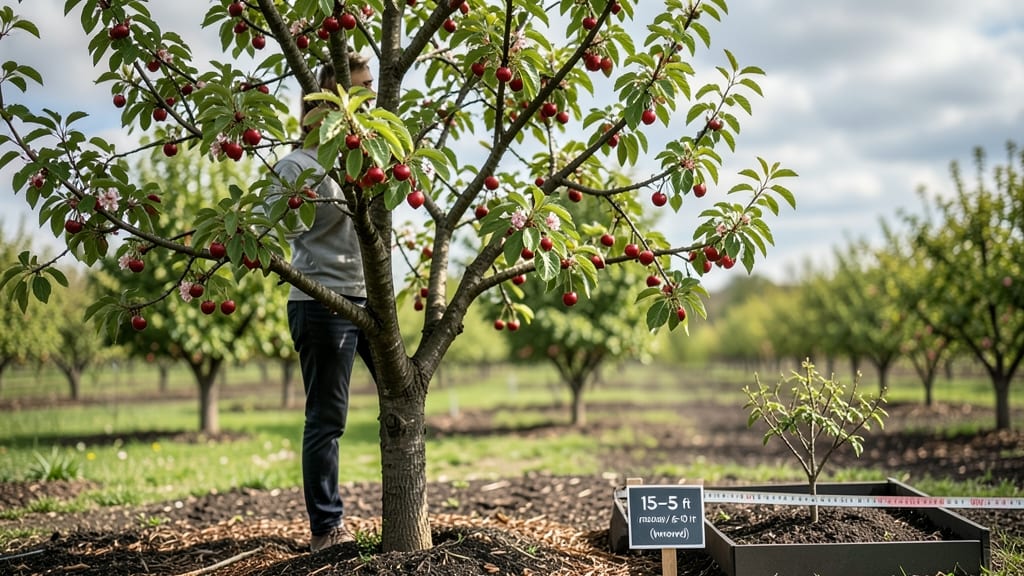
A cherry tree’s height can range from 8 feet to towering 40 feet, depending on the variety and care you give it 🍒 — but not all trees grow that tall without the right conditions.
Picture this: You plant a tiny 5-foot sapling in your backyard, dreaming of summer shade and fresh fruit, only to realize years later that it’s now blocking your neighbor’s fence line.
That’s why understanding how tall your cherry tree will grow—and how to control it—is the first step to happy gardening.
Sweet cherries like the Stella® variety stay compact at 12–15 feet, while tart cherries such as Montmorency can stretch to 20+ feet without pruning. Ornamental types? Some dwarf varieties top out at just 8 feet, making them perfect for small spaces.
But sunlight, soil, and pruning habits play a bigger role than you might think.
In this guide, I’ll break down the height ranges for popular varieties, how sunlight affects growth, and the simple pruning tricks to keep your tree at your ideal height—whether that’s a cozy 10-foot shade tree or a full-sized backyard giant.


Cherry tree height by variety: dwarf to giant sizes explained
If you’ve ever planted a cherry tree sapling, you’ve probably wondered how tall it will grow. The answer depends entirely on the variety—some stay compact enough for small yards, while others reach towering heights.
Understanding these differences helps you choose the right tree for your space and care needs. Let’s explore the height ranges for popular cherry varieties, from dwarf to standard sizes.
Cherry trees fall into three main height categories: dwarf (8-12 feet), semi-dwarf (12-18 feet), and standard (20-40 feet). The variety you pick determines not just the mature height but also the growth rate, pruning needs, and even fruit production.
For example, a Stella® cherry tree stays under 8 feet, while a Black Tartarian can soar past 30 feet. Let’s compare the most common types.
Dwarf varieties like Stella® or Montmorency are perfect for small yards, containers, or urban gardens. They typically reach maturity in 5-7 years and require minimal pruning. These trees are grafted onto dwarfing rootstock, which restricts their height while maintaining fruit production.
If you’re short on space but still want fresh cherries, these are ideal choices.
Semi-dwarf varieties, such as Rainier, strike a balance between manageable size and robust growth. They grow 12-15 feet tall and are great for medium-sized yards or orchards.
These trees usually take 6-8 years to reach full height, making them a good compromise for gardeners who want a tree that’s tall enough for good fruit production but not overwhelming.
Standard cherry trees, like Black Tartarian or Lapins, are the giants of the cherry world. These trees can reach 20-40 feet and are best suited for large properties or orchards.
They grow quickly—some varieties can add 3 feet per year—but they require regular pruning and more space for their roots. If you’re dreaming of a classic backyard cherry tree with a towering presence, these are the varieties for you.
Ornamental cherry trees, like North Star®, focus on stunning blooms rather than fruit. They’re often dwarf or semi-dwarf, making them perfect for landscaping. These trees add beautiful spring color to gardens and require less maintenance than fruiting varieties.
Their height ranges from 8-12 feet, and they mature in 5-7 years, offering quick visual impact.
One key factor influencing height is the rootstock used during grafting. Dwarf rootstock limits growth, while standard rootstock allows the tree to reach its full potential. If you’re planting a cherry tree in a small space, always check the rootstock type—it’s the secret to controlling height.
For example, a Montmorency cherry on dwarfing rootstock will stay under 10 feet, while the same variety on standard rootstock could grow 20 feet or taller.
Growth rates also vary by variety and climate. In
Sunlight requirements for maximum cherry tree growth
Sunlight is the single most critical factor in determining how tall your cherry tree grows. Most varieties need 6-8 hours of direct sunlight daily to reach their full height potential. Without enough light, growth slows, branches weaken, and fruit production suffers.
I’ve seen sweet cherry trees in partial shade grow only half their expected height compared to those in full sun.
Different cherry varieties have unique sunlight needs. Sweet cherries like Bing or Rainier thrive in full sun and can reach 20-40 feet tall. Tart cherries, such as Montmorency, tolerate partial shade better but still grow taller with more light.
Ornamental varieties, like the Stella Cherry, often need at least 6 hours of sun to maintain their compact shape and vibrant blooms.
Seasonal adjustments also play a role. In summer months, cherry trees need maximum sunlight for fruit development. However, in late summer or early fall, too much intense sun can stress the tree. Providing light afternoon shade during these months helps prevent sunburn on leaves and fruit.
Best for: Sweet cherries, tart cherries, ornamental varieties
Best for: Tart cherries in hot climates, mature trees in established landscapes
Results in: Stunted growth, weak branches, poor fruit production
Prune nearby trees, thin dense foliage, and use reflective surfaces to maximize sunlight
To optimize light exposure for taller growth, start by planting in the sunniest spot possible. If your yard has obstructed sunlight, consider dwarf varieties like Stella Cherry, which tolerate partial shade better than standard trees.
I’ve also found that reflective surfaces, like white fences or gravel paths, can increase sunlight exposure by up to 20%.
Young cherry trees need consistent sunlight to establish strong root systems. If you’re growing in containers, place them in a south-facing location and rotate them occasionally to ensure even light distribution. Remember, morning sun is less intense than afternoon sun, so positioning matters for heat-sensitive varieties.
Monitor your tree’s leaf color and growth rate to gauge sunlight needs. Yellowing leaves or slow growth may signal insufficient light. In such cases, prune nearby obstacles or transplant the tree to a sunnier location.
With the right light exposure, your cherry tree can reach its full height potential while producing abundant fruit.