
Pests and Diseases
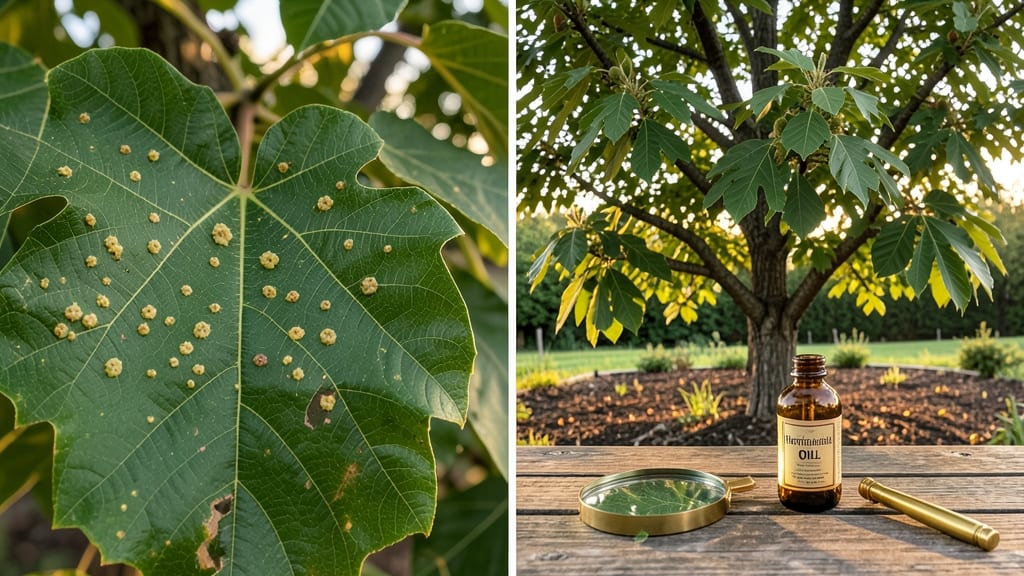
Bumps on pecan tree leaves could be the first sign of a fungal infection like anthracnose, or tiny spider mites feasting under the leaf surface. 🌿 I’ve seen these bumps turn a once-healthy tree into a defoliated mess if ignored—don’t let that happen to yours.
The key is catching it early, when those bumps are still small and the leaves still green, before the tree puts all its energy into fighting the problem instead of producing nuts.
Most bumps start as tiny raised spots—some fuzzy, some crusty—that eventually darken and spread. Anthracnose bumps often look like tiny velvet cushions, while mites leave behind a stippled, sandpaper-like texture. Grab a magnifying glass and check the underside of leaves first; that’s where the real action happens.
If the bumps are soft and moist, it’s likely fungal. If the leaves look dusty or webbish, mites are probably to blame.
You can stop the spread with a simple mix of 1 tablespoon baking soda + 1 quart water + a dash of dish soap sprayed on the leaves every 7-10 days. For stubborn fungal infections, a copper fungicide applied in early spring works like a charm.
Prune out heavily infected branches and dispose of them far from your tree—don’t compost them, or you’ll just spread the problem.
The best defense is prevention: keep your tree well-watered but not soggy, mulch to improve soil health, and prune for airflow.
If the bumps keep coming back year after year, it’s time to call in a professional arborist—they can diagnose whether it’s a deeper issue like root rot or a persistent pest infestation that needs targeted treatment.
Root Causes Behind Leaf Bumps
When your pecan tree’s leaves develop unsightly bumps, it’s rarely a coincidence—these irregularities usually signal an underlying issue. Understanding the why behind these growths is the first step toward restoring your tree’s health.
Below, we break down the most common culprits, from environmental stressors to microscopic invaders, with clear explanations of how each disrupts your pecan tree’s natural processes.
Pecan trees, like all plants, react to their surroundings. When leaves develop bumps due to environmental factors, the issue often stems from mechanical injury, extreme temperatures, or poor growing conditions.
- Hail or Wind Damage 🌪️ Pecan trees are tough, but severe storms can bruise or puncture leaves, triggering a wound response. The tree seals off the damaged area by producing callus tissue—small, hard bumps that form as a protective barrier.
These bumps are typically irregular in shape and may appear alongside torn or discolored leaf edges.
- Temperature Fluctuations ❄️☀️ Sudden drops or spikes in temperature (e.g., late spring frosts or scorching summer heat) can cause physiological stress. Leaves may develop water-soaked blisters or corky bumps as cells swell or collapse in response.
This is most common in young, rapidly growing leaves that haven’t yet hardened off.
- Poor Soil or Water Stress 💧⚠️ Compacted, waterlogged, or nutrient-deficient soil forces roots to work harder, leading to stunted growth and abnormal leaf development. Bumps may form as the tree overcompensates by producing extra tissue to support photosynthesis.
Check for: - Yellowing or curling leaves (sign of poor drainage). - Wilting despite moist soil (possible root rot or fungal blockage). - Stunted new growth (lack of nitrogen or potassium).
Fungi are the #1 cause of bumps on pecan leaves, often masquerading as harmless growths before wreaking havoc. These pathogens thrive in warm, humid conditions and exploit weak spots in the tree’s defenses.
- Anthracnose (Colletotrichum gloeosporioides) 🍄💥 This aggressive fungus creates raised, dark brown to black bumps that ooze pink or yellow spores when wet. It targets young leaves and shoots, causing them to distort and die prematurely.
Look for: - Sunken, crusty lesions with a fuzzy center. - Premature leaf drop in spring or early summer. - Blackened twigs (a sign of spread to woody tissue).
- Powdery Mildew (Oidium spp.) ❄️🌿 While powdery mildew typically appears as a white, powdery coating, severe infections can cause leaves to develop hard, chalky bumps as the fungus penetrates tissue.
These bumps are often superficial but widespread, covering entire leaf surfaces. Humidity-loving fungi like this thrive in: - Shaded, poorly ventilated areas. - Trees with dense canopies (reduced airflow).
- **Rust Fungi (e.g., Cronartium quercuum) 🔥🍂 Pecan trees are alternate hosts for some rust fungi, which produce orange, pustule-like bumps on leaf undersides.
These bumps release spores that infect oak trees, but the damage to pecans includes: - Thinned, weak leaves (reduced photosynthesis). - Defoliation if infections are severe. - Stunted nut production in later stages.
Not all bumps are fungal—some are insect-induced, where pests trigger the tree’s defensive responses. These bumps often appear as galls, blisters, or swollen tissue around feeding sites.
- Pecan Phylloxera (Phylloxera devastatrix) 🐜🍃 This tiny aphid-like insect inserts its mouthparts into leaf tissue, causing hard, greenish bumps (galls) on the undersides of leaves.
Infested leaves may: - Curl and thicken around the gall. - Drop prematurely if heavily infected. - Weaken the tree’s vigor, making it susceptible to secondary diseases.
- Sawfly Larvae (e.g., Caliroa cerasi) 🔪🍃 These caterpillar-like larvae chew leaf edges and surfaces, prompting the tree to form raised, corky bumps along their feeding paths.
Damage includes: - Serrated or notched leaf margins. - Honeydew buildup (a sticky residue attracting sooty mold). - Stunted growth if larvae target new shoots.
- Scale Insects (e.g., Pulvinaria vitis) 🛡️🐛 While scale insects themselves are stationary and armored, their feeding weakens leaves, leading to swollen, puckered bumps as the tree tries to isolate damage.
Look for: - White, cottony masses (scale secretions). - Sticky residue (honeydew) on leaves below. - Yellowing between veins (nutrient theft by insects).
Pecan trees are heavy feeders, and nutrient extremes—whether deficiencies or toxicities—can manifest as physical leaf deformities, including bumps.
- Excess Nitrogen (Over-Fertilization) 💥🌱 While nitrogen fuels growth, too much leads to soft, spongy bumps on leaves as cells grow uncontrollably. Symptoms include:
- Weak stems prone to snapping.
- Delayed nutrient uptake (lockout of phosphorus, potassium).
Sometimes, bumps aren’t a sign of distress at all—but they can still raise eyebrows! Genetic traits or natural growth patterns may explain isolated cases.
- Pecan Leaf Gall Midge (Asphondylia spp.) 🪰🐝 Unlike fungal galls, these are caused by tiny gall midges whose larvae induce smooth, spherical bumps (often mistaken for tumors). These galls are harmless to the tree but can be unsightly.
- Variegation or Mutations 🎨🌿 Rarely, pecan trees develop chlorotic (yellow) or hyperplastic (overgrown) bumps due to sports (genetic mutations). These are usually localized to a single branch** and don’t spread.
Fixing Leaf Bumps Naturally
Now that you’ve identified the culprit behind those pesky bumps on your pecan tree leaves—whether it’s fungal infections, insect damage, or environmental stress—it’s time to take action! Below are practical, step-by-step solutions tailored to each cause, plus prevention tips to keep your tree thriving.
Let’s get your pecan tree back to its healthy, leafy glory! 🌿✨
Fungal bumps often appear as velvety spots, raised pustules, or discolored patches, and they spread fast if left untreated. Here’s how to tackle them:
🔥 Remove Infected Leaves Immediately
- 👨🍳 Step 1: Wear gloves and a mask (fungal spores are sneaky!).
- 🗑️ Step 2: Prune all visibly infected leaves—don’t leave them on the ground!
Bag them and dispose of them in the trash (not compost). - ✂️ Pro Tip: Sterilize your pruners with rubbing alcohol between cuts to prevent spreading spores.
💡 Apply Fungicide (Organic or Chemical)
- 🌿 Organic Options:
- Neem oil spray (1 tsp neem oil + 1 tsp mild soap + 1 quart water).
Spray early morning or evening to avoid burning leaves. - Baking soda solution (1 tbsp baking soda + 1 quart water + a few drops of soap).
Test on a small leaf first! - 🧪 Chemical Options: - Copper fungicide (e.g., Copper Soap)—follow label instructions for best results. - Systemic fungicides like chlorothalonil for severe cases (use as a last resort).
🌡️ Improve Airflow & Reduce Moisture Fungi love damp, shady conditions.
To prevent recurrence: - 🌳 Thin out dense branches to allow sunlight and airflow. - 💦 Water at the base (not overhead) and avoid late-day watering to keep leaves dry. - 🌿 Mulch properly—use wood chips or straw (not thick layers) to retain moisture without suffocating roots.
If bumps are caused by tiny pests (like weevil eggs or mite webs), you’ll need a two-pronged attack: eliminate the pests and strengthen the tree’s defenses.
🔪 Targeted Pest Control
- 🕷️ For Weevils & Beetles:
- 🍎 Handpick adults (check under leaves and bark).
- 🪰 Use sticky traps (yellow or blue) to catch flying pests.
- 💦 Spray soapy water (1 tsp dish soap + 1 quart water) on newly hatched larvae.
- 🕸️ For Spider Mites:
- 🌿 Apply horticultural oil or insecticidal soap (follow label rates).
- 🌱 Encourage natural predators like lacewings or ladybugs (buy them online or attract with dill or fennel plants).
- 🧴 Use kaolin clay (e.g., Surround WP) as a physical barrier—mix with water and spray on leaves.
💪 Boost Tree Health to Deter Pests
- 🌱 Fertilize lightly with a balanced, slow-release fertilizer (e.g., 10-10-10) in early spring.
- 💧 Water deeply but infrequently—stressed trees attract more pests!
- 🌿 Prune for sunlight—thick canopies trap moisture and pests.
If bumps are due to physical damage or poor growing conditions, focus on repair and prevention.
🌞 Protect from Extreme Conditions
- 🌡️ For Heat Stress:
- 🌿 Provide shade with lightweight shade cloth during extreme heatwaves.
🍃 Fix Nutrient Imbalances
- 📊 Test your soil (use a home test kit or send to a lab).
- 💪 Address deficiencies:
- Yellow bumps? → Likely iron or zinc deficiency—apply chelated iron or zinc sulfate.
- Pale, weak leaves? → Nitrogen boost (use blood meal or fish emulsion).
Once your tree is healthy, lock in those gains with these long-term strategies:
| Problem | Prevention Tip |
|---|---|
| Fungal Spread | Prune in dry weather (fungi thrive in damp conditions). |
| Insect Infestations | Inspect leaves weekly—catch pests before they multiply! |
| Heat Stress | Plant in full sun but avoid reflective surfaces (like pavement) nearby. |
| Nutrient Issues | Fertilize in early spring—don’t overdo it! |
| Poor Airflow | Space trees 20-30 ft apart to reduce humidity buildup. |
Final Thought: 🎯 Act fast—the sooner you treat bumps, the easier it is to save your pecan tree! Most issues are manageable with simple fixes, but prevention is always cheaper than a cure.
Keep an eye on your tree, stay proactive, and you’ll enjoy healthy leaves (and nuts!) for years to come.
Frequently asked questions
Are bumps on pecan leaves always a sign of disease?
Not necessarily! While fungal infections like anthracnose or pest damage often cause bumps, some bumps are harmless. For example, gall midges create smooth, harmless bumps, and genetic mutations might produce isolated growths. Always check for other symptoms like discoloration or leaf drop before treating.
How can I tell if my pecan tree has anthracnose?
Look for dark brown to black raised bumps that ooze pink or yellow spores when wet—classic anthracnose signs. These bumps often appear on young leaves and shoots, and infected areas may turn crusty. If you see premature leaf drop or blackened twigs, anthracnose is likely spreading.
Will pruning infected branches help stop the spread?
Prune all visibly infected branches (including leaves with bumps) and dispose of them in the trash—not compost—to prevent reinfection. Sterilize your pruners with rubbing alcohol between cuts, and focus on improving airflow by thinning dense foliage.
Can I use household items to treat pecan leaf bumps?
Yes! For fungal bumps, try a baking soda spray (1 tbsp baking soda + 1 quart water + a few drops of soap) or neem oil (1 tsp neem oil + 1 tsp soap + 1 quart water). For pests, soapy water (1 tsp dish soap + 1 quart water) works well. Always test sprays on a small leaf first.
When should I call an arborist for pecan leaf bumps?
If bumps persist after 3-4 treatments, spread rapidly despite your efforts, or appear alongside other severe symptoms (like wilting or dieback), it’s time to call a professional. Chronic issues may require soil testing, targeted fungicides, or pest management beyond DIY solutions.