
Pruning
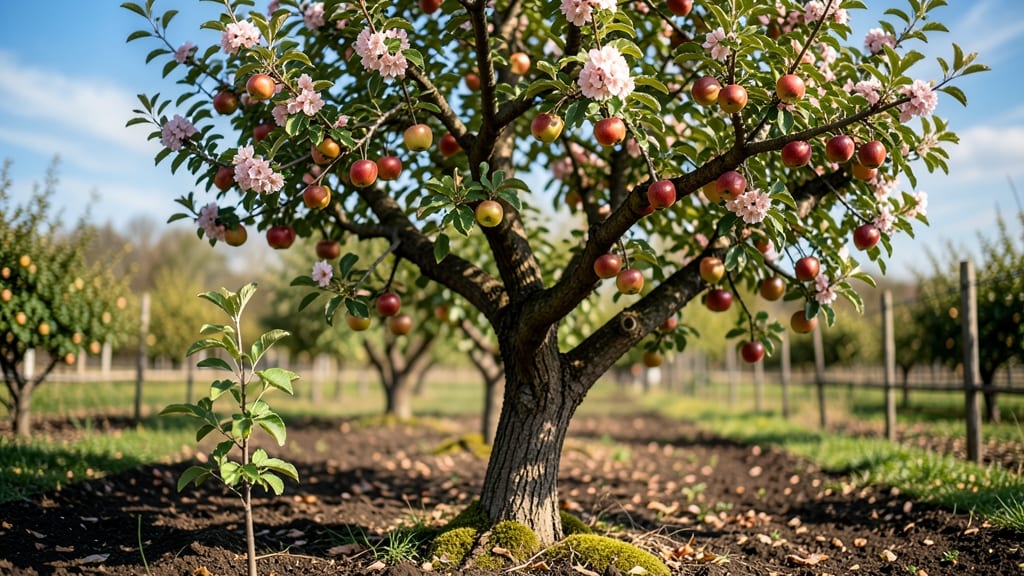
Tracking your apple tree's growth isn't just about measuring height—it's about unlocking the secrets to bigger harvests. 🌳 From a tiny seedling to a fruit-bearing giant, every stage needs different care, and this chart shows you exactly what to expect each year.
Most gardeners miss the early signs of trouble because they don't know what healthy growth looks like at each stage. A two-year-old tree might grow 12-24 inches annually, while a mature tree adds just 6-12 inches—knowing these numbers prevents over-pruning or under-watering.
You'll spot key milestones like first blooms at 3-5 years, fruit set at 5-7 years, and full production by 7-10 years, depending on variety. The chart even includes pruning windows so you never cut at the wrong time.
Perfect for new orchardists, backyard growers, or anyone curious about their tree's progress. Let's grow that knowledge together!
📚 In This Guide
- What you need
- Instructions
- Tips and common mistakes
- Wrapping up and next steps
What you need
- ● Apple tree sapling or bare-root tree – Choose a variety suited to your climate (e.g., Honeycrisp, Granny Smith, or Fuji).
- ● Shovel or trowel – For planting (18"–24" deep for saplings).
- ● Garden gloves – Heavy-duty, chemical-resistant (e.g., FrogToggs).
- ● Pruning shears – Sharp, bypass-style (e.g., Felco F-2) for clean cuts.
- ● Measuring tape – 10–25 ft, for tracking height and branch growth.
- ● Mulch (wood chips or straw) – 2–4 inches, organic and weed-free.
- ● Balanced fertilizer – 10-10-10 or 5-10-10 (follow label rates).
- ● Watering can or hose with nozzle – 1–2 gallons capacity for deep watering.
- ○ Tree stake (optional but helpful for young trees) – 4–6 ft tall, biodegradable.
- ● Growth chart or notebook – For recording height, diameter, and seasonal changes.
- ● Soil pH test kit – Ideal range: 6.0–7.0 for apple trees.
- ● Tree growth paint – Non-toxic, for marking branches to track progress.
- ● Drip irrigation system – Saves time and ensures consistent moisture.
- ● Pest/disease monitor traps – For early detection of aphids, codling moths, or fungal issues.
- ● Tree growth regulator (e.g., Paclobutrazol) – For dwarf varieties to control height.
- ● Camera or smartphone – To document yearly changes (great for your growth chart!).
How to track your apple tree’s growth year by year
Here’s the straightforward way to monitor your tree’s development—no guesswork, just clear milestones.
🌱 Step 1: Measure and Record First-Year Growth
Start by marking your tree’s height at planting with a bright ribbon or spray paint at the base. Measure from the ground to the highest point of the main trunk or scaffold branches using a tape measure. Most young apple trees grow 12–24 inches in their first year, depending on variety and care. Record this measurement in a growth journal—I keep mine in a simple notebook near the garden shed.
Watch for the first scaffold branches (the main structural limbs) forming at an angle of 45–60 degrees from the trunk. These branches should emerge within 6–12 months. If they grow too upright, they’ll weaken the tree over time. Prune any branches growing straight up or crossing others to encourage a strong framework.
☀️ Step 2: Track Annual Height Increases in Years 2–5
By year two, your apple tree will typically grow 2–4 feet annually, with some dwarf varieties reaching 3–5 feet by year three. Measure again in early spring before new growth begins, and mark the new height with a permanent flag or stake at the base. This helps you visualize growth over time—you’ll be surprised how quickly the numbers add up.
During this phase, focus on branch spread as much as height. A healthy tree should develop 4–6 scaffold branches by year four. If growth slows significantly (less than 12 inches per year), check for nutrient deficiencies (yellow leaves) or pests (aphids, mites). Adjust fertilizer or treat pests early to keep the tree on track.
🌿 Step 3: Monitor Flowering and Fruit Production (Years 3–6)
Most apple trees begin flowering by year 3 or 4, though some standard varieties may take 5–6 years. When buds form in late winter, count them to predict fruit yield—each flower cluster has the potential to become a small apple. Thin flowers to 4–6 per cluster early in the season to improve fruit size and quality.
Once fruit appears, measure fruit diameter at harvest (typically 2–3 inches for most varieties). Track how many apples the tree produces per branch to identify high-yielding limbs. If the tree bears too many small apples, thin fruit to 6–8 inches apart to prevent overburdening the branches.
⏰ Step 4: Assess Mature Growth (Years 6+)
By year six, your apple tree should reach its mature height (varies by variety: 12–25 feet for standard trees, 6–10 feet for dwarf). Measure the canopy width—it should be 2–3 times the height of the tree. If growth slows or branches die back, it may signal disease, poor drainage, or root issues. Prune dead or diseased wood immediately and amend the soil if needed.
For long-term tracking, take annual photos from the same angle. Compare them side by side to spot subtle changes in shape, leaf health, or branch structure. A well-maintained tree will show consistent growth, dense foliage, and strong scaffold branches—these are signs of a thriving, productive apple tree.
Tips & tricks for perfect apple tree growth tracking
Tracking your apple tree's growth over the years doesn't have to be guesswork—these practical tips will help you monitor progress like a seasoned arborist.
Precision Measuring Tools: Invest in a sturdy tape measure and a permanent marker for marking growth increments. I use a 100-foot fiberglass tape measure for accuracy, especially when tracking mature trees. For first-year measurements, a simple bright ribbon works perfectly to mark the base—just make sure it's visible but won't damage the bark.
Branch Angle Watch: The 45–60 degree angle for scaffold branches in Step 1 is critical—this creates the strongest structural framework. Use a small protractor tool> (or even a DIY version made from cardboard) to check angles during pruning. Upright branches (less than 30 degrees) will eventually break under fruit weight, while branches growing too close to horizontal (over 70 degrees) reduce sunlight exposure.
Seasonal Measurement Timing: Always measure in early spring before new growth begins, as instructed in Step 2. This gives you a clean baseline for annual comparisons. I set a calendar reminder for mid-March> in my climate zone to ensure consistency. For flowering and fruit production tracking in Step 3, note the timing of bud formation—this varies by variety and can help predict harvest windows.
Photographic Documentation: The annual photo technique mentioned in Step 4 is a game-changer. Use a waterproof camera case> or phone in a sealed bag to protect equipment during rainy seasons. I place a whiteboard with the year and variety name> in the frame for easy reference. Comparing side-by-side photos reveals subtle changes in canopy density and branch structure that measurements alone might miss.
Pro Tips for Apple Tree Growth Chart
- Tracking your apple tree's growth over the years doesn't have to be guesswork—these practical tips will help you moni...
- Precision Measuring Tools: Invest in a sturdy tape measure and a permanent marker for marking growth increments. I us...
- Branch Angle Watch: The 45–60 degree angle for scaffold branches in Step 1 is critical—this creates the strongest str...
Frequently asked questions
Got questions about tracking your apple tree’s growth? Here are some common ones—and the answers you need to keep your orchard thriving!
How fast does an apple tree grow in its first year?
Most young apple trees (like dwarf or semi-dwarf varieties) grow 1–3 feet in their first year if planted in spring. Standard-sized trees may reach 4–6 feet. Growth slows in fall/winter, but warm climates can extend the season. Pro tip: Mulch around the base to retain moisture and boost early growth!
When should I prune an apple tree based on its age?
Timing matters! Prune newly planted trees (1–2 years old) in late winter (just before buds swell) to shape the scaffold. For mature trees (3+ years), prune in early spring to remove dead wood and improve airflow. Avoid heavy pruning in fall—it stresses the tree. Use sharp tools and seal cuts with pruning paste to prevent disease.
What’s the best apple tree variety for small gardens?
Space-saving picks include ‘Columnar’ varieties (e.g., ‘Northpole’ or ‘Urban Apple’) that grow 8–12 feet tall but stay narrow. Dwarf varieties like ‘Gala’ or ‘Fuji’ (4–6 feet) also work well. Check your USDA zone—some varieties (like ‘Honeycrisp’) need cross-pollination, so plant two compatible trees!
Why isn’t my apple tree growing like the chart predicts?
Slow growth often stems from poor soil, pests, or overwatering. Check for compacted roots, aphids, or fungal spots (like powdery mildew). Adjust care by:
- Testing soil pH (ideal: 6.0–7.0)
- Watering deeply 1–2 times/week (not daily)
- Fertilizing in early spring with balanced 10-10-10
Can I use an apple tree growth chart for container-growing trees?
Yes—but expect slower growth due to limited root space. Container trees (like ‘Liberty’ or ‘Red Delicious’) may max out at 6–8 feet if pruned regularly. Use large pots (20+ gallons) with drainage, and repot every 2–3 years. Move containers to sunny spots in winter if temps drop below 20°F.
Wrapping up and next steps
Tracking your apple tree’s growth with a year-round height and variety progression chart isn’t just informative—it’s empowering! 🌱 Whether you’re a seasoned gardener or a beginner, understanding milestones helps you nurture a thriving tree and anticipate bountiful harvests.
Now that you’re armed with the right tools and knowledge, take the next step: sketch your own growth chart or use it to plan pruning and care routines. Your future orchard starts with today’s small steps!