
How To
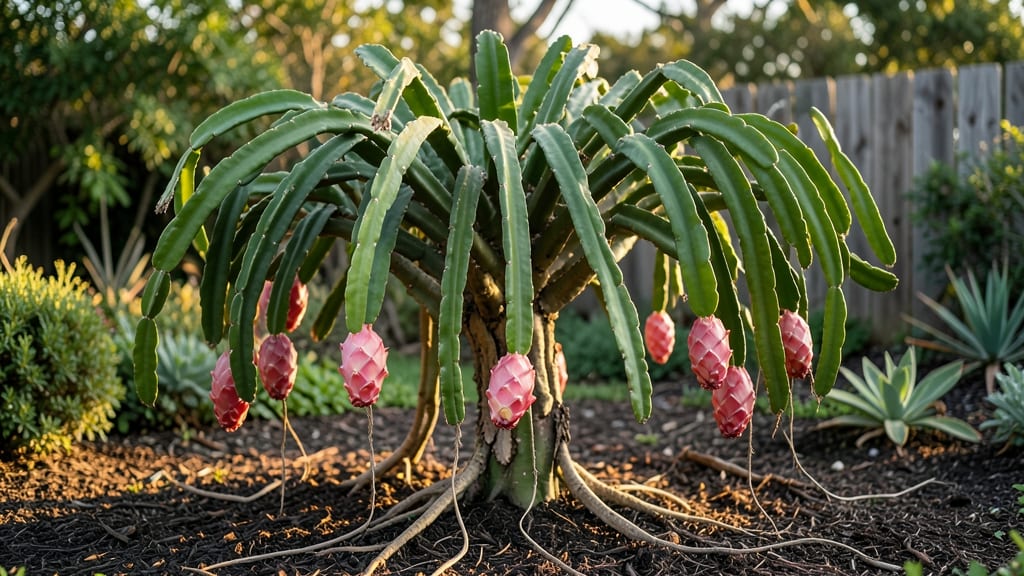
How tall does a dragon fruit tree grow? It can range anywhere from 6 feet to a towering 20 feet—depending on the variety, care, and growing conditions.
Wondering if your backyard can accommodate a dragon fruit tree’s towering growth? The height of these exotic plants varies dramatically by variety—and proper care can make the difference between a compact bush and a jungle giant.
Some varieties, like Hylocereus undatus, climb aggressively on trellises, while others stay bushier. Without pruning or support, a mature dragon fruit tree 🐉 might sprawl beyond your expectations, especially in warm climates like USDA zones 10-12.
In this guide, I’ll break down the height ranges by variety, how to control its growth, and the simple tricks to keep it manageable—whether you’re growing it in a pot or letting it reach for the sky.


Dragon fruit tree height by variety: dwarf vs. giant species compared
Dragon fruit trees (Hylocereus spp.) are famous for their striking pink and yellow fruits, but their growth habits can be just as impressive. Some varieties grow as climbing vines reaching 20 feet, while others develop into bushy shrubs under 10 feet.
The key difference? Genetics, pruning, and support structures determine whether your dragon fruit tree becomes a backyard giant or a manageable container plant.
If you're planning your garden layout, knowing these height variations helps you choose the right variety for your space. Hylocereus undatus, the most common type, typically grows 15-20 feet when given full sun and proper support.
Meanwhile, Hylocereus costaricensis (yellow-fleshed dragon fruit) tends to stay slightly shorter, around 10-15 feet, making it a better fit for smaller yards.
Here’s the hard truth: there are no true dwarf varieties of dragon fruit trees. However, with strategic pruning and container gardening, you can keep even the tallest varieties under control.
For example, regular tip pruning can reduce height by 30-50% while encouraging bushier growth and more fruit production.
| Variety | Common Name | Growth Habit | Mature Height (ft) | Best For |
|---|---|---|---|---|
| Hylocereus undatus | Pink Pitaya | Climbing vine | 15-20 ft | Large yards, trellises |
| Hylocereus costaricensis | Yellow Pitaya | Climbing vine | 10-15 ft | Balconies, small gardens |
| Hylocereus megalanthus | Queen of the Night | Bushy vine | 12-18 ft | Trellises, greenhouses |
| Hylocereus polyrhizus | White Pitaya | Climbing vine | 10-14 ft | Containers, patios |
| Selenicereus megalanthus | King of the Night | Climbing vine | 18-22 ft | Large gardens, pergolas |
Note: Heights can vary by climate, pruning, and support. Container-grown plants may stay 20-50% shorter than in-ground varieties.
Hylocereus undatus, the pink-skinned dragon fruit, is the tallest of the common varieties, often reaching 20 feet without pruning. This makes it ideal for large backyards or commercial farms where vertical space isn’t an issue. However, if you’re growing it in a container, expect it to max out around 8-10 feet with proper training.
On the other hand, Hylocereus costaricensis (yellow-fleshed dragon fruit) is naturally more compact, making it perfect for urban gardeners or those with limited space. Its bushier growth habit means it requires less aggressive pruning compared to its taller cousins.
For container gardening, this variety thrives in 5-gallon pots and can produce fruit within 18-24 months—much faster than larger varieties.
Pruning is non-negotiable if you want to control height. I recommend pruning back the main stem to encourage lateral branching, which creates a bushier, more manageable shape. For example, cutting the top 1-2 feet of a 10-foot vine can reduce its height by 3-5 feet while boosting fruit production. Just be sure to prune after harvest season
How to control dragon fruit tree height for small spaces
If your urban balcony or small greenhouse feels too cramped for a 20-foot dragon fruit tree, don’t worry—you can train it to stay compact!
These tropical vines naturally climb, but with the right pruning techniques and support structures, you can keep them at a manageable 6-10 feet without sacrificing fruit. The key is balancing growth while encouraging flowering, so your plant thrives in tight spaces.
For container gardening, choose dwarf varieties like Hylocereus undatus (yellow-fleshed dragon fruit), which max out at 8-10 feet with proper care. Even standard varieties can be pruned aggressively to stay under 12 feet.
The trick is to prune new shoots regularly and provide a sturdy trellis or cage to direct vertical growth upward instead of sprawling.
Step-by-Step Guide to Managing Dragon Fruit Height
- Step 1: Start with a dwarf variety or a grafted plant (they grow slower and stay smaller).
- Step 2: Install a trellis or cage at planting—use a 5-6 foot tall structure to limit vertical growth.
- Step 3: Prune aggressively in early spring—cut back overgrown branches by 1/3 to encourage bushier growth.
- Step 4: Train vines upward by tying them to the trellis with soft plant ties—never let them sprawl.
- Step 5: Fertilize lightly—use a low-nitrogen fertilizer (like 5-10-10) to promote flowering over leafy growth.
When pruning, always cut just above a leaf node to encourage new growth. Avoid over-pruning in fall or winter, as this can stress the plant. For container-grown dragon fruits, choose pots at least 15-20 gallons to accommodate root growth while keeping the plant compact.
Elevate containers to improve airflow and reduce humidity-related diseases.
If you’re growing in a greenhouse, monitor light exposure—too much shade can make the plant leggy. Use reflective surfaces or supplemental grow lights to keep it bushy. With these strategies, your dragon fruit can thrive in even the smallest spaces while still producing abundant, sweet fruit.
Remember, the goal isn’t to stunt growth but to guide it. A well-pruned dragon fruit tree in a container can produce just as many fruits as an unpruned one in the ground—it just won’t take over your yard! 🌱