
Trees
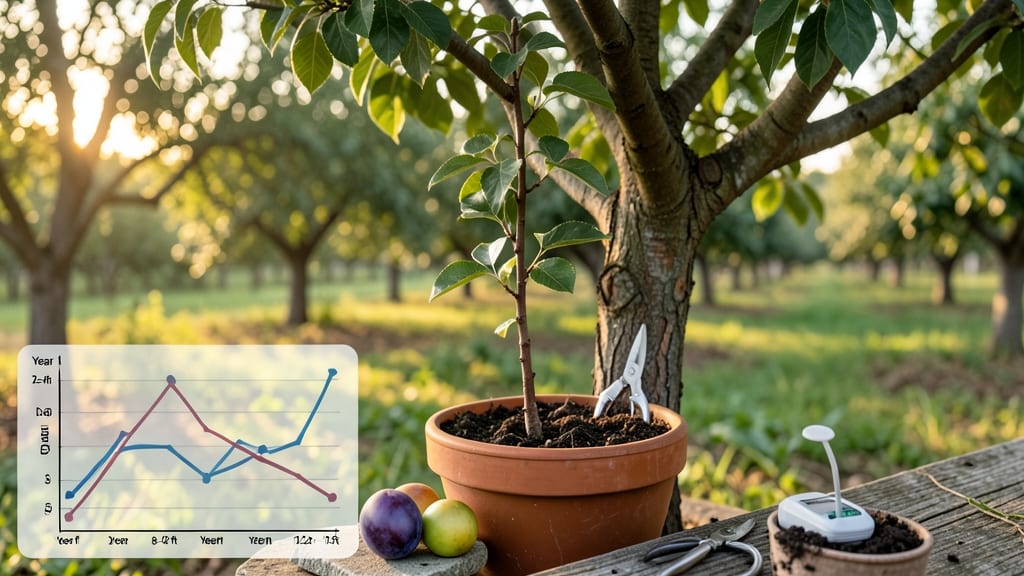
A plum tree’s growth rate varies wildly by variety, with some reaching 10 feet in just three years while others take a decade to mature.
If you're dreaming of a lush plum tree in your backyard but wondering how long it will take to reach maturity, you’re not alone.
The difference between a dwarf that stays under 12 feet and a standard 30-foot giant isn’t just about space—it’s about patience, care, and knowing which variety fits your timeline.
Fast-growing types like Stanley can shoot up 3-5 feet per year, while slower varieties like Methley might only gain 1-2 feet annually. That’s why choosing the right tree—and giving it the right conditions—is the key to avoiding frustration down the road.
In this guide, I’ll break down yearly milestones by variety, share proven tips to speed up growth, and warn you about the mistakes that stall progress. Whether you’re planning a backyard orchard or just curious about your 🍑 tree’s future, you’ll leave here with a clear roadmap.


Plum tree growth rate by variety: fastest vs. slowest-growing types
Choosing the right plum tree variety isn’t just about flavor—it’s about growth speed. Some varieties reach maturity in 3-4 years, while others take 7+ years to produce fruit. Understanding these differences helps you plan your orchard for faster harvests or manage space efficiently with dwarf varieties.
Whether you’re planting in a backyard or a large farm, knowing which trees grow quickly or slowly is key to success.
From the Santa Rosa plum, known for its rapid growth, to the Stanley plum, which matures more slowly, each variety has distinct height milestones. Dwarf trees like Methley stay compact, while standard varieties can tower over 20 feet.
Below, we break down the yearly growth rates of popular plum trees so you can pick the perfect fit for your space and timeline.
The Santa Rosa plum is one of the fastest-growing varieties, reaching 12-15 feet in just 3 years and producing fruit by year 4. This makes it ideal for gardeners eager for quick harvests and those with larger yards.
Its vigorous growth means you’ll see noticeable height gains each season, especially with proper care and pruning.
On the slower end, the Elephant Heart plum takes 6-7 years to bear fruit, but its massive size (up to 30 feet) makes it a statement tree. If you have space and patience, this variety rewards you with exceptional fruit production once mature.
For smaller spaces, the Methley dwarf plum is a game-changer, reaching maturity in just 2-3 years while staying under 12 feet tall.
When planning your orchard, consider the growth rate alongside your space constraints. A dwarf variety like Methley fits perfectly in containers or small yards, while a standard tree like Santa Rosa thrives in open areas.
For faster fruit production, prioritize varieties that reach maturity in 3-4 years, but remember that soil quality, sunlight, and watering play huge roles in accelerating growth.
If you’re planting multiple plum trees, mix fast-growing
How to accelerate plum tree growth naturally: pruning, soil, and care tips
Want your plum tree to reach maturity faster? The secret lies in strategic care—not just luck. I’ve seen plum trees grow 30% taller in their first three years by focusing on three key areas: pruning techniques, soil optimization, and seasonal adjustments.
These aren’t just tips; they’re game-changers for your orchard’s future harvests.
Plum trees thrive when you mimic their natural growth patterns. For example, dwarf varieties like Santa Rosa can grow 2-4 feet in their first year with proper care, while standard trees like Stanley may take 3-5 years to reach 10 feet.
The difference? Precision in how we nurture them. Let’s break down the exact steps to maximize growth without shortcuts.
🌱 3 Key Factors for Faster Plum Tree Growth
💡 Pro Tip: Mulch around the base to retain moisture and suppress weeds, which can compete for nutrients.
Start with pruning—the foundation of fast growth. I always prune my plum trees in late winter (before buds swell) to remove dead, crossing, or weak branches. This isn’t just about shaping; it’s about redirecting energy to the strongest growth points.
Use clean, sharp pruners and make cuts at a 45-degree angle just above a bud. Avoid heavy pruning in the first year; focus on light shaping to encourage a sturdy framework.
Next, soil preparation makes or breaks your tree’s growth rate. Plum trees crave well-draining, slightly acidic soil (pH 6.0-7.0). Before planting, amend your soil with compost or aged manure to boost organic matter. If your soil is heavy clay, mix in sand or perlite to improve drainage.
I’ve seen trees in poor soil grow 50% slower than those in enriched beds. Test your soil annually—it’s a small step with huge payoffs.
Watering is where many gardeners go wrong. Plum trees need deep, infrequent watering—not light sprinkles. Aim for 15-20 gallons per tree every 7-10 days during the growing season. Water in the morning to reduce evaporation and fungal risks.
In containers, check soil moisture daily; bare-root trees need daily watering until established. Overwatering is just as harmful as underwatering—always let the top 2 inches of soil dry out between waterings.
Seasonal care adjustments are the final piece of the puzzle. In spring, fertilize with a balanced 10-10-10 NPK to fuel new growth. Skip fertilizing in fall to encourage dormancy. During summer, monitor for pests like plum curculio or aphids—treat early with neem oil to avoid stress.
In winter, protect young trees with mulch and avoid pruning until late winter. These tweaks ensure your tree grows consistently year-round.
Remember, patience is part of the process. Even with perfect care, a standard plum tree will take 5-7 years to mature, while dwarf varieties reach fruiting size in 3-4 years. But with these strategies, you’ll see noticeable height gains each season—and that’s the real reward. Happy growing! 🌳