
Pruning
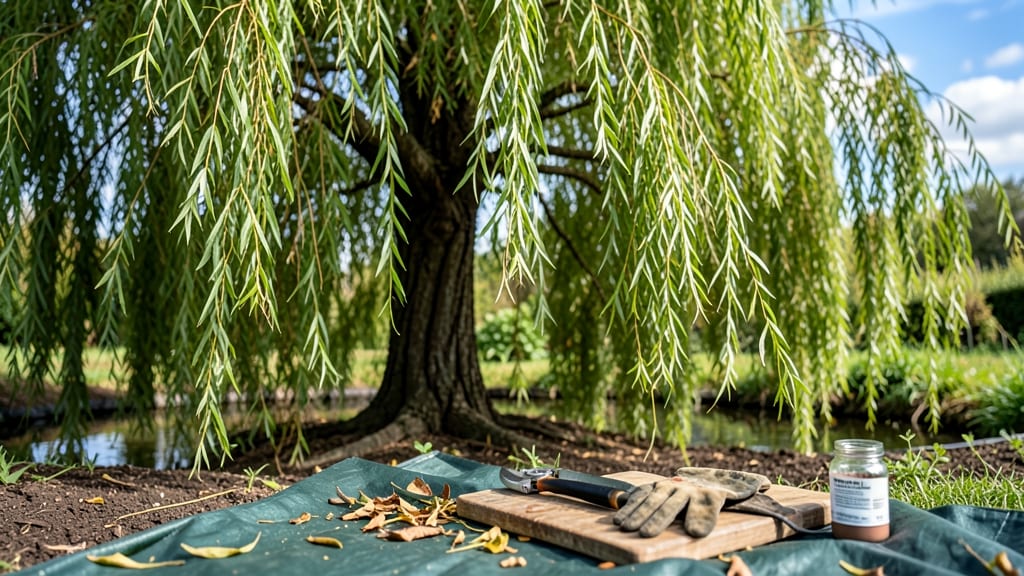
Mastering willow tree cutting turns tangled messes into vibrant, thriving growth with just a few precise snips. 🌿 I’ve learned that willows reward precision—too much pruning stunts them, but strategic cuts unlock their rapid growth potential. The key is working with their natural flexibility, not against it.
You’ll need sharp bypass pruners for clean cuts, a sturdy ladder (willows grow fast—up to 6 feet a year!), and a bucket for water if you’re propagating cuttings. Timing matters too: prune in late winter or early spring before new growth starts.
Willow sap flows heavily in spring, so seal larger cuts with pruning sealant to prevent disease.
What you’ll end up with is a tree that bounces back stronger, with fewer weak branches and more vibrant foliage. Proper cuts encourage new shoots for propagation or shaping, and you’ll avoid the common mistake of over-pruning, which stresses willows.
Think of it as sculpting with nature’s own pruners—every snip shapes the future.
This method works for both young trees and mature willows, though larger branches may need a chainsaw. The goal is balance: enough cuts to shape, but not so many that you slow their legendary growth. Ready to transform your willow from overgrown to thriving?
📚 In This Guide
- What you need
- Instructions
- Tips and common mistakes
- Wrapping up and next steps
What you need
- ● Pruning shears or loppers: Choose bypass pruners (for clean cuts) or anvil pruners (for thicker branches). A 10-12 inch pair is ideal for most willow branches.
- ● Pruning saw: A curved-tooth saw (8-10 inches) for cutting larger branches (2+ inches in diameter).
- ● Gloves: Heavy-duty, cut-resistant gloves (e.g., leather or Kevlar) to protect against thorns and rough bark.
- ● Safety glasses: ANSI-rated goggles to shield your eyes from debris.
- ● Ladder or stump: If your willow is tall (over 6 feet), a stable ladder or tree stump is a must. Ensure it’s rated for your weight.
- ○ Disinfectant (optional but recommended): 70% isopropyl alcohol or a pruning sealant to sterilize tools and prevent disease spread.
- ● Heavy-duty trash bags: 2-3 bags (30-gallon size) for collecting cuttings and debris.
- ● Rope or harness (for tall trees): A safety harness and static rope if working above 15 feet—willows can be unpredictable!
- ● Extension pole: A 10-12 foot pole saw for hard-to-reach branches.
- ● Tree wound dressing: Pruning paste (like Tanglefoot) to seal large cuts and reduce sap loss.
- ● Work boots: Steel-toe or composite-toe boots for extra foot protection.
- ● First aid kit: Just in case—willow branches can be sharp!
- ● Marking spray: Bright paint or chalk to mark branches for future reference.
Step-by-step guide to pruning willow trees for vibrant growth
Here's how I prune willows to keep them lush, strong, and free of weak branches.
✂️ Step 1: Choose the Right Time to Prune
Willows respond best when pruned in late winter or early spring, just before new growth begins. This timing prevents disease spread and lets the tree focus energy on healing before summer heat arrives. Avoid pruning during wet weather—fresh cuts in damp conditions invite fungal infections that will weaken the tree.
Look for bud swell on branches as your signal. When you see those tiny bumps forming along the stems, that's your cue. If you prune too early, the tree may produce weak, leggy growth. If you wait too long, you risk stressing the tree during its active growing season.
✂️ Step 2: Gather the Right Tools and Safety Gear
You'll need sharp pruning shears for small branches, loppers for 2- to 4-inch stems, and a pruning saw for anything thicker. I always sterilize my tools with rubbing alcohol before starting—willows are prone to bacterial infections like canker, and contaminated tools spread it fast.
Wear gloves and eye protection—willow branches are brittle and can snap back unexpectedly. Dress in long sleeves and pants too. The bark has tiny hairs that can irritate skin, and willows often grow near water where ticks or mosquitoes might lurk.
🌿 Step 3: Remove Dead, Diseased, or Weak Branches First
Scan the tree for dead branches (no leaves, dry or hollow when tapped) and diseased wood (discolored, oozing sap, or fungal growth). Cut these out first using a clean, upward cut just outside the branch collar—the swollen area where the branch meets the trunk. This ensures proper healing.
Next, look for weak or crossing branches—those growing toward the center of the tree or rubbing against others. Remove one of the two if they intersect, always cutting back to a healthy bud or lateral branch. You'll see stronger growth patterns emerge after these cuts.
☀️ Step 4: Thin the Canopy for Better Airflow
Willows naturally grow dense, so aim to open the canopy by 25-30% to improve airflow and sunlight penetration. Focus on branches growing inward or downward—these compete with stronger, upward-growing limbs. Cut these back to a lateral branch or bud facing outward.
Watch for water sprouts (fast-growing, vertical shoots) and suckers (shoots from the base). These drain energy from the main tree. Snip them at the base with clean cuts. You'll notice the tree's structure become more balanced and less prone to storm damage after this step.
⏰ Step 5: Shape and Maintain the Tree's Natural Form
Willows have a graceful, weeping habit, so avoid heavy shaping. Instead, prune to encourage the tree's natural silhouette by selectively removing branches that disrupt its flow. For multi-stemmed willows, thin out crowded stems to 3-5 strong leaders to prevent weak growth.
Finish by making final adjustments to any uneven cuts. Smooth jagged edges with a pruning knife if needed, but don't over-smooth—the branch collar should remain intact. Step back and admire your work—the tree should look open, airy, and ready to burst into fresh growth.
Tips & tricks for healthy willow tree pruning
Pruning willow trees properly ensures they stay vibrant and resilient for years. Here's what I've learned from years of working with these graceful trees.
Timing is Everything: The late winter to early spring window is critical because it aligns with the tree's natural dormancy period. This timing lets the tree heal before summer heat arrives. I've seen willows stressed when pruned during wet weather—fresh cuts attract fungal infections like canker, so always check the forecast. If you must prune in damp conditions, do it on a dry day and sterilize your tools thoroughly.
Tool Care Makes All the Difference: Sharp, sterilized tools prevent damage and disease spread. I keep a small bottle of rubbing alcohol in my toolkit to disinfect shears between cuts, especially when removing diseased branches. For larger branches, I use loppers for 2- to 4-inch stems and a pruning saw for anything thicker. Remember, dull tools crush branches instead of making clean cuts, which weakens the tree.
Focus on the Branch Collar: When removing branches, always cut just outside the branch collar—the swollen area where the branch meets the trunk. This ensures proper healing and prevents the wound from sealing improperly. I've made the mistake of cutting too close to the trunk, which can lead to slow healing or even dieback in willows. A clean cut at the right spot makes all the difference in long-term tree health.
Canopy Thinning Strategy: Aim to open the canopy by 25-30% to improve airflow and sunlight penetration. I focus on removing branches that grow inward or downward, as these compete with stronger upward-growing limbs. This step prevents future storm damage and reduces the risk of fungal diseases that thrive in dense, shaded areas. After thinning, the tree's structure becomes more balanced and visually appealing.
Pro Tips for Willow Tree Cutting
- Pruning willow trees properly ensures they stay vibrant and resilient for years.
- Timing is Everything: The late winter to early spring window is critical because it aligns with the tree's natural dormancy period.
- Tool Care Makes All the Difference: Sharp, sterilized tools prevent damage and disease spread.
Frequently asked questions
Got questions about cutting willow trees? You’re not alone! Here are some of the most common concerns—plus straightforward answers to help you prune like a pro.
When is the best time to cut back a willow tree?
The ideal time to prune willow trees is late winter or early spring, just before new growth begins. Avoid cutting in fall or summer, as this can stimulate weak, disease-prone shoots. For weeping willows, prune after flowering (late spring) to avoid removing next year’s blooms.
How much can I trim a willow tree without harming it?
Willows are resilient but don’t overdo it—never remove more than 25-30% of the canopy in a single year. For young trees, light pruning (10-15%) encourages strong branching. Mature willows can handle heavier cuts, but avoid "topping" (cutting back to stubs), which stresses the tree and invites pests.
Do I need special tools to cut a willow tree?
Yes! Willow branches are often flexible and slippery, so use:
- Loppers or pruning saws for thicker branches (2"+ diameter).
- Bypass pruners for smaller cuts (avoid anvil pruners—they crush willow bark).
- Gloves and safety goggles (willows can bleed sap and have sharp thorns).
- Rope or a 3rd hand to stabilize branches before cutting.
What should I do if my willow tree keeps sprouting new shoots from the base?
Willows are aggressive regrowers—if you see unwanted suckers, cut them at the base (just above soil level) and apply a barrier of landscape fabric or mulch to prevent new growth. For persistent suckers, consider root pruning (digging around roots) or using a hormone root inhibitor (like RootOne).
Can I cut a willow tree in the fall, or will it die?
Pruning willows in fall or winter isn’t fatal, but it weakens the tree and increases disease risk. If you must prune late, do so after leaf drop (November) and keep cuts clean. Spring is always safer—willows heal faster when energy is focused on new growth.
How do I stop my willow tree from bleeding sap after cutting?
Willows bleed heavily when pruned in warm weather. To minimize sap loss:
- Prune in cool weather (below 60°F).
- Use sealant (like pruning paint) on large cuts (1"+ diameter).
- Avoid topping—clean cuts heal better than jagged ones.
Wrapping up and next steps
Cutting and pruning your willow tree doesn’t have to be intimidating—with the right tools, timing, and techniques, you can encourage lush growth and strong branches while keeping your tree healthy and safe.
Remember, willows thrive on regular maintenance, so stay consistent, and don’t hesitate to ask for help if the task feels overwhelming.
Ready to take the next step? Mark your calendar for late winter or early spring, gather your supplies, and roll up your sleeves! Your willow tree—and your future shade—will thank you. 🌿✨