
Pruning
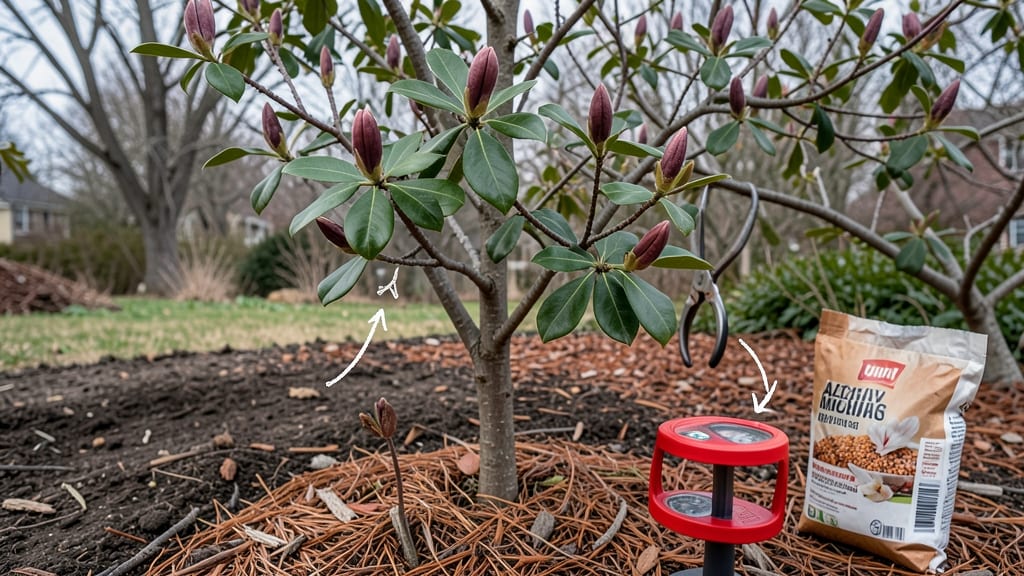
Why doesn’t my magnolia tree flower? That silence speaks volumes—no blooms mean something’s off. 🌸 I’ve spent years watching these trees, and the most common reasons are age, light, or pruning mistakes that disrupt their delicate balance. The good news? Most issues have simple fixes, and you might just be one season away from that dreamy spring display.
Young trees under 10 years old often skip flowering—they’re still growing roots and structure. Poor light (too much shade or harsh afternoon sun) stresses them, while over-pruning cuts off next year’s buds.
Even soil that’s too wet or nutrient-poor can send energy underground instead of into flowers. The first step? Check your tree’s age, location, and last pruning date.
With the right adjustments, you’ll see buds forming within 1-2 seasons. Start by mapping sunlight exposure, adjusting watering, and pruning only when necessary. The payoff? A canopy of fragrant blooms that outshines any store-bought bouquet. Let’s troubleshoot what’s holding yours back.
For stubborn cases, consult a local arborist—sometimes pests or disease lurk beneath the surface. But in 90% of cases, light, age, or pruning are the culprits. Your magnolia’s flowering future is closer than you think.
Why it happens
If your magnolia tree is throwing a "no-show" on the flowers, don’t panic—it’s usually a mix of biology, environment, or even a little neglect. Magnolias are finicky but forgiving, and understanding the why behind their silence is half the battle.
Let’s break down the most common reasons your tree might be holding back those stunning blooms, backed by science and actionable fixes.
🌱 Age Matters: Patience Is a Virtue
Magnolias are slow growers, and some varieties—like the Magnolia grandiflora (Southern magnolia)—don’t even think about flowering until they’re 10 to 15 years old.
Others, such as Magnolia stellata (star magnolia), may bloom earlier (around 5–7 years), but their first flowers are often sparse. Why? Trees prioritize root and foliage growth before devoting energy to reproductive structures like flowers.
Think of it as a teenager saving up for a car instead of blowing cash on fun.
💡 Pro Tip: If your tree is young (<10 years), resist the urge to prune aggressively. Over-pruning can delay flowering even further by stressing the tree. Focus on light, soil, and water instead—these are the real accelerants for maturity.
☀️ Light Starvation: The Silent Flower Killer
Magnolias are light-hungry plants, and too little sun is a top reason they skip the bloom party. Most magnolias need 6 to 8 hours of direct sunlight daily, though some varieties (like Magnolia 'Black Tulip') tolerate partial shade. Why does light matter? Photosynthesis fuels flower production.
Without enough sunlight, the tree redirects energy to survival—think of it like a student cramming for finals instead of joining the debate team.
📊 Light Requirements by Type:
Magnolia Type
Ideal Sunlight
Signs of Light Stress
Magnolia grandiflora (Southern magnolia)
Full sun (6+ hours)
Sparse, yellowing leaves; no blooms
Magnolia stellata (Star magnolia)
Partial shade to full sun
Leggy growth, small leaves
Magnolia 'Jane' (Saucer magnolia)
Full sun to partial shade
Delayed or no blooms; weak stems
🔥 Fix It: If your tree is in shade, consider thinning nearby branches or transplanting it to a sunnier spot. Just be cautious—magnolias hate transplant shock, so do it in early spring or fall.
✂️ Pruning Gone Wrong: The Overzealous Mistake
Pruning is a double-edged sword for magnolias. Done correctly, it encourages blooms; done poorly, it stops them in their tracks. The biggest offenders? Pruning at the wrong time or cutting back too much. Here’s why it backfires:
- Timing: Magnolias set flower buds in late summer to early fall (for spring blooms) or spring to early summer (for summer/fall blooms). Pruning after buds form removes next year’s flowers. Oops.
- Over-pruning: Cutting back more than 25% of the canopy stresses the tree, diverting energy away from blooms. It’s like telling a chef to halve their ingredients—the result? A sad, flavorless dish.
- Topping or shearing: This brutal pruning method turns magnolias into flowerless shrubs. Always prune to open the canopy and encourage airflow, not to shape it like a topiary.
🌡️ Correct Pruning Window:
- ✅ Right after flowering (for spring bloomers like M. grandiflora)
- ✅ Late winter/early spring (before buds swell, for summer bloomers like M. 'Ann')
- ❌ Never prune in fall (buds form then!)
🎯 How to Prune for Blooms:
- 🔪 Remove dead, diseased, or crossing branches first.
- 🌿 Thin out crowded areas to improve airflow (but never remove more than 25% of the canopy).
- 🌱 Shape naturally—avoid shearing. Use hand pruners for small branches and loppers for thicker stems.
💧 Water and Nutrient Imbalances: The Hidden Drain
Flowering is an energy-intensive process, and your magnolia needs the right fuel to pull it off. Two common culprits:
- Underwatering or drought stress: Magnolias have shallow but extensive root systems. Dry soil forces the tree into survival mode, delaying blooms. Signs: Wilting leaves, crispy leaf edges, or soil pulling away from the pot (if container-grown).
- Over-fertilizing (especially with nitrogen): Too much nitrogen = leafy monster, no flowers. Nitrogen pushes vegetative growth, while phosphorus and potassium support blooming. It’s like eating only candy—you’ll get a sugar rush, but no lasting energy.
🥗 Nutrition Fixes:
- 📊 Test your soil (pH should be 4.5–6.5 for most magnolias). Acidic soil (pH <5) can lock out nutrients.
- 💪 Fertilize in early spring with a balanced 10-10-10 or bloom-boosting 5-10-10 (higher phosphorus). Avoid high-nitrogen fertilizers like 12-6-6.
- 💧 Water deeply 1–2 times per week (more in extreme heat). Mulch with 2–3 inches of organic mulch (like pine bark) to retain moisture.
✨ Bonus: A slow-release granular fertilizer in spring can provide steady nutrients without the risk of overfeeding.
🐞 Pests and Diseases: The Silent Saboteurs
Unseen invaders can drain your tree’s energy, leaving it too weak to flower. Common culprits:
- Magnolia scale: These sap-sucking insects coat branches in a white, waxy residue, stunting growth. Heavy infestations force the tree to divert energy to repair.
- Root rot (Phytophthora): Too much moisture or poor
Revive Your Magnolia’s Bloom
If your magnolia tree is stubbornly refusing to flower, don’t despair—most issues have simple fixes. The key is identifying the root cause (like age, light deprivation, or poor pruning) and taking targeted action.
Below, we break down practical solutions for each common problem, plus tips to keep your magnolia blooming beautifully for years.
Young magnolias often take 3–10 years to mature enough to flower. If yours is still bare, patience is key—but you can speed things up with these steps:
- 🔥 Boost Nutrients for Growth
- Apply a balanced, slow-release fertilizer (10-10-10 or 8-3-9) in early spring before new growth appears.
- Pro Tip: Magnolias love organic matter! Mix compost or aged manure into the soil around the base to improve root health. 💡
- 🌡️ Optimize Winter Chill
- Most magnolias need 200–600 hours of temperatures below 45°F (7°C) to trigger blooming.
- If your climate is too mild, simulate winter chill by lightly covering the tree with frost cloth during cold snaps (but remove it by day to avoid heat stress).
- 🌿 Encourage Root Development
- Water deeply once a week (unless rain is frequent) to establish strong roots. Overwatering can suffocate roots, so ensure the soil drains well—amend clay soil with perlite or sand.
Magnolias crave full sun (6+ hours/day) to produce flowers. If yours is in shade, follow these steps:
- 🍳 Relocate or Thin Overhead Canopy - If possible, move the tree to a sunnier spot (young trees transplant best in early spring). - For established trees, prune nearby shade trees (like oaks or pines) to increase sunlight exposure.
Use sharp pruning shears to make clean cuts just above a bud or branch collar. ⏰
- 🌿 Adjust Mulch & Soil
- Remove thick mulch layers (more than 2–3 inches) that block sunlight from reaching the trunk.
- Test soil pH—magnolias prefer slightly acidic soil (pH 5.0–6.5). If yours is alkaline, amend with sulfur or peat moss.
- 💡 Quick Fix for Partial Shade
- If relocating isn’t an option, plant sun-loving companions (like dwarf crape myrtles or ornamental grasses) nearby to reflect light onto the magnolia.
Over-pruning or cutting at the wrong time can delay—or even prevent—flowering. Here’s how to correct common errors:
- 👨🍳 Prune at the Right Time
- Never prune in late summer or fall—this removes next year’s flower buds (which form in summer).
- Best time: Late winter or early spring (just as buds swell but before leaves emerge). For heavy pruning, do it immediately after flowering.
- 🔪 Fix Over-Pruned Branches
- If you’ve accidentally trimmed too much, avoid drastic cuts—focus on selective thinning to open the canopy.
- For dead or crossing branches, cut back to a healthy bud or lateral branch (never leave stubs).
- 🌿 Stimulate New Growth
- After pruning, apply a root stimulator (like liquid seaweed extract) to encourage recovery.
- Pro Tip: Avoid topping (cutting the main stem)—this stresses the tree and reduces blooms. ✨
Extreme heat, drought, or transplant shock can halt flowering. Try these remedies:
- 💧 Hydrate Deeply in Drought
- Water slowly and deeply (1–2 inches per week) to encourage deep root growth. Use drip irrigation to avoid wetting leaves (which can cause fungal issues).
- 🌿 Shield from Scorching Sun
- In hot climates, provide afternoon shade with a lightweight shade cloth (30–50% coverage) during peak heat (12–4 PM).
- 💪 Recover from Transplant Shock
- If recently planted, mulch heavily (3 inches of wood chips) to retain moisture and fertilize lightly with a low-nitrogen formula (5-10-10) to reduce stress.
With these targeted fixes, your magnolia should start blooming within 1–3 years (depending on the issue). For long-term success, monitor light, soil, and pruning habits—and enjoy those fragrant flowers for decades! 🌸
Frequently asked questions
How do I know if my magnolia tree is too young to flower?
Most magnolia varieties need 5-15 years to mature enough for blooms. Southern magnolias (Magnolia grandiflora) often wait until 10-15 years, while star magnolias (Magnolia stellata) may bloom at 5-7 years. Look for thick trunk growth and established root systems—these are better indicators than age alone.
Can I force my magnolia to bloom faster?
While you can't rush maturity, you can optimize conditions to encourage earlier flowering. Focus on full sun exposure (6+ hours/day), proper pruning timing (never after buds form), and balanced fertilization (higher phosphorus like 5-10-10). For young trees, ensure they get 200-600 hours of winter chill below 45°F—this triggers bloom formation.
What should I do if my magnolia only has leaves but no buds?
Check for these common issues: light deprivation (move to sunnier spot), over-pruning (avoid cutting after summer), or nutrient imbalance (test soil pH and fertilize with phosphorus-rich formula). Also inspect for pests like magnolia scale—these sap-suckers drain energy from bud formation.
Is it normal for my magnolia to have flowers one year and none the next?
Yes! Many magnolias bloom every other year as a natural energy conservation strategy. Stress factors like drought, poor soil, or heavy pruning can also cause skipped seasons. Focus on consistent care—healthy trees often rebound with spectacular displays after a "rest year."
When should I call an arborist about my non-flowering magnolia?
Consult a professional if you've ruled out common issues (age, light, pruning) and suspect disease (like root rot), severe pest infestations, or soil toxicity. Signs to watch for include oozing bark, sudden leaf drop, or fungal growth. Arborists can diagnose hidden problems like girdling roots or nutrient deficiencies through soil testing.