
How To
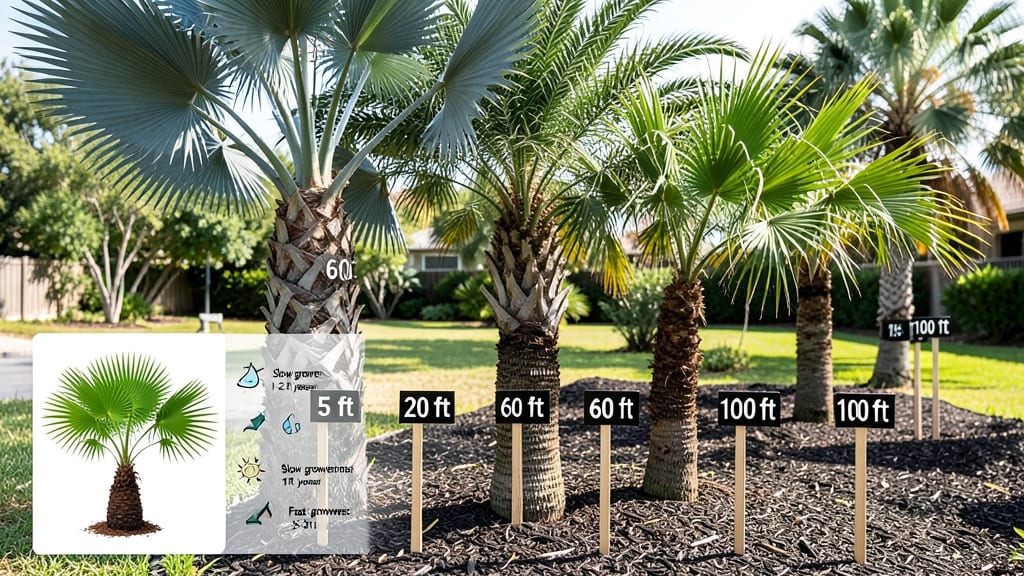
How tall can a palm tree grow? The answer will leave you in awe—some species reaching over 100 feet under ideal conditions, while others stay compact enough for suburban yards.
If you’ve ever dreamed of a tropical paradise in your backyard—or simply want to know which palm trees can tower over your home—you’re in the right place. Palm trees aren’t just decorative; some species grow tall enough to rival skyscrapers, while others stay manageable for suburban landscapes.
From the towering coconut palms that dominate coastal regions to the elegant royal palms that grace Mediterranean gardens, height varies wildly by species. Climate, soil quality, and sunlight all play a role in how fast and tall they grow.
Below, I’ll break down the fastest-growing varieties, their sky-high limits, and how you can encourage healthy growth—whether you’re aiming for shade or a dramatic focal point.


Tallest palm tree species and their maximum heights
If you’re considering adding a palm tree to your landscape, you might be surprised to learn that some species can grow taller than a 10-story building. The world’s tallest palm trees reach heights of 200 feet or more in ideal conditions, while others remain compact enough for suburban yards.
Understanding these differences helps you choose the right species for your space and climate.
Palm tree height depends on several factors, including genetics, sunlight exposure, soil quality, and water availability. Tropical climates with warm temperatures year-round create perfect conditions for rapid growth, while cooler regions may limit height potential.
Some species, like the coconut palm, thrive in coastal areas, while others, such as the date palm, prefer arid environments.
Below, I’ve compiled a comparison of the tallest palm tree species and their maximum heights, along with key details to help you decide which one fits your landscape goals. Whether you want a towering tropical giant or a more manageable variety, this guide covers it all.
| Palm Species | Max Height (ft) | Growth Rate (ft/year) | Ideal Climate | Notes |
|---|---|---|---|---|
| Cocos nucifera (Coconut Palm) | 100+ ft | 3-5 ft | Tropical coastal | Fast-growing; thrives in sandy soil near oceans. |
| Roystonea regia (Royal Palm) | 60-100 ft | 2-4 ft | Tropical/subtropical | Iconic; drought-tolerant once established. |
| Phoenix dactylifera (Date Palm) | 80-100 ft | 1-3 ft | Arid desert | Edible fruit; cold-sensitive below 15°F. |
| Archontophoenix cunninghamiana (Bangalow Palm) | 60-80 ft | 2-3 ft | Subtropical | Cold-hardy to 18°F; great for urban landscapes. |
| Washingtonia filifera (California Fan Palm) | 50-80 ft | 1-2 ft | Arid/semi-arid | Drought-resistant; thrives in USDA zones 8-11. |
| Syagrus romanzoffiana (Queen Palm) | 30-50 ft | 1-2 ft | Tropical/subtropical | Versatile; adaptable to urban environments. |
The coconut palm stands out as the tallest, often exceeding 100 feet in its native tropical habitats. If you’re in a coastal region with warm temperatures, this species can create a dramatic focal point. However, its massive size makes it unsuitable for small yards or containers.
For those in subtropical climates, the royal palm and bangalow palm offer a balance between height and manageability. Both can reach 60-80 feet but grow at a steady pace, making them ideal for larger properties. Their cold tolerance also extends their range beyond purely tropical zones.
If you’re in a drier climate, like the Southwest U.S., the date palm and California fan palm are excellent choices. These species thrive with minimal water and can still achieve impressive heights of 50-100 feet. Their drought resistance makes them low-maintenance options for arid landscapes.
For smaller spaces, consider the queen palm, which tops out at 30-50 feet. It’s one of the most adaptable palms, tolerating urban pollution and a variety of soil types. This makes it a popular choice for suburban backyards and city streetscapes where space is limited
Fastest-growing palm trees for quick vertical growth
If you're craving instant tropical drama in your landscape, some palm trees deliver rapid vertical growth that can transform your yard in just a few years.
These speedy growers reach mature heights faster than their slower counterparts, making them perfect for privacy screens, shade solutions, or bold focal points. Let’s explore the top 5 fastest-growing palm species that will have your neighbors asking how you did it!
What sets these palms apart isn’t just their height—it’s their growth rate. While most palms take decades to reach their full potential, these varieties can add 5-10 feet per year under ideal conditions.
That means a 10-foot palm could become a 30-foot statement piece in just three years! The key lies in their tropical origins, which thrive in warm climates with abundant sunlight and moisture.
- 1 Coconut Palm (Cocos nucifera) – Grows 6-12 feet per year in perfect conditions, reaching 60-100 feet in 10-15 years. Loves coastal climates with high humidity.
- 2 Mediterranean Fan Palm (Chamaerops humilis) – The fastest cold-hardy option, adding 2-4 feet annually and topping out at 15-20 feet in 5-7 years. Thrives in USDA Zones 8-11.
- 3 Pygmy Date Palm (Phoenix roebelenii) – Compact but aggressive grower, reaching 6-10 feet in 3-5 years with 3-5 feet per year growth. Perfect for containers or small yards.
- 4 California Fan Palm (Washingtonia filifera) – Grows 3-6 feet per year, hitting 50-75 feet in 10-15 years. Drought-tolerant once established, ideal for arid climates.
- 5 Mexican Blue Palm (Brahea armata) – Adds 2-4 feet annually, reaching 30-40 feet in 7-10 years. Drought-resistant and low-maintenance for desert landscapes.
For maximum growth speed, prioritize full sun exposure (6+ hours daily) and well-draining soil mixed with compost. Deep watering 2-3 times per week during the first year helps establish strong roots, while balanced fertilizer (like 8-3-9 NPK) applied every 6-8 weeks keeps them fueled.
Avoid overwatering—root rot is a common killer of fast-growing palms!
Pro tip: If you’re planting for privacy or shade, space your palms 10-15 feet apart to allow their canopies to fill in quickly. In just 3-5 years, you’ll have a lush, tropical barrier that feels like a vacation getaway.
Just remember, even the fastest growers need patience and proper care to reach their full potential.
Whether you’re dreaming of a coastal retreat vibe or just want to outpace your neighbors’ growth, these speed-demon palms deliver results faster than you’d expect. Start with a young sapling in spring, and watch your vertical garden take off!