
Size
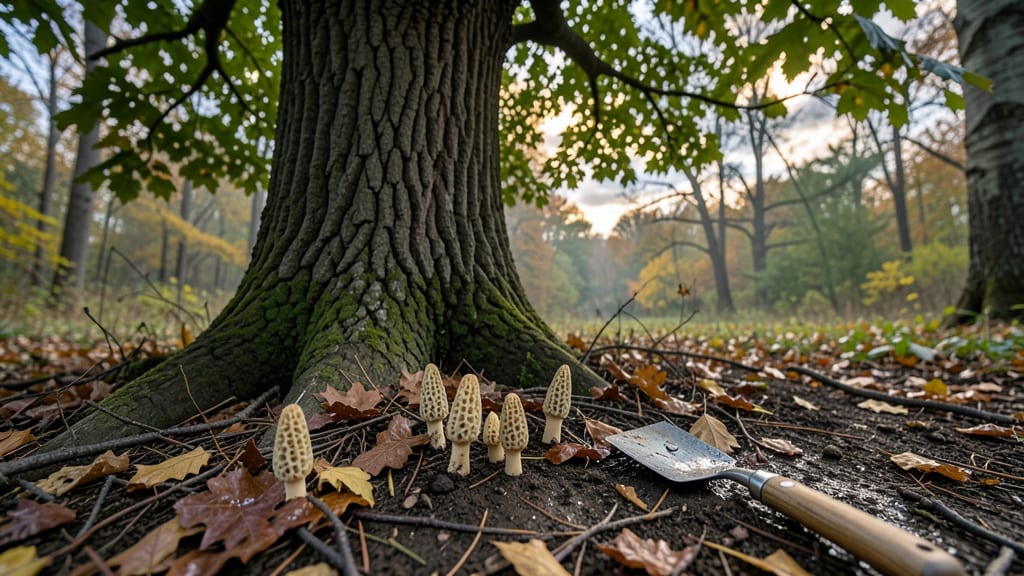
Morel mushrooms grow by specific trees like ash, apple, elm, and sycamore, thriving in rich, moist soil near decaying wood or roots. They favor mature forests with leaf litter and partial sunlight, often appearing in spring after rain.
Morels have a fascinating relationship with certain hardwood trees, forming a delicate balance where the fungi rely on the tree's decaying nutrients while contributing to soil health. 🌳 The most productive hunting grounds often involve trees like black cherry, paper birch, and even hackberry, which create microclimates perfect for morel growth.
Unlike some mushrooms that spread randomly, morels cluster near these host trees, making them easier to locate once you know what to look for in wooded areas.
What sets these trees apart isn't just their species but their health status - morels particularly thrive near dying or recently dead trees where the wood is breaking down. This decaying process releases nutrients that morels need to grow, while the tree's root system provides moisture regulation.
The key is finding these trees in areas with consistent moisture but good drainage, as waterlogged conditions will stunt their growth.
💡 In This Article
- Morel Mushroom Tree Hosts: Science Behind Symbiotic Relationships
- Best Trees for Morel Hunting: 12 Ideal Host Species and Locations
Morel mushroom tree hosts: science behind symbiotic relationships
Morels don't just grow near trees—they form a complex relationship with specific hardwood species through a process called mycorrhizal association. These fungi attach to tree roots, exchanging nutrients: the morel receives carbohydrates from the tree, while it helps break down decaying wood into simpler compounds that enrich the soil.
The trees that host morels often have shallow root systems, allowing the fungi to access their nutrients more easily. For example, ash trees (a top morel host) produce compounds during decay that morels metabolize into growth-promoting sugars.
The decaying wood chemistry is where the magic happens. When a tree like apple or sycamore begins to rot, it releases cellulose and lignin—complex carbohydrates that morels specialize in breaking down. This process creates a nutrient-rich zone in the soil where morels thrive.
The pH of this microhabitat typically ranges between 5.5 and 7.5, slightly acidic to neutral, which morels prefer over alkaline soils. Moisture levels also play a critical role: the decaying wood retains water like a sponge, providing the consistent hydration morels need to fruit.
Tree species influence more than just nutrients—they affect growth patterns too. Morels growing under ash trees, for instance, often appear in larger clusters due to the tree's extensive root network, while those near paper birch tend to be more scattered.
The tree's bark texture matters too: rough-barked species like hackberry create microclimates that trap humidity, while smoother-barked trees like elm allow better air circulation. This is why you'll find morels in different formations depending on their host tree.
Seasonal timing ties directly to tree biology. Most morel hosts drop leaves in autumn, and their roots begin decaying over winter. When spring rains arrive, this decay accelerates, releasing nutrients that trigger morel fruiting.
The tree's age also matters: mature trees (30+ years old) have more decaying roots, while younger trees are less productive. This is why experienced foragers target old-growth forests or orchards with established trees.
What most people overlook is the tree's health status. Morels rarely grow under completely healthy trees—they prefer those in decline or recently dead, where decay is active but not yet advanced to the point of becoming sterile.
This "goldilocks zone" of partial decay creates the perfect conditions for morel mycelium to colonize. The tree's natural defense compounds (like tannins in oak) can even signal morels to grow nearby, creating a chemical attraction.
Consider this: a single ash tree might support morel growth for decades because its decaying roots provide a renewable nutrient source. Meanwhile, a freshly cut sycamore stump could produce a morel "flush" within just 2-3 years as it begins decomposing.
This dynamic relationship explains why morel hunters return to the same trees year after year—the fungi and trees have established a reliable partnership.