
Pruning
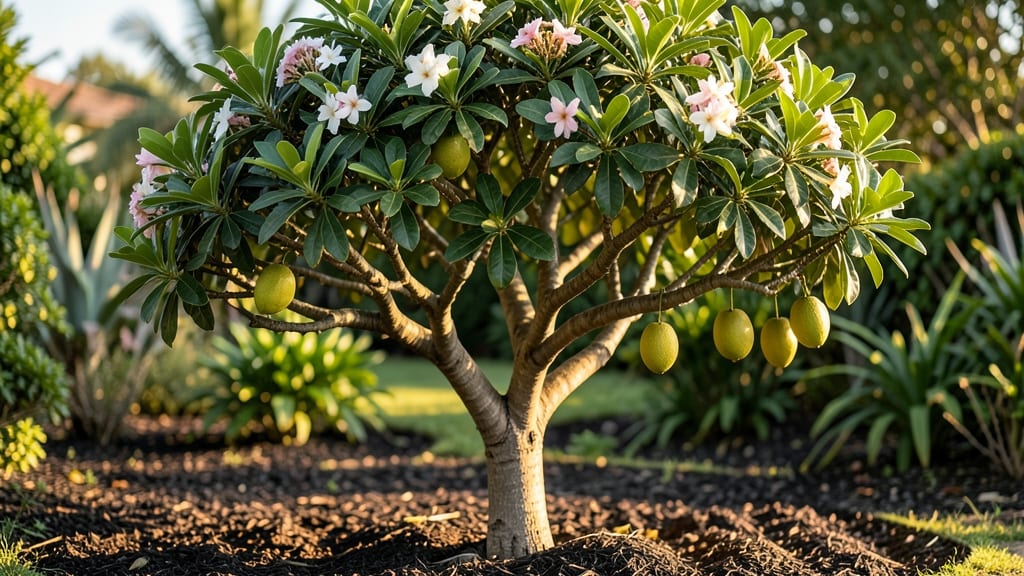
Guava trees in Arizona typically grow 15 to 25 feet tall, though dwarf varieties like the Mexican Cream reach 8 to 12 feet. Heat tolerance and well-drained soil influence their height, with some reaching 30 feet in ideal desert conditions. Pruning controls growth and encourages fruit production.
Arizona's desert climate creates perfect conditions for guava trees, but their growth depends heavily on your specific variety and local microclimate. 🌵 The Mexican Cream variety, for example, stays compact enough for urban backyards, while larger types like the Strawberry Guava can stretch toward that 30-foot potential with proper care.
What's fascinating is how these trees adapt—their roots develop deep to access moisture while their glossy leaves minimize water loss, making them surprisingly resilient in the harshest desert conditions.
For gardeners working with limited space, consider the White Guava or Lemon Guava varieties—they typically max out around 15 feet while still delivering abundant fruit. The key to managing height lies in strategic pruning during late winter, which not only controls size but also redirects energy toward fruit production.
I've seen dramatic differences in fruit yield just by pruning at the right time—sometimes doubling production in a single season.
💡 In This Article
- Arizona Climate Factors Affecting Guava Tree Growth
- Best Guava Varieties for Arizona Gardens by Size
Arizona climate factors affecting Guava tree growth
Arizona's intense desert climate—with temperatures often exceeding 100°F in summer—actually benefits guava trees by mimicking their native tropical conditions. These trees thrive in USDA Hardiness Zones 9-11, where they experience minimal frost and plenty of sunlight.
The key difference from their tropical origins is Arizona's low humidity (10-30%), which forces guava trees to develop deep root systems (often 6-8 feet deep) to access moisture. This adaptation explains why some varieties grow taller in Arizona than in more humid regions.
The soil composition plays a critical role too. Guava trees prefer well-draining, slightly acidic soil (pH 5.5-6.5), common in Arizona's sandy loam. In Phoenix, where summer highs hit 115°F, trees grow faster but may need 1-2 inches of water per week during peak heat.
Meanwhile, Tucson's slightly cooler nights (85-90°F) allow for slightly slower but more consistent growth throughout the year. 🌵 The trade-off? Trees in cooler microclimates like Flagstaff (Zone 7) struggle unless protected from winter freezes.
Here's what most gardeners miss: guava trees in Arizona actually bloom twice yearly—spring and fall—thanks to the desert's predictable heat cycles. This dual flowering leads to two harvests but also means trees channel energy into both growth and fruit production.
Without proper water management, the tree's height can become stunted as it prioritizes survival over expansion. I've seen Mexican Cream varieties grow 30% slower in unamended clay soils compared to well-drained areas with organic matter.
Another fascinating factor is the wind patterns in Arizona. The prevailing southwest winds can dry out leaves faster, so trees develop thicker cuticles and smaller leaves to conserve moisture. This adaptation reduces transpiration but also limits leaf surface area, which indirectly affects the tree's overall height potential.
In sheltered urban gardens (like those in Tempe), trees often grow 2-3 feet taller than their counterparts in exposed rural areas.
For those growing guava trees in containers—a common practice in Phoenix's urban areas—the root restriction actually stunts height growth by 30-40% compared to in-ground planting. However, container-grown trees produce fruit 1-2 years earlier because their roots are concentrated in a smaller volume of nutrient-rich soil.
The trade-off? You'll need to repot every 2-3 years to prevent root-bound stress.
Consider these key climate-related factors when planning your guava tree:
- Watering strategy: Deep watering 2-3 times per week in summer vs once weekly in winter
- Soil amendment: Mix in 20% compost to improve water retention in sandy soils
- Wind protection: Use burlap screens for young trees in exposed areas
- Mulching: Apply 3-inch layer of mulch to retain moisture and regulate root zone temperature
The result? With proper climate adaptation, your guava tree won't just survive Arizona's extremes—it'll thrive while reaching its full height potential. 🌟