
Flowers
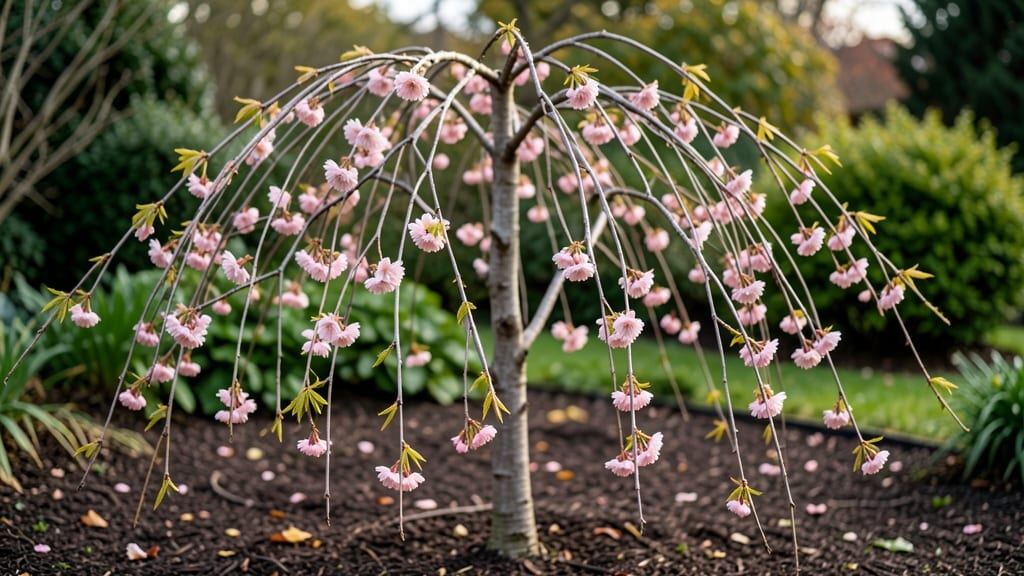
That weeping cherry tree with its pink flowers hanging over your patio is the kind of garden magic that makes neighbors pause and take photos. 🌸 Weeping cherry trees don’t just look like spring—they are spring, year after year, even when other trees have gone dormant.
The secret lies in how you place them: not just as a standalone specimen, but as the centerpiece of a layered design that makes every season feel intentional.
Picture this: the tree’s delicate branches draped over a sunken seating area, where the flowers spill like confetti onto a bed of hostas or ferns below.
Around its base, low-growing azaleas or Japanese forest grass catch the dappled shade, while climbing roses on a nearby arbor echo the pink theme in summer. The contrast of dark green leaves against the blossoms creates drama, and the tree’s graceful habit softens sharp edges in modern landscapes.
What you’ll end up with is a year-round focal point—spring’s blush, summer’s shade, and autumn’s fiery foliage—all while attracting pollinators like crazy. The flowers even make stunning cut branches for indoor arrangements, so you get double the impact.
For small spaces, a dwarf variety in a large container becomes a living sculpture that moves with the breeze.
Pro tip: Pair with white mulch to make the pink pop, and add string lights for evening ambiance. Whether it’s a courtyard, garden corner, or even a street-side planting, this tree turns ordinary spaces into cinematic backdrops. Let’s make yours unforgettable.
📚 In This Guide
- What you need
- Instructions
- Tips and common mistakes
- Wrapping up and next steps
What you need
- ● Weeping cherry tree (Prunus serrulata 'Kwanzan' or similar) – Choose a 1- to 3-gallon container-grown tree for easier handling (avoid bare-root unless experienced).
- ● High-quality potting soil or native soil mix – 5+ cubic feet, amended with compost (20% by volume) for drainage and nutrients.
- ● Organic mulch (shredded bark or wood chips) – 2–3 inches, enough to cover the root zone (avoid direct contact with the trunk).
- ● Slow-release fertilizer (10-10-10 or balanced formula) – 1–2 lbs per tree, applied at planting time.
- ○ Tree stake (optional but recommended for young trees) – 1–2 stakes, 1–1.5 inches in diameter, and soft tree tie (not wire!).
- ● Shovel or spade – For digging the planting hole (width should be 2–3x the root ball).
- ● Garden trowel – For adjusting soil around roots.
- ● Wheelbarrow or bucket – To mix soil amendments.
- ● Watering can or hose with nozzle – For deep watering (1–2 gallons per watering session).
- ● Pruning shears (sterilized) – To trim any damaged branches post-planting.
- ● Gloves and knee pads – Because gardening is hard work! 😉
- ● Sunlight – Full sun (6+ hours daily) for optimal blooms.
- ● Well-draining soil – Cherry trees hate soggy roots! Test soil pH (ideal: 6.0–7.0).
- ● Space – Mature trees need 15–25 feet of clearance (wider for weeping varieties).
- ● Patience – Full blooms may take 3–5 years, but the wait is worth it!
- ● Soil moisture meter – To monitor root zone hydration.
- ● Tree guard or protective wrap – For young trees in windy areas.
- ● Epsom salt (magnesium sulfate) – 1 tbsp per gallon of water for pink flower enhancement (apply in early spring).
- ● Drip irrigation system – For consistent moisture without overwatering.
How to cultivate a stunning weeping cherry tree with reliable pink blooms
Here’s my method for growing a weeping cherry tree that delivers that breathtaking pink canopy year after year.
🌱 Step 1: Select the Right Variety and Planting Site
Choose a cold-hardy weeping cherry like Prunus subhirtella ‘Pendula’ or Prunus serrulata ‘Kiku-shidare-zakura’ for reliable pink blooms. These varieties handle temperature swings better than their non-weeping counterparts. The key is full sun exposure—at least 6-8 hours daily—to trigger robust flowering. Avoid low-lying areas where cold air pools, as cherry blossoms are frost-sensitive.
Test your soil’s drainage by digging a 12-inch deep hole and filling it with water. If it drains slower than 4 hours, amend with 2-3 inches of compost mixed into the native soil. Weeping cherries hate soggy roots, so prioritize well-drained sites over picturesque but poorly drained spots.
☀️ Step 2: Plant at the Correct Time and Depth
Plant bare-root trees in early spring or fall, when temperatures hover around 40-60°F. This gives roots time to establish before summer heat or winter cold stress. Dig a hole twice as wide as the root ball but only as deep—the top of the root flare should sit 1-2 inches above ground level. Burying too deep suffocates the roots and weakens the tree.
Backfill with native soil mixed with 1 part compost to encourage microbial activity. Water deeply to settle the soil, then create a 3-inch deep mulch ring around the base (but keep mulch 6 inches away from the trunk to prevent rot). This mimics natural forest conditions and reduces moisture stress.
💧 Step 3: Water Deeply and Prune for Structure Early
Water twice weekly for the first 6-8 weeks after planting, providing 1-2 gallons per watering to encourage deep root growth. After establishment, water once weekly during dry spells, aiming for 1 inch of moisture per week. Overhead watering promotes fungal diseases—always water at the base with drip irrigation or soaker hoses.
Prune in late winter (just before buds swell) to shape the weeping habit. Remove crossing branches first, then thin out 20% of the weakest stems to improve air circulation. Never prune more than 25% of the canopy in one season—cherry trees bloom on old wood, so aggressive cuts reduce next year’s flowers.
✂️ Step 4: Fertilize and Protect for Lifelong Blooms
Apply a balanced 10-10-10 fertilizer in early spring (just as buds break) and again in mid-summer after the first flush of blooms. Weeping cherries are light feeders—over-fertilizing leads to leafy growth at the expense of flowers. Use ½ cup per inch of trunk diameter, spread evenly in the mulch ring.
Protect young trees from late spring frosts (below 28°F) by covering with frost cloth or running water from a hose to raise humidity. Mature trees handle cold better, but pink buds are frost-sensitive—monitor forecasts and act if frost is predicted within 48 hours of bloom.
🌿 Step 5: Maintain Soil Health for Year-Round Color
Top-dress with 2-3 inches of compost every spring to replenish nutrients without shocking the tree. Weeping cherries thrive in slightly acidic to neutral soil (pH 6.0-7.0). Test your soil annually—if pH drops below 5.5, amend with lime to prevent nutrient deficiencies that dull bloom intensity.
Watch for aphids or scale insects on new growth—they excrete honeydew, which attracts sooty mold and weakens the tree. Spray with neem oil at the first sign of infestation (early morning or evening to avoid burning foliage). A healthy canopy means more buds next season.
Tips & tricks for perfect weeping cherry tree pink blooms
Here’s what nobody tells you about keeping those pink blossoms coming back year after year.
Sunlight Strategy: The 6-8 hours of full sun requirement isn’t just about light—it’s about consistent warmth. South-facing locations work best, but if your yard has afternoon shade, consider a west-facing spot instead. Early morning sun helps dry dew quickly, reducing fungal risks. I’ve seen trees in partial shade still bloom, but the flowers are sparse and less vibrant. Think of sunlight as the tree’s energy drink—cut the supply, and you’ll get weaker results.
Soil Drainage Test: That 4-hour drainage test in Step 1 is non-negotiable. I learned this the hard way after watching a weeping cherry’s roots rot in heavy clay. If your soil fails the test, mix in coarse sand or perlite along with the compost—aim for a 60/40 compost-to-sand ratio. The goal is to mimic the loose, well-drained forest floors where these trees naturally grow. A simple way to check: if water pools on the surface after 30 minutes, you’ve got work to do.
Frost Protection Timeline: The 48-hour frost warning window is your critical alert period. I’ve seen budding trees completely stripped of blossoms overnight when gardeners waited too long. Set up a weather alert on your phone for spring frost warnings in your zone. A cheap frost blanket draped over the tree (secured with stakes) can raise temperatures by 5-7 degrees—often enough to save the buds. For extra insurance, wrap the trunk with bubble wrap to protect the vascular system from cold stress.
Pruning Precision: When thinning those 20% weakest stems in Step 3, focus on branches growing toward the center of the tree. These compete for sunlight and nutrients, weakening the overall structure. I use sharp pruners to make clean cuts just outside the branch collar—the raised area where the branch meets the trunk. This prevents unsightly stubs and promotes faster healing. Remember, every cut you make today affects next year’s blossoms, since cherry trees rely on old wood for flowering.
Pro Tips for Weeping Cherry Tree Pink Flowers
- Here’s what nobody tells you about keeping those pink blossoms coming back year after year.
- Sunlight Strategy: The 6-8 hours of full sun requirement isn’t just about light—it’s about consistent warmth.
- Soil Drainage Test: That 4-hour drainage test in Step 1 is non-negotiable.
Frequently asked questions
Got questions about cultivating or enjoying your weeping cherry tree with pink flowers? You’re not alone! Here are some of the most common queries—plus quick, practical answers to help you make the most of this stunning tree.
When do weeping cherry trees with pink flowers bloom?
Most weeping cherry varieties burst into showstopping pink blooms in early to mid-spring, typically between late March and April, depending on your climate. In warmer regions, blooms may appear as early as February, while colder zones might see them in May. Timing tip: Choose a cultivar suited to your hardiness zone for consistent, reliable blooms!
How fast do weeping cherry trees grow?
Weeping cherry trees grow at a moderate pace, averaging 12–24 inches per year under ideal conditions. They can reach 15–25 feet tall and wide over 10–20 years, though some dwarf varieties stay smaller. Pro tip: Prune in late winter to shape growth and encourage denser blooms—just avoid heavy pruning during bloom season!
Can weeping cherry trees handle wet or rainy climates?
While these trees tolerate moisture well, they hate soggy roots. Plant in well-draining soil and avoid low-lying areas where water pools. In rainy climates, ensure the tree’s root zone has sand or compost mixed into the soil to prevent root rot. Watch for: Yellowing leaves or wilting—signs of overwatering!
Are there alternatives to weeping cherry trees with pink flowers?
If you love the dramatic, cascading look but want variety, consider these stunning options:
Dull or sparse blooms often stem from nutrient deficiencies, poor sunlight, or stress. Try these fixes:
Bonus: All thrive in similar sunny, well-drained spots!
Why aren’t my weeping cherry tree’s pink flowers as vibrant?
Remember: Over-fertilizing with nitrogen can reduce flowers—stick to bloom-boosting formulas!
Wrapping up and next steps
The weeping cherry tree’s pink floral canopy is nature’s breathtaking masterpiece—one that turns ordinary spaces into dreamy, spring-like retreats year after year. Whether you’re drawn to its delicate blooms or its graceful, arching branches, this tree promises timeless beauty and joy with minimal fuss.
Ready to transform your garden? Start planning your planting today—your future self (and neighbors!) will thank you.
- 🌸 Next step: Pick your spot, gather supplies, and let the magic grow!
- 💡 Pro tip: Snap a photo of your tree’s first bloom—it’ll be a keepsake for years to come.