
How To
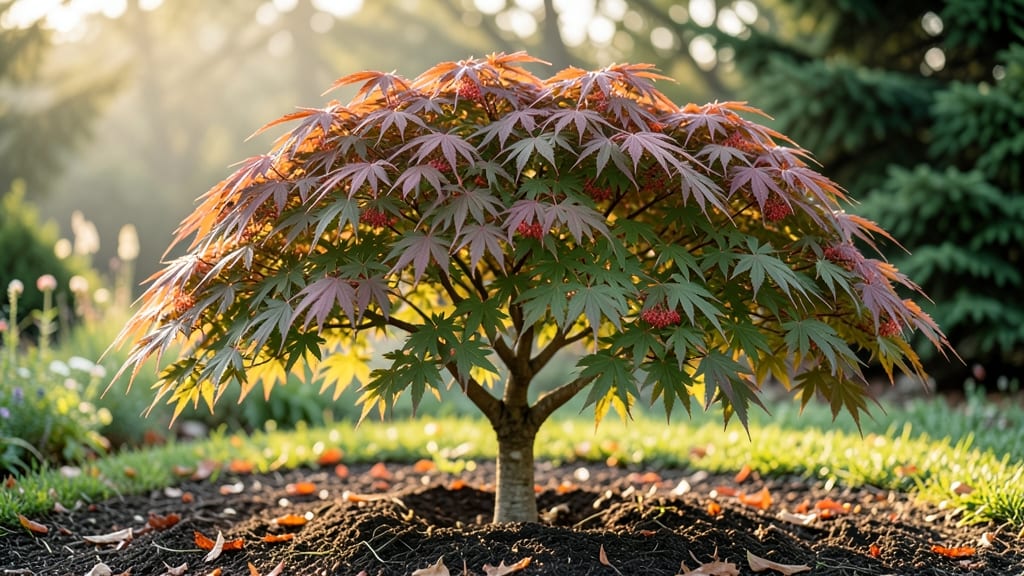
A Japanese Maple Tree 🌿 can grow anywhere from 6 feet to over 30 feet tall, depending on the variety and growing conditions.
Picture this: a delicate 'Drummondii' barely reaching your waist, while a majestic 'Emperor I' towers like a living sculpture in your backyard. That’s the beauty—and challenge—of choosing one for your space.
Some varieties stay compact, perfect for small gardens or containers, while others demand room to stretch their branches skyward. The difference comes down to genetics, sunlight, and a little pruning know-how.
In this guide, I’ll break down the height ranges for popular cultivars, share tips to control growth, and help you pick the perfect size for your landscape—whether you want a shade tree or a conversation piece.


Japanese maple tree height by variety: small to giant growth ranges explained
Japanese maples (Acer palmatum) are among the most beloved ornamental trees, prized for their delicate foliage and stunning seasonal colors. But their mature height can vary dramatically—from compact dwarf varieties perfect for containers to towering specimens that dominate landscapes.
Choosing the right variety for your space means understanding these height ranges and growth habits first.
The smallest Japanese maples stay under 6 feet tall, making them ideal for patios, balconies, or small yards. On the other end, giant varieties can reach over 25 feet, requiring spacious gardens or park-like settings.
Even within a single cultivar, growth can be influenced by pruning practices, soil conditions, and sunlight exposure.
Below, I’ve organized the most popular varieties by their mature height ranges, along with their typical growth rates and ideal planting spaces. This comparison will help you visualize which size fits your landscape goals—whether you’re dreaming of a bonsai-like specimen or a grand shade tree.
If you’re working with a limited space, varieties like 'Drummondii' or 'Little Princess' are perfect for containers or small yards. Their slow growth rates (6–15 inches annually) make them easy to manage, and their compact forms won’t overwhelm your landscape.
For a statement tree, 'Emperor I' or 'Bloodgood' deliver dramatic height and bold foliage, but they require ample room to thrive.
One common misconception is that all Japanese maples grow slowly. While many varieties are slow-growing, some like 'Emperor I' can add 1–2 feet per year under ideal conditions. To control height, focus on pruning in late winter or early spring
How fast Japanese maple trees grow: growth rates and pruning tips for optimal height control
Understanding how fast your Japanese maple tree grows helps you plan for its mature size and manage its height effectively. Most varieties grow at a moderate pace, typically gaining 6-12 inches per year during their first decade.
However, growth rates can double in ideal conditions, while poor care may slow development significantly. The key to controlling height lies in understanding these growth patterns and applying strategic pruning techniques.
Growth speed varies dramatically between varieties. Dwarf cultivars like 'Drummondii' or 'Shishigashira' may only reach 6-8 feet tall after 10 years, while standard types like 'Bloodgood' can grow 12-18 inches annually and reach 20+ feet in the same timeframe.
Even within the same variety, environmental factors play a crucial role in determining how quickly your tree will mature and how tall it will eventually grow.
To maximize growth while maintaining your desired height, focus on soil preparation before planting. Japanese maples thrive in acidic, well-draining soil with a pH between 5.0 and 6.0. Amending clay-heavy soils with peat moss or pine bark improves drainage and encourages faster growth.
Additionally, mulching with wood chips helps retain moisture and regulate soil temperature, both of which support optimal growth rates.
Pruning plays a crucial role in managing height. For height reduction, prune in late winter or early spring before new growth begins. Remove 1-2 branches per year from the top to gradually lower the canopy.
Always use clean, sharp pruners and make cuts just above a bud or lateral branch to promote healthy regrowth. Avoid heavy pruning in summer or fall, as this can stimulate weak, late-season growth that's vulnerable to frost damage.
Light exposure significantly impacts growth rates. While Japanese maples tolerate partial shade, they grow 20-30% faster with 4-6 hours of morning sun. Avoid planting in hot afternoon sun, which can scorch leaves and stunt growth.
In cooler climates (Zones 5-6), growth may slow in winter but accelerate rapidly in spring. Conversely, hot, dry summers (Zones 7-8) can reduce growth if not properly irrigated.
If you're growing a Japanese maple in a container, expect slower growth due to root restriction. Container-grown trees typically reach 50-70% of their mature height compared to in-ground specimens.
To encourage faster growth, choose a large pot (20+ gallons) with drainage holes and repot every 2-3 years to accommodate root expansion. Fertilize lightly with a balanced, slow-release fertilizer in early spring to support steady growth without overstimulating the plant.