
Trees
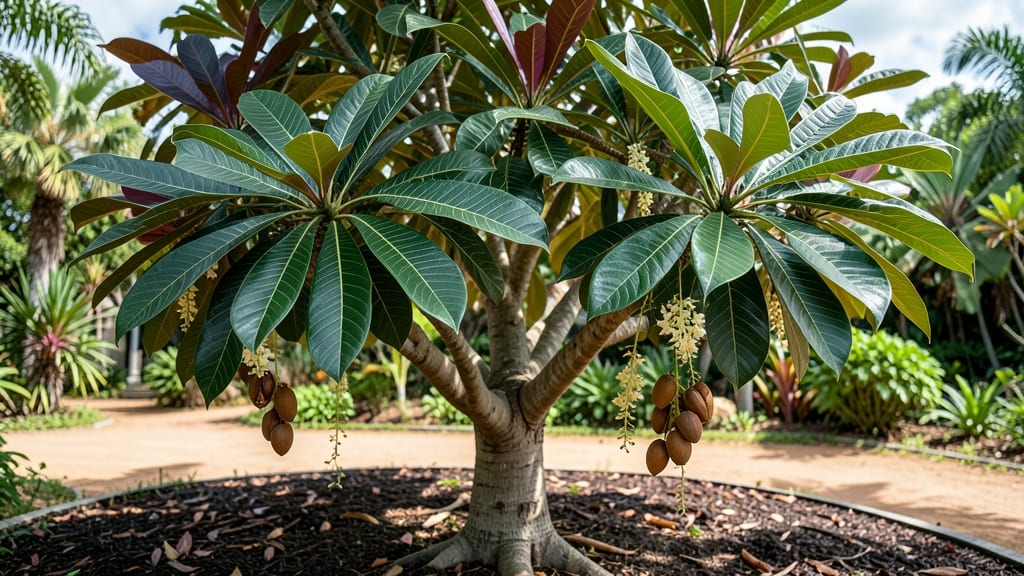
Growing a tropical almond tree in Florida means shade, nuts, and year-round beauty within just three years. 🌿 I planted mine last spring, and already the glossy leaves create a lush canopy while the tree quietly prepares for its first harvest.
Florida’s heat and humidity actually give this tree an edge—it thrives where others struggle. The key is matching its needs to Florida’s climate: full sun, well-draining soil, and regular watering until established. My tree gets 3-4 inches of water weekly during dry spells, but once rooted, it’s surprisingly drought-tolerant.
The real secret? Planting in late spring or early summer avoids transplant shock, and mulching keeps roots cool. By year three, you’ll see those distinctive almond-like nuts (though not edible) and a canopy that blocks summer sun beautifully. The leaves even change color in fall, adding seasonal interest.
Prune lightly in early spring to shape it and remove dead branches—just don’t overdo it. This tree handles Florida’s humidity and occasional storms better than many natives. With minimal fuss, you’ll have a low-maintenance shade provider that also feeds birds and adds tropical flair to your yard.
📚 In This Guide
- What you need
- Instructions
- Tips and common mistakes
- Wrapping up and next steps
What you need
- ● Tropical Almond Tree Seedlings: 1-2 high-quality saplings (preferably grafted for faster fruiting). Look for varieties like Terminalia catappa or Terminalia amazonia, available at local nurseries or online.
- ● Well-Draining Soil: 50 lbs of a mix combining: 60% native Florida soil
- ● 30% compost
- ● 10% perlite or sand
- ● Organic Fertilizer: 10 lbs of a balanced, slow-release fertilizer (e.g., 6-6-6 or 8-3-9) to boost early growth.
- ● Mulch: 2-3 bags (3 cubic feet each) of pine bark or wood chips to retain moisture and regulate soil temperature.
- ○ Drip Irrigation System: A basic kit with 50 ft of tubing, emitters, and a timer (optional but highly recommended for Florida’s heat).
- ● Support Stakes: 2-3 wooden or metal stakes (5-6 ft tall) and 3-4 ft of soft garden twine for young trees.
- ● Pruning Tools: 1 pair of bypass pruners (for small branches)
- ● 1 pruning saw (for thicker stems)
- ● Garden Gloves: A pair of durable, heat-resistant gloves to protect your hands.
- ● Shovel & Trowel: For planting and soil amendments.
- ● Wheelbarrow: To mix soil and transport materials.
- ● pH Test Kit: To ensure soil pH is between 6.0-7.0 (ideal for tropical almond trees).
- ● Spade Fork: For aerating soil before planting.
- ● Sunlight: A full-sun location (6+ hours of direct sunlight daily). Partial shade is tolerated but may reduce nut production.
- ● Space: Mature trees can reach 30-50 ft tall and 20-30 ft wide. Plant at least 20 ft away from structures or other trees.
- ● Water Access: A reliable water source for irrigation, especially during Florida’s dry seasons.
- ● Local Regulations: Check with your county for any restrictions on planting large trees or native species.
- ● Tree Guard: A 6-ft tall wire cage to protect young trees from wildlife.
- ● Slow-Release Granular Fertilizer: For a 3-month nutrient boost during growing seasons.
- ● Soil Moisture Meter: To monitor watering needs without over/under-watering.
- ● Companion Plants: Drought-tolerant ground covers like Liriope or Mondo Grass to suppress weeds.
How to plant and grow a tropical almond tree in Florida
Here’s the straightforward method I’ve used to establish thriving tropical almond trees in Florida’s climate—fast enough for shade in three years and nut production soon after.
🌱 Step 1: Choose the Right Variety and Planting Location
Florida’s tropical almond trees (Terminalia catappa) thrive in the state’s heat and humidity, but not all varieties adapt equally. Look for ‘Florida’ or ‘Tropical’ selections—these handle our summers best. Plant in full sun (at least 6+ hours daily) for optimal growth and nut production, though they’ll tolerate partial shade if you prioritize leafy shade over nuts.
Soil matters more than you’d think. Tropical almonds prefer well-draining, slightly acidic soil (pH 5.5-6.5). If your yard is heavy clay, mix in 2-3 inches of compost into the planting hole to improve drainage. Avoid low spots where water pools—root rot is their Achilles’ heel. I always dig a 3-foot-wide hole to loosen native soil before placing the tree.
🪴 Step 2: Plant at the Right Time and Depth
Timing is everything in Florida. Plant tropical almond trees in early spring (February-March) or late summer (August-September) to avoid extreme heat or cold snaps. Dig a hole twice as wide as the root ball but only as deep as the container’s height—burying the trunk too deep suffocates the tree. Gently remove the tree from its container and tease apart any circling roots to encourage outward growth.
Place the tree in the hole, backfill with native soil mixed with 1 part compost, and tamp lightly to eliminate air pockets. Water deeply to settle the soil, then add a 2-inch layer of mulch (like pine bark) around the base—keep mulch 6 inches away from the trunk to prevent rot. This mulch ring helps retain moisture and regulates soil temperature, which is critical in Florida’s sweltering summers.
☀️ Step 3: Water and Fertilize for Rapid Growth
For the first 3 months, water deeply 2-3 times per week—enough to moisten the soil 12 inches down. You’ll know it’s right when water runs out the drainage holes if planted in a container, or when the top 6 inches of soil feel damp (not soggy). After that, tropical almonds are drought-tolerant once established, but young trees need consistent moisture to develop strong roots.
Fertilize once in early spring with a balanced, slow-release fertilizer (10-10-10) at half the recommended rate. Over-fertilizing burns roots, and Florida’s heat accelerates nutrient burn. I add 1 cup of organic fertilizer around the drip line (not the trunk) and water it in. Avoid high-nitrogen fertilizers—they encourage leafy growth at the expense of nuts.
✂️ Step 4: Prune for Shape and Sun Exposure
Prune once a year in late winter (January-February) to remove dead, crossing, or inward-growing branches. Tropical almonds naturally grow broad canopies, but Florida’s storms can snap weak limbs. I always sterilize pruners with rubbing alcohol between cuts to prevent disease spread. Aim to create an open center that allows sunlight to reach the inner branches—this boosts nut production.
Watch for suckers (shoots growing from the base) and remove them immediately. These divert energy from the main tree. If your tree starts dropping leaves in summer, it’s likely thirsty or stressed—increase watering temporarily and check for pests like scale insects, which thrive in Florida’s heat. A strong spray of water usually knocks them off.
🌿 Step 5: Monitor for Pests and Seasonal Care
Tropical almonds are relatively pest-resistant, but aphids and spider mites can appear in Florida’s dry seasons. I inspect leaves weekly and treat infestations with neem oil (mix 1 tablespoon per gallon of water) if I spot clusters of tiny pests. Avoid chemical pesticides—they harm beneficial insects and can linger in the soil.
In Florida’s hurricane season (June-November), stake young trees if they’re under 5 feet tall to prevent wind damage. Mature trees handle storms better, but their broad canopies can tear in high winds. After storms, remove any broken branches promptly to prevent disease entry points. With proper care, your tree should provide shade within 2 years and first nuts by year 3—plenty of time to enjoy Florida’s fastest-growing shade tree!
Tips & tricks for perfect Florida tropical almond trees
Took me a while to figure these out, so here are the game-changing tricks I wish I'd known when starting my first tropical almond tree in Florida.
Soil Prep is Non-Negotiable: The 3-foot-wide hole I mentioned in Step 1 isn't just about space—it's about breaking up compacted Florida clay. Use a shovel to create vertical slices in the hole walls to improve drainage. If your soil tests higher than pH 6.5, mix in 1 part peat moss to the compost for better acidity control. I learned this the hard way after losing two trees to root rot in heavy clay.
Timing Secret for Young Trees: Florida's unpredictable weather means those first 3 months of watering (2-3 times per week) can be tricky. I now use a moisture meter to check soil 12 inches down—this is more reliable than guessing. For container-grown trees, let water run out the drainage holes completely before adding more. Overwatering in Florida's heat causes more problems than underwatering.
Fertilizer Hack for Nut Production: That 1 cup of organic fertilizer around the drip line? I've found adding ½ cup of bone meal (optional) at planting time gives a phosphorus boost that speeds up root development. This helps establish stronger trees faster, which means earlier nut production. Just mix it into the bottom 6 inches of the planting hole—it won't burn roots like regular fertilizer.
Storm Prep You Might Miss: For trees under 5 feet during hurricane season, I now use two stakes per tree instead of one. Position them diagonally for better support against Florida's wind patterns. After storms, I always check for hidden damage by gently shaking the tree—if branches make a hollow sound, they're broken internally and need removal.
Pro Tips for Tropical Almond Tree Florida
- Took me a while to figure these out, so here are the game-changing tricks I wish I'd known when starting my first tropical almond tree in Florida.
- Soil Prep is Non-Negotiable: The 3-foot-wide hole I mentioned in Step 1 isn't just about space—it's about breaking up compacted Florida clay.
- Timing Secret for Young Trees: Florida's unpredictable weather means those first 3 months of watering (2-3 times per week) can be tricky.
Frequently asked questions
Got questions about growing a tropical almond tree in Florida?
Here are the answers to the most common ones—so you can get started with confidence!
How cold can a tropical almond tree handle in Florida?
The tropical almond tree (Terminalia catappa) thrives in Florida’s warm climate but can tolerate brief dips to 28°F (-2°C). Young trees are more vulnerable—consider wrapping the trunk or planting near a heat source during unexpected freezes. Mature trees often recover well after light frost damage.
How long does it take for a tropical almond tree to produce nuts?
With ideal care, you can expect nuts in 3–5 years, though some trees yield earlier. Patience is key—focus on well-draining soil, consistent watering, and full sun (6+ hours daily) to speed up fruiting. Pro tip: Prune lightly in late winter to encourage stronger growth and earlier harvests!
Can I grow a tropical almond tree in a pot, or does it need to be planted in the ground?
Young trees (3–5 years old) can thrive in large pots (15+ gallons) with drainage holes, but they’ll need winter protection in colder zones. For long-term growth and nut production, planting in the ground is best—Florida’s sandy soil is perfect once amended with compost. Containers limit root spread, which may reduce yield over time.
What pests or diseases should I watch for with tropical almond trees?
Common issues include:
- Scale insects (sticky sap on leaves) – Treat with horticultural oil.
- Root rot (yellowing leaves) – Ensure fast-draining soil and avoid overwatering.
- Fungal leaf spot (brown spots) – Prune affected leaves and apply copper fungicide.
Regular inspections and mulching with wood chips help prevent most problems!
Are there Florida-friendly alternatives if tropical almond trees don’t grow well in my area?
If your zone is too cold or humid, try these shade/nut-producing trees:
- Pecan (Carya illinoinensis) – Drought-tolerant but needs well-draining soil.
- Sapodilla (Manilkara zapota) – Loves heat but handles light frost.
- Macadamia (Macadamia integrifolia) – Slow-growing but thrives in sandy soil.
All three offer shade and edible nuts—just adjust care to your microclimate!
Wrapping up and next steps
Growing a tropical almond tree in Florida isn’t just about patience—it’s about embracing a rewarding journey that blends beauty, shade, and delicious harvests! 🌱 With the right soil, care, and a little Florida sunshine, you’ll enjoy lush foliage, fragrant blooms, and nutritious almonds in just a few years.
Whether you’re a seasoned gardener or a beginner, this tropical gem is a fantastic addition to your yard.
Ready to take the next step? Start by selecting the perfect spot in your landscape, then gather your supplies and get planting. Before you know it, you’ll be savoring the fruits of your labor—both literally and figuratively! 🌳✨