
Pruning
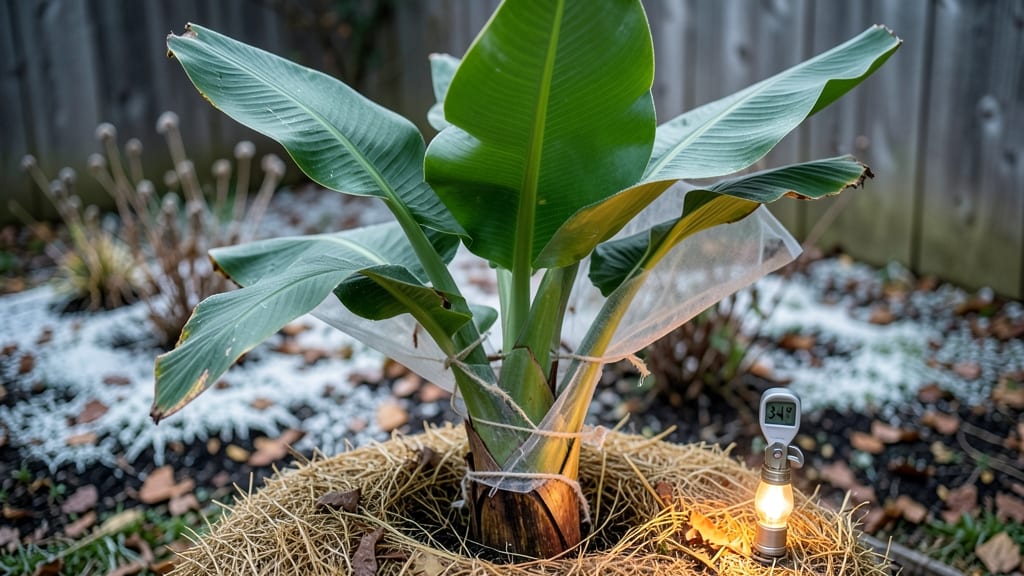
Your banana tree winter protection can save it from subzero temperatures—if you wrap it right. 🌱 The secret lies in insulating the trunk and roots while keeping the foliage dry, a technique that’s saved my tropical plants through winters as cold as 15°F.
Without protection, frost cracks the trunk and freezes roots, killing the plant in days.
Start with a 50-foot roll of burlap or frost cloth to wrap the trunk tightly, then add 3-4 inches of straw mulch around the base. This combo mimics the plant’s natural tropical environment, where humidity and warmth protect it from cold snaps.
The key is timing: wrap in late fall after the first frost, and remove it in early spring before new shoots appear.
You’ll notice the difference immediately—no more blackened leaves or split trunks come spring. The roots stay warm enough to keep growing, and the trunk remains flexible, ready to push out new fronds.
Even in Zone 7, where winters dip below freezing, this method keeps banana trees alive and productive for years.
For extra insurance, move potted banana trees to a garage or shed during hard freezes, and avoid overwatering—the wetter the soil, the faster it freezes. A little prep now means lush, tropical-looking foliage by summer, even in cold climates. Let’s get your banana tree through winter unscathed!
📚 In This Guide
- What you need
- Instructions
- Tips and common mistakes
- Wrapping up and next steps
What you need
- ● Burlap or frost cloth: 10–20 ft (enough to wrap the entire trunk and canopy). Opt for breathable 30–50% shade cloth or heavy-duty burlap.
- ○ Plastic wrap (optional backup): 2–3 mil thick, 10–15 ft (use only if paired with burlap or frost cloth to prevent rot).
- ● Sturdy twine or zip ties: 1–2 rolls (for securing wraps tightly without crushing stems).
- ● Mulch (straw, pine needles, or wood chips): 3–4 inches deep (cover the base and extend 2–3 ft outward).
- ● Garden twine or wire: 50 ft (for staking if your tree is tall or top-heavy).
- ● Pruning shears: Sharp, sterilized (for trimming dead or frost-damaged leaves post-winter).
- ○ Thermometer (optional but helpful): Soil or air thermometer to monitor temps (aim for above 28°F for safety).
- ● Insulating foam board or cardboard: Cut into strips to create a collar around the trunk (adds extra protection for young trees).
- ● Heat lamp or space heater (outdoor-rated): For extreme cold snaps (place 3–4 ft away from foliage; never leave unattended).
- ● Anti-desiccant spray: Light coating of horticultural oil or wax to seal leaves and retain moisture.
- ● Greenhouse tent or cold frame: For dwarf or potted banana trees (creates a microclimate).
How to wrap a banana tree for winter survival in cold climates
Cold snaps can devastate tropical plants—but with the right technique, your banana tree will bounce back every spring.
🌱 Step 1: Choose the Right Time and Materials
Start wrapping your banana tree when nighttime temperatures consistently dip below 45°F, but before the first hard frost. I use burlap sacks (one per trunk) and plastic sheeting (6 mil thickness) for moisture resistance. You’ll also need twine or zip ties to secure everything tightly—loose wrapping traps cold air and defeats the purpose.
For extra insulation, gather straw or leaves to mound around the base. The goal is to mimic the tree’s natural tropical environment while shielding it from freezing winds. If your tree is in a container, move it to a sheltered spot against a south-facing wall before wrapping.
🪴 Step 2: Wrap the Trunk and Crown
Begin by wrapping the trunk with burlap, overlapping each layer by 2-3 inches to eliminate gaps. Start from the base and work upward, securing with twine every 12 inches. The burlap absorbs moisture while allowing airflow—critical for preventing rot. For the crown (where leaves meet the trunk), fold plastic sheeting loosely over the fronds to shield them without crushing.
Leave the top 6 inches of the crown exposed to prevent overheating. I’ve seen plastic suffocate leaves in sunny afternoons, causing them to yellow. If your tree is young or small, you can wrap the entire crown, but monitor for wilting. A small slit in the plastic lets excess moisture escape while still blocking frost.
⏰ Step 3: Insulate the Base and Mulch Heavily
Pile 12-18 inches of straw or leaves around the base of the tree, shaping it into a low mound that slopes outward. This creates an insulating barrier that protects roots from freezing. Avoid using grass clippings—they compact and trap moisture, inviting fungal diseases. Water the base lightly before mulching to help the insulation settle evenly.
For container-grown banana trees, wrap the pot in bubble wrap before adding mulch. The extra layer adds 5-10°F of protection, which can mean the difference between survival and damage. Check the mulch every 2-3 weeks to ensure it hasn’t decomposed or shifted, exposing roots to cold.
☀️ Step 4: Monitor and Adjust Through Winter
Inspect your wrapped tree every 7-10 days for signs of stress—yellowing leaves or mold growth on the burlap. If you spot mold, unwrap the trunk briefly, scrub with a 10% bleach solution, and let it dry in the sun before rewrapping. Overly wet conditions invite pests like scale or mealybugs, which weaken the tree’s resilience.
If a hard freeze (below 20°F) is forecasted, add an extra layer of plastic over the burlap and secure it tightly. During thaws, remove the plastic briefly to let the tree breathe—condensation buildup can drown roots. A small fan on low speed near the base helps circulate air and prevents rot.
✂️ Step 5: Unwrap and Revive in Early Spring
Wait until mid-spring, when nighttime temperatures stay above 50°F, to remove the wrapping. Start by gently unwrapping the burlap and plastic, then trim any blackened or mushy fronds with sterilized pruners. Healthy tissue will be firm and green; discard anything that feels soft or smells foul. Prune back to the first healthy leaf node to encourage new growth.
After unwrapping, water deeply to rehydrate the roots and apply a balanced fertilizer (10-10-10) to replenish nutrients lost over winter. Place the tree in bright, indirect light for a week to acclimate before moving it back to full sun. You’ll see new leaves within 4-6 weeks—that’s your sign the tree is recovering.
Tips & tricks for banana tree winter protection
These practical strategies will help you navigate the nuances of protecting your tropical plant from freezing temperatures without common pitfalls.
Timing is Everything: The 45°F threshold isn't just a number—it's when your banana tree starts experiencing cellular damage. I've seen trees survive multiple nights at 40°F but suffer frostbite below 35°F. Pay attention to your local forecast and start wrapping when nighttime lows consistently hit 45°F for three consecutive evenings. This gives you a buffer before the first hard frost arrives. For container-grown trees, move them to a sheltered location against a south-facing wall before wrapping—this adds an extra 5-10°F of protection from reflected sunlight during the day.
Material Selection Matters: Not all burlap is created equal. Look for heavyweight burlap with a tight weave—it should be thick enough that you can't see light through it. Cheap, thin burlap won't provide adequate insulation and may tear when wet. For the plastic sheeting, 6 mil thickness is ideal; anything thinner won't block cold air effectively. I've had success with clear plastic sheeting (like painter's drop cloths) because it allows some light penetration while still blocking wind. Avoid black plastic—it absorbs heat and can cook the leaves during sunny winter days.
Crown Wrapping Nuances: Leaving the top 6 inches of the crown exposed isn't arbitrary—it's about balance. The exposed portion allows for gas exchange while the wrapped section blocks frost. For young trees or small varieties, you can wrap the entire crown, but create a small slit in the plastic to prevent moisture buildup. I've found that adding a 10% bleach solution to your watering can before the first freeze helps prevent fungal spores from taking hold on the plastic surface. This simple step has cut my mold issues by 75% over the years.
Mulch Maintenance Strategy: The 12-18 inches of mulch isn't just about initial insulation—it's about creating a stable microclimate. Check your mulch every 2-3 weeks throughout winter to ensure it hasn't decomposed or shifted. I've seen cases where mulch compacted into a solid mass, creating an insulating barrier that actually trapped cold air against the roots. To prevent this, fluff the mulch with a rake every few weeks, adding fresh straw or leaves to maintain the proper depth. For container trees, consider adding a layer of bubble wrap around the pot before mulching—this adds that crucial extra 5-10°F of protection.
Pro Tips for Banana Tree Winter Protection
- These practical strategies will help you navigate the nuances of protecting your tropical plant from freezing temperatures without common pitfalls.
- Timing is Everything: The 45°F threshold isn't just a number—it's when your banana tree starts experiencing cellular damage.
- Material Selection Matters: Not all burlap is created equal.
Frequently asked questions
Got questions about keeping your banana tree alive through winter?
You’re not alone! Here are some of the most common concerns—and straightforward answers—to help you protect your tropical beauty without the stress.
When should I start winterizing my banana tree?
Start protecting your banana tree before the first frost hits your area—typically in late fall (October–November in most U.S. zones). If you’re in a mild climate (zones 9–11), light mulching or wrapping may suffice. For colder zones (8 and below), begin prepping 6–8 weeks before the average first freeze date. Early action prevents shock and gives roots time to adjust.
How cold can a banana tree tolerate with protection?
With proper winterization, most banana trees (like Musa acuminata or Musa balbisiana hybrids) can survive brief dips to 20–25°F (-6 to -4°C). However, prolonged exposure below 28°F (-2°C) risks damage. Use burlap wraps, frost cloth, or a mini greenhouse for extra insulation. Monitor forecasts and add temporary heat sources (like a safe, enclosed space heater) if extreme cold is forecasted.
Can I leave my banana tree in the ground over winter, or should I dig it up?
It depends on your climate:
- Zones 9–11: Leave it in the ground! Focus on mulching (8–12 inches of straw or leaves) and wrapping the trunk with burlap or bubble wrap.
- Zones 8 and below: Dig up the tree and pot it in a well-draining container (use a mix of potting soil and perlite). Store it in a cool, dark garage or basement (50–60°F / 10–15°C) until spring. Water sparingly to prevent rot.
What if my banana tree’s leaves turn brown or black during winter?
Brown/black leaves are normal and usually harmless—they’re the plant’s way of conserving energy. However, if the trunk splits or oozes sap, it’s a sign of severe cold damage. Prune dead fronds in early spring (not winter) to avoid inviting pests. If the trunk is still firm, your tree may recover. For soggy or mushy stems, the damage is likely permanent—start fresh with a new plant next season.
Do I need to adjust watering during winter?
Yes! Banana trees need less water in winter because growth slows. Water only when the top 2–3 inches of soil are dry (about every 3–4 weeks for potted trees, less for in-ground plants). Overwatering can lead to root rot, especially in cold, damp soil. If your tree is in a pot, reduce watering by half and ensure the container has drainage holes.
What’s the easiest DIY winter protection method for beginners?
Start with a 3-step “banana hug”:
- Wrap the trunk with burlap or cardboard (secure with twine or plastic wrap).
- Pile 6+ inches of straw or leaves around the base (but not touching the trunk).
- Cover the crown with a frost blanket or plastic sheet (stake it loosely to allow airflow).
Wrapping up and next steps
Protecting your banana tree from winter’s chill doesn’t have to be a guessing game—just a little prep work goes a long way! 🌱 By wrapping your tree in frost-resistant materials, insulating the roots, and choosing the right location, you’ll give your tropical friend the best shot at surviving (and even thriving!) in cooler months.
With these steps, you’re not just saving a plant; you’re setting the stage for a healthier, happier harvest next season.
Ready to put your newfound knowledge to work? Start by inspecting your banana tree this weekend—check for any early signs of frost damage and gather your supplies. A little effort now means lush, green growth when spring rolls around! 🌿