
Propagation
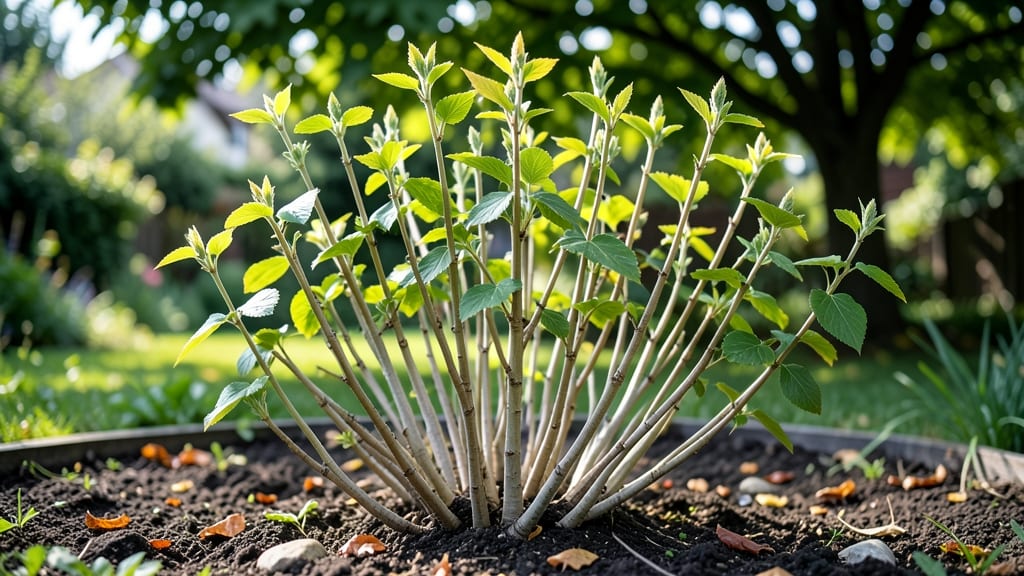
When your tree starts sprouting from the base, it’s not just a quirky growth habit—it’s a sign your trunk needs support before it splits under its own weight. 🌳 I’ve seen this happen with both young fruit trees and mature shade trees, and the fix starts with understanding why it’s happening in the first place.
These base sprouts often form because the tree is trying to stabilize itself, especially after damage, poor pruning, or weak structural support. Some trees, like apples or cherries, naturally produce suckers from their roots, while others react to stress by sending up new shoots.
The key is deciding whether to encourage these sprouts (for grafting or replacement growth) or remove them to strengthen the main trunk. If you prune them back too aggressively, you risk weakening the tree further. Instead, focus on supporting the trunk with stakes or cabling while selectively removing competing sprouts.
For fruit trees, you can even redirect energy by grafting onto one of the strongest base shoots if needed. The goal isn’t just to stop the sprouts—it’s to build a stronger, more stable tree that won’t split when storms or heavy fruit hit.
Let’s get into the exact steps to fix this before it’s too late.
Root Causes Of Stubborn Base Growth
When a tree starts sprouting from its base—often called suckering or sprouting—it’s rarely a random act of nature. Instead, it’s a survival response triggered by specific biological and environmental cues.
Understanding these causes is the first step to preventing weak trunks and ensuring your tree grows strong from the top down. Let’s break down the science behind why this happens.
Trees are hardwired to reproduce and regenerate, even when the primary trunk is damaged or stressed. This instinct is rooted in their genetic survival programming.
When a tree senses weakness or injury—such as a broken trunk, girdling roots, or disease—it triggers dormant buds at the base to sprout new growth. These buds, called adventitious buds, are pre-programmed to activate when the tree’s central system is compromised.
For example, fruit trees like apples or cherries often sprout from the base because they’ve evolved to prioritize reproductive success over structural integrity.
If the main trunk is cut or weakened, the tree redirects energy to these basal sprouts to ensure the species survives, even if the original tree fails.
Actionable insight: If you’re dealing with a young tree, pruning aggressive basal sprouts early can help redirect energy to the main trunk—but never remove more than 25% of the foliage at once, or you’ll stress the tree further.
Pruning is a powerful tool, but poor timing or technique can send mixed signals to your tree, prompting unwanted basal sprouts. When you make cuts too late in the season (after dormancy but before winter) or remove too much canopy at once, the tree’s auxin hormones—which regulate growth—become disrupted.
Auxin, produced in the tree’s leaves, normally suppresses basal buds to prevent competition with the main trunk. But if you prune heavily, the sudden drop in leaf production lowers auxin levels, removing this natural brake. The result? Dormant buds at the base wake up and start growing uncontrollably.
Common pruning mistakes that trigger sprouting:
- ❌ Topping a tree (cutting the main trunk flat)—this sends shockwaves through the tree’s system, causing chaotic regrowth.
- ❌ Over-pruning in spring (when buds are already swelling)—this confuses the tree’s growth cycle.
- ❌ Removing too many branches at once (more than 25% of the canopy)—this starves the tree of energy and triggers survival mode.
Pro tip: Always prune in late winter or early spring (just before buds swell) and use three-cut pruning to avoid tearing bark. If you’ve already topped a tree, don’t panic—focus on strengthening the remaining structure to prevent splits.
A tree’s roots are its lifeline, and when they’re restricted or damaged, the entire plant reacts by producing basal sprouts as a last-ditch effort to stabilize itself. Two key root-related issues trigger this response:
-
🔗 Girdling roots:
When roots grow in a circular pattern around the trunk (often due to root-bound potted trees or poor planting), they strangle the trunk as they thicken. This restricts water and nutrient flow, causing the upper trunk to weaken.
The tree responds by sending up new shoots from the base to bypass the blockage.
-
💧 Compacted or waterlogged soil:
Roots need oxygen to function. If soil is too dense (from foot traffic or heavy clay) or waterlogged (from poor drainage), roots suffocate. This stress signals the tree to produce basal sprouts as a way to expand its root zone and access new nutrients.
How to check for root issues:
- Gently dig around the base of the tree (6–12 inches deep). Look for roots circling the trunk or growing horizontally.
- Test soil drainage: Dig a hole 12 inches deep and fill it with water. If it drains in less than 4 hours, your soil is too compacted.
Fix it: For girdling roots, carefully sever the restrictive roots with a sharp knife (only do this in dormant season). For compacted soil, aerate the root zone with a garden fork or add organic matter (compost or mulch) to improve drainage.
When a tree is under attack—whether from fungal infections, bacterial rot, or pests like borers—its immune system diverts energy to fight the threat. This weakens the trunk, making it unable to support itself. In response, the tree activates emergency sprouts to create a new structural framework.
Common culprits include:
- 🍄 Fungal infections (e.g., Armillaria root rot or canker diseases) that rot the trunk from the inside out.
- 🐜 Wood-boring pests (like emerald ash borers or bark beetles) that tunnel into the cambium layer, disrupting nutrient transport.
- 🦠 Bacterial infections (e.g., bacterial wetwood) that cause internal decay and oozing sap.
Signs your tree is sick:
- Oozing sap, mushrooms at the base, or cracked or peeling bark.
- Wilting leaves, unusual discoloration, or leaf drop in the wrong season.
- Hollow-sounding wood when tapped with a knife.
What to do: If you suspect disease, consult a certified arborist before treating. For pests, prune and dispose of infested branches immediately (don’t compost them!). In severe cases, systemic fungicides or insecticides may be needed—but prevention (like proper mulching and avoiding soil compaction) is always better.
Key takeaway: Basal sprouts are your tree’s emergency backup system. By addressing the root cause—whether it’s hormonal confusion, root stress, or disease—you can stop the cycle and help your tree grow strong from the top down.
Fixing Weak Trunk Growth Naturally
If you’ve noticed a tree sprouting stubbornly from its base—often a sign of weak trunk development—don’t panic. With the right approach, you can strengthen the main stem, redirect energy to the right growth, and prevent future splits or structural issues.
Below are practical, step-by-step solutions tailored to the root causes (literally!) of the problem, plus prevention tips to keep your tree thriving.
When multiple shoots emerge at the base, they compete for water, sunlight, and nutrients, weakening the primary trunk. The fix? Prioritize the strongest leader and eliminate the rest.
🔪 Step-by-Step: Prune Aggressively (But Smartly)
- 👀 Identify the Dominant Sprout
- Look for the shoot with the thickest stem, most upright growth, and healthiest leaves. This is your tree’s future trunk.
- ⏰ Time Your Pruning
- Trim competing sprouts in early spring (before new growth starts) or late fall (after leaves drop). Avoid pruning in summer heat or winter frost.
- 🪓 Cut at the Base (Not Just the Top) - Use clean, sharp pruners (or a saw for thicker stems) and cut flush with the soil—no stubs left behind.
This prevents regrowth from the same spot. - For stubborn sprouts, apply a 1:9 bleach-to-water solution to the cut area to deter new growth (let dry before planting).
- 🌿 Mulch Strategically
- Spread 2–4 inches of organic mulch (wood chips, straw) around the base, but keep it 3–6 inches away from the trunk to avoid rot. Mulch helps direct nutrients to the main stem.
If the base sprout appears after transplanting, grafting, or root damage, the tree is essentially “confused” about where to grow. The goal here is to stabilize the root system and encourage upward energy flow.
💧 Step-by-Step: Revitalize the Root Zone
- 🚰 Water Deeply (But Less Often)
- Drench the soil once a week (or every 10 days in dry climates) with 1–2 gallons per inch of trunk diameter. Deep watering encourages roots to grow downward, strengthening the trunk.
- 🌱 Fertilize for Trunk Strength
- Use a balanced, slow-release fertilizer (e.g., 10-10-10) in early spring. For fruit trees, opt for high-phosphorus (e.g., 5-10-10) to boost root development.
- Avoid high-nitrogen fertilizers—they promote leafy (not woody) growth, making the trunk weaker.
- 🌿 Support with a Stake (Temporarily)
- If the tree is young or recently transplanted, stake it for 6–12 months to prevent wind stress. Use a soft tie (not wire) and remove stakes once the trunk thickens.
- 🔄 Transplant Care (If Recently Moved)
- If the sprout appeared after transplanting, the tree may have root damage. Apply mycorrhizal fungi (available as powder) to the roots to improve nutrient absorption.
If the tree’s canopy is too large for its trunk (or you’ve pruned too much in the past), it may send out base sprouts as a survival tactic. The fix? Balance the tree’s structure and encourage gradual thickening.
✂️ Step-by-Step: Prune for Balance
- 🌿 Thin the Canopy
- Remove 20–30% of the smallest, inner branches to reduce weight on the trunk. Focus on branches growing downward or inward.
- 🍃 Limit New Growth
- Avoid heavy summer pruning—it stresses the tree. Instead, prune in dormant season (late winter/early spring).
- 🌱 Encourage Trunk Thickness
- If the trunk is too thin, avoid pruning the top (this can cause “water sprouts” at the base). Instead, prune lower branches to redirect energy upward.
- 🌡️ Protect from Extreme Conditions
- Windbreaks: Plant nearby trees/shrubs to shield young trees from wind.
- Frost cloth: Use in cold climates to prevent winter damage, which can trigger weak regrowth.
Once you’ve addressed the base sprouts, keep these habits to prevent future issues:
- 🌱 Plant the Right Tree for Your Climate
- Choose native species or varieties known for strong trunks (e.g., oak, maple, or fruit trees like apple or pear).
- 🌿 Mulch Correctly
- Do: Use organic mulch in a 3-inch ring around the trunk.
- Don’t: Pile mulch against the trunk (causes rot) or use plastic mulch (traps heat).
- 🚫 Avoid Over-Fertilizing
- Too much nitrogen = soft, weak wood. Stick to balanced or low-nitrogen fertilizers.
- 👀 Monitor for Pests/Disease
- Aphids, borers, or fungal infections can weaken trunks. Treat early with neem oil or copper fungicide.
- 📅 Prune on a Schedule
- Young trees: Prune only to remove dead/diseased branches.
- Mature trees: Prune every 2–3 years to maintain shape and strength.
With these targeted fixes, your tree’s main trunk should thicken over time, reducing the risk of splits and giving you a strong, healthy specimen for years to come. 🌳💪
Frequently asked questions
Why do some trees naturally sprout from the base while others don't?
Genetics play a huge role! Fruit trees like apples, cherries, and citrus are notorious for producing basal sprouts because they evolved to prioritize survival through reproduction. These trees often have adventitious buds at their base that activate when the main trunk is damaged or stressed. Deciduous trees like oaks or maples rarely do this—their energy focuses on trunk development.
Can I turn these base sprouts into a new tree instead of removing them?
If you have a healthy base sprout, you can graft it to become the new trunk or even transplant it as a separate tree. For fruit trees, this is a great way to propagate varieties. Just ensure the sprout is at least 1/4-inch thick before attempting to graft or transplant.
How do I know if my tree's base sprouts are harmful or helpful?
Helpful sprouts are straight, vigorous, and upright—these can become strong new trunks. Harmful ones are weak, leaning, or growing in circles, which compete with the main trunk. If more than 3-4 sprouts appear, prioritize removing the weakest ones to avoid splitting the base.
Will removing base sprouts weaken my tree further?
Not if done correctly! Only remove 25% or less of the foliage at once, and always cut at the base (not leaving stubs). For young trees, focus on keeping one dominant sprout while removing others. Over-pruning in one session can stress the tree, but selective removal strengthens the main trunk over time.
Can I use chemical treatments to stop base sprouts?
Chemical treatments like hormone pastes (e.g., with auxin) or diluted bleach solutions can help deter regrowth, but they're not always necessary. For most trees, proper pruning and mulching work better long-term. If you choose chemicals, apply sparingly and only to cut surfaces—never to healthy bark.