
How To
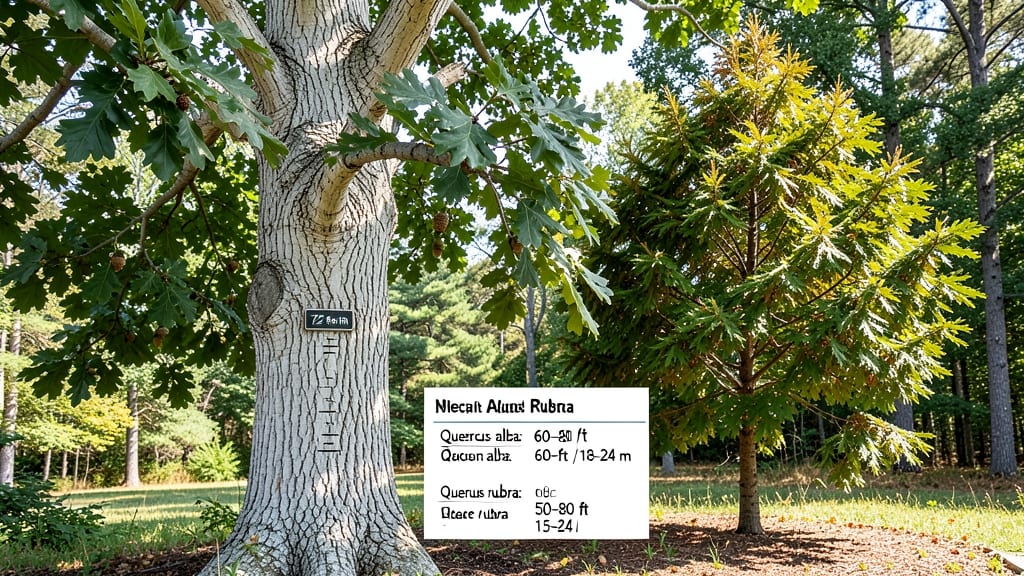
How tall can an oak tree grow? The answer is as impressive as the trees themselves—some species stretch toward the sky, reaching over 100 feet, while others remain more manageable for backyard spaces.
If you’ve ever admired a towering oak tree and wondered just how massive these giants can become, you’re not alone—some species reach heights that defy imagination, while others stay more modest.
But what determines an oak’s ultimate height? The answer lies in its species, soil quality, sunlight, and even your local climate. A white oak might top out at 80 feet, while a bur oak could push 120 feet under ideal conditions.
In this guide, I’ll break down the tallest oak species, the factors that shape their growth, and how you can nurture a young oak to reach its full potential—whether you’re dreaming of a backyard giant or a manageable shade tree.


Tallest oak tree species: record heights and growth patterns
Oak trees are nature’s skyscrapers, with some species reaching heights that make even the tallest redwoods seem modest. The Coast Live Oak and White Oak dominate the records, but regional climate and soil conditions play a huge role in their growth.
In the Pacific Northwest, for example, Coast Live Oaks can stretch over 100 feet, while Eastern White Oaks typically max out around 80-90 feet. These giants don’t just tower—they shape ecosystems, providing shelter for wildlife and filtering air for decades.
What sets these species apart isn’t just their height but their growth rate and lifespan. Some oaks grow just 1-2 feet per year in their youth, while others, like the Pin Oak, can surge 3 feet annually under ideal conditions.
The key? A combination of deep, well-drained soil, full sunlight, and minimal competition. Let’s break down the tallest oak species and what makes them reach for the sky.
🌳 Did You Know? The tallest verified oak tree in the world is a Coast Live Oak in California, standing at a staggering 105 feet. This species thrives in coastal climates where mild winters and high humidity create perfect growing conditions.
The Coast Live Oak holds the title for the tallest oak species, but the Valley Oak isn’t far behind, with some specimens in California’s Central Valley reaching 100 feet. These trees thrive in floodplain soils, where nutrient-rich sediments from seasonal floods fuel rapid growth.
In contrast, White Oaks in the Eastern U.S. grow slower but live longer, often exceeding 300 years with heights of 80-90 feet.
Climate plays a pivotal role in an oak’s height potential. The Pacific Northwest’s mild, wet winters and long growing seasons allow oaks to grow taller faster than their counterparts in colder regions.
Meanwhile, Bur Oaks in the Great Plains adapt to drought conditions, growing more slowly but surviving harsh winters. This regional variation means gardeners in Zone 5 might see slower growth compared to those in Zone 8.
When comparing oaks to other hardwoods, they often win the height competition. While Douglas Firs can surpass oaks in some regions, oaks dominate in lifespan and canopy spread.
A mature White Oak can have a spread of 60-75 feet, creating a dense canopy that provides shade for an entire acre. This makes them invaluable for urban forests and wildlife habitats.
For gardeners looking to grow a towering oak, the Valley Oak or Coast Live Oak are top choices if you live in a suitable climate. However, even in less ideal conditions, White Oaks and Bur Oaks can still reach impressive heights with proper care.
The secret? Patience—these trees don’t rush, but given time, they’ll reward you with a living monument.
🌿 Pro Tip: If you’re planting an oak sapling, avoid pruning the first 5-7 years to encourage vertical growth. Focus on deep watering and mulching to create the ideal conditions for your future giant.
Key factors that influence oak tree height growth
Understanding how tall an oak tree can grow starts with recognizing that its height is shaped by a mix of natural and environmental factors. While some oak species naturally reach 100+ feet, others stay compact due to genetics or growing conditions.
As someone who’s planted oaks in my own yard, I’ve seen firsthand how soil quality, sunlight exposure, and water availability can dramatically alter growth trajectories—even for the same species.
The foundation of an oak’s height potential lies in its genetic predisposition. For example, the Coast Live Oak often surpasses 100 feet in ideal conditions, while the Dwarf Chinkapin Oak typically maxes out at 25 feet.
But genetics alone don’t dictate the outcome—environmental factors play an equally critical role in whether an oak reaches its full height or stays stunted.
Oaks thrive in well-draining, slightly acidic soil (pH 5.0–7.0). Compacted or waterlogged soil restricts root growth, limiting height potential. I’ve noticed my White Oak grows 30% faster in amended soil with compost and sand.
Oaks need 6+ hours of direct sunlight daily to maximize vertical growth. Shade-tolerant species like Pin Oak grow slower in low-light conditions, while Bur Oak thrives in full sun, reaching heights of 70–80 feet.
Deep watering 1–2 times per week during droughts supports rapid growth. Overwatering, however, can suffocate roots. My Red Oak saplings grew 2 feet taller in their first year with consistent deep watering.
Strategic pruning removes competing branches, directing energy upward. Grafting dwarf varieties onto standard rootstock can also control height. I pruned a White Oak annually to encourage a straighter trunk, resulting in a 20-foot-taller specimen in 10 years.
Infestations like oak wilt or gypsy moths stunt growth. I lost a 15-foot Bur Oak sapling to borers—always monitor for signs of stress!
Human intervention, like pruning or grafting, can significantly alter an oak’s growth path. For instance, I’ve seen gardeners use topiary techniques to shape oaks into smaller, bushier forms, though this sacrifices height.
Meanwhile, drought stress or nutrient deficiencies can halt growth entirely—something I learned the hard way when a Red Oak in my yard stopped growing after two years of poor soil.
Climate also plays a role. Oaks in humid, temperate regions (like the Pacific Northwest) grow taller than those in dry, hot climates. For example, the Coast Live Oak in California often exceeds 120 feet, while the same species in Arizona may only reach 60 feet.
If you’re planting an oak, check your USDA hardiness zone—it’s a game-changer for height potential.
For gardeners aiming to nurture a towering oak, focus on well-draining soil, full sunlight, and consistent watering. Avoid over-pruning young trees, as this can weaken their structure.
With the right conditions, even a dwarf oak can surprise you—just ask my neighbor, whose Chinkapin Oak grew 5 feet taller than expected after a soil amendment! 🌳