
Trees
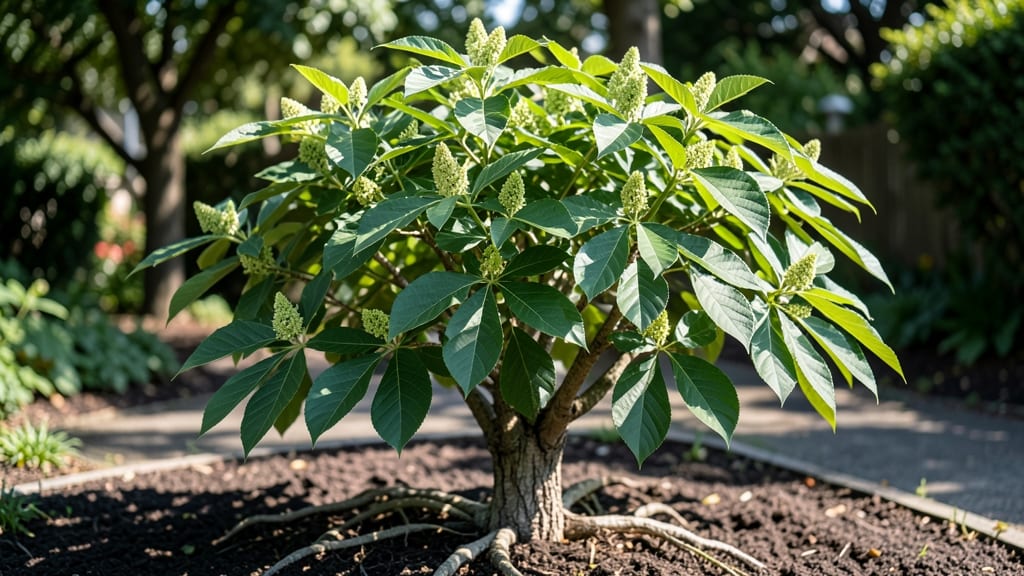
The tree of heaven root system diagram reveals a silent takeover—aggressive lateral roots that outmaneuver anything you plant nearby. 🌳 I’ve wrestled with this invasive tree’s underground network firsthand—once it’s established, even the most determined gardener can feel like they’re fighting a losing battle.
Those deep taproots (up to 10 feet) anchor the tree while shallow, sprawling laterals (spreading 30+ feet) steal water and nutrients from your prized plants. The diagram shows how roots form dense mats near the surface, making removal tools like a skid-steer or root saw essential for cleanup.
One wrong cut, and you’ll be dealing with regrowth for years.
📚 In This Guide
- What you need
- Instructions
- Tips and common mistakes
- Wrapping up and next steps
What you need
- ● Graph paper or large sketchpad (11" x 17" or larger for detailed diagrams).
- ● Pencils (HB and 2B) (2–3 pencils for sketching and shading).
- ● Eraser (kneaded or vinyl for clean corrections).
- ● Ruler (12" or 18") for precise measurements.
- ○ Protractor (optional but helpful for angle accuracy).
- ● Colored markers or pencils (3–5 colors to differentiate root types: primary, secondary, and invasive spread).
- ● Reference images of Tree of Heaven (Ailanthus altissima) root systems (print or digital).
- ● Notebook or digital tool (for labeling root depths, spread patterns, and notes).
- ● Compass for drawing perfect circles (to represent root clusters).
- ● Grid paper with 0.1" increments for hyper-detailed scaling.
- ● Digital tablet (e.g., Wacom) if creating a digital diagram.
- ● Printed legend template to label root zones (e.g., "Taproot," "Lateral Spread").
- ● Measuring tape (10–25 ft) if sketching roots in situ (fieldwork).
- ● 🌡️ Use real-world measurements: Tree of Heaven roots can spread 50–100 ft laterally—scale your diagram accordingly!
- ● ✨ Color-code aggressively: Red for invasive roots, blue for primary, and green for secondary growth.
- ● 🎯 Add a scale bar (e.g., "1 cm = 10 ft") to contextualize spread patterns.
How to identify tree of Heaven's invasive root spread
Understanding this tree's aggressive root structure helps you control it before it takes over your landscape.
🌱 Step 1: Locate the Primary Taproot and Lateral Roots
The tree of heaven (Ailanthus altissima) starts with a thick central taproot that can reach 10-15 feet deep within its first decade. This main root anchors the tree and makes it extremely difficult to remove completely. Use a shovel or root saw to expose the soil around the base—look for the 3-6 inch diameter white or tan root running straight down.
Once you've found the taproot, trace the secondary lateral roots radiating outward. These spread 10-20 feet horizontally and often form suckers where they intersect with surface roots. The lateral roots are thinner (1-3 inches wide) but more numerous—count on 3-5 major branches per mature tree. These are the roots that resprout if you don't cut them back aggressively.
🌿 Step 2: Map the Sucker Clusters and Rhizome Networks
Tree of heaven doesn't just spread from roots—it creates rhizomes, which are horizontal underground stems that form new shoots. Dig 12-18 inches deep around the tree's drip line (the edge of its canopy) to uncover these pencil-thick, fibrous roots. They often appear in clusters of 3-5, each capable of sprouting into a new tree if left intact.
Pay special attention to disturbed soil areas—construction sites, garden beds, or even compacted paths create perfect conditions for rhizomes to take hold. Mark these clusters with flagging tape or stakes so you can target them during removal. A single rhizome fragment left in the soil can regrow into a 10-foot tree within 3-5 years.
✂️ Step 3: Document the Root System with Sketches or Photos
Grab a measuring tape, graph paper, and a camera to create a visual record. Sketch the taproot's depth, the lateral roots' spread, and the rhizome clusters with their distances from the main trunk. For example, note that "Lateral Root #2 extends 12 feet northeast and has 4 active suckers at its tip."
Take close-up photos of the root structures—especially the rhizome nodes (the swollen sections where new shoots emerge). These visuals will help you track regrowth and plan future treatments. Label each photo with the date, location, and root type (e.g., "Primary Lateral Root – June 15, 2024"). This documentation is critical if you're working with a professional removal team.
💧 Step 4: Test Soil Moisture and Compaction Zones
Tree of heaven thrives in moist, compacted soil, so dig test holes every 5 feet around the tree to check moisture levels. Use a soil probe or trowel to insert into the ground—if the soil feels damp below 6 inches, that's an ideal growing zone for rhizomes. Mark these areas with stakes to prioritize treatment.
Compacted soil (common in urban areas) accelerates root spread because the roots grow horizontally rather than downward. If the soil resists penetration with your hand, it's likely compacted. In these zones, rhizomes can spread up to 3 times faster than in loose soil. Aerate these areas with a soil aerator or deep fork to weaken the root system before removal.
⏰ Step 5: Plan Removal Based on Root Age and Season
Young trees (under 5 years old) have shallower taproots and fewer lateral branches, making them easier to remove. Aim for early spring or fall when the tree is dormant—roots are less active, and regrowth is slower. For mature trees, late winter pruning (just before buds swell) reduces sap flow and makes cutting roots easier.
If the tree is 10+ years old, expect the taproot to be hard as concrete—you'll need a root saw or excavator to sever it completely. Cut at least 6 inches below the soil surface to prevent regrowth from root fragments. After removal, monitor the site for 2 years—even small root pieces can sprout new trees. Apply mulch or landscape fabric to block sunlight from dormant buds.
Tips & tricks for mastering tree of Heaven root identification
These targeted insights will help you uncover the full scope of this invasive tree's underground network—before it's too late.
Equipment Essentials: I can't stress enough how much easier root identification becomes with the right tools. A root saw (not a regular saw) is a game-changer for cutting through the 3-6 inch diameter taproot mentioned in Step 1. For younger trees, a sturdy shovel with a sharp edge works well, but don't try to force it—the roots are tougher than they look. I also recommend bringing a soil probe for testing moisture levels in Step 4, as compacted soil can accelerate rhizome spread by up to 300%.
Visual Documentation Hack: When you're sketching the root system in Step 3, use a simple color-coding system to distinguish between root types. I mark the taproot in black, lateral roots in brown, and rhizomes in red—the colors stand out against your graph paper and make patterns immediately obvious. For photos, include a ruler or measuring tape in each shot to provide scale, especially when documenting those 10-20 foot lateral spreads from Step 1.
Seasonal Timing Strategy: The dormant periods mentioned in Step 5 are your best windows for identification—roots are less active, making them easier to trace. In early spring, look for new sucker clusters emerging from lateral roots; these are your first clues about last year's spread. Fall is ideal for mapping because the soil is still workable but the tree hasn't yet entered winter dormancy. If you're working in late summer, be prepared for the soil to be drier and roots harder to expose.
Hidden Spread Warning Signs: Don't limit your search to just under the tree's canopy. Tree of heaven often spreads aggressively along property lines, utility trenches, and even beneath sidewalks. In Step 2, when you're looking for those pencil-thick rhizome clusters, check areas where the ground appears unnaturally moist or has recent disturbances. These are prime invasion zones where even small root fragments can regenerate into full trees within 3-5 years.
Pro Tips for Tree Of Heaven Root System Diagram
- These targeted insights will help you uncover the full scope of this invasive tree's underground network—before it's too late.
- Equipment Essentials: I can't stress enough how much easier root identification becomes with the right tools.
- Visual Documentation Hack: When you're sketching the root system in Step 3, use a simple color-coding system to distinguish between root types.
Frequently asked questions
Got questions about the Tree of Heaven’s root system? You’re not alone! Here are some of the most common concerns—and their answers—to help you manage this invasive species like a pro.
How deep do Tree of Heaven roots grow?
The roots of a Ailanthus altissima can spread 20–30 feet wide and penetrate 10–15 feet deep. Their aggressive lateral roots (especially suckers) make removal tricky—always dig beyond the visible root zone to prevent regrowth. Pro tip: Use a root saw or trenching tool for stubborn roots!
Can Tree of Heaven roots damage foundations or pipes?
While not as destructive as silver maple or willow trees, Tree of Heaven roots can invade cracks in foundations, sidewalks, or sewer lines if left unchecked. Monitor young trees closely, and prune roots before they reach structures. Troubleshooting: If damage occurs, consult an arborist for targeted root barriers.
What’s the best time of year to remove Tree of Heaven roots?
Late fall or early winter (November–February) is ideal because the tree’s sap flow slows, making removal easier. Avoid spring/summer when roots are active and regrowth is faster. Bonus: Apply glyphosate in late summer for stump treatment before dormancy sets in.
Will cutting the trunk kill the roots permanently?
Nope! This tree is a regrowth champion—even a stump can sprout new shoots from dormant buds. For 100% removal, combine trunk cutting + root excavation + herbicide (like triclopyr). Warning: Wear gloves; sap can irritate skin!
Are there non-toxic alternatives to chemical root killers?
Yes! For small roots, try vinegar + dish soap (50/50 mix) or boiling water injected into fresh cuts. Larger infestations may still need glyphosate, but manual digging (with a shovel or mattock) is the safest long-term fix. Eco-friendly tip: Smother roots with cardboard + mulch to starve them of light.
How do I know if new sprouts are from the Tree of Heaven?
Look for compound leaves (7–13 leaflets) with a distinctive “peppery” smell when crushed. Young shoots often appear green and fuzzy in spring. Quick test: Snap a stem—if it’s hollow, it’s likely Tree of Heaven!
Wrapping up and next steps
Understanding the Tree of Heaven root system is your first line of defense against its invasive spread! 🌳 With its deep taproots and aggressive lateral growth, this tree can quickly dominate landscapes—but armed with knowledge, you can manage it effectively.
Whether you’re a gardener, landscaper, or nature enthusiast, recognizing these patterns helps you take action early.
Ready to tackle this challenge? Start by monitoring your property for new sprouts or monitoring existing trees. If removal is needed, consult local experts or extension services for the safest methods. Every step counts in preserving your green spaces!