
Pruning
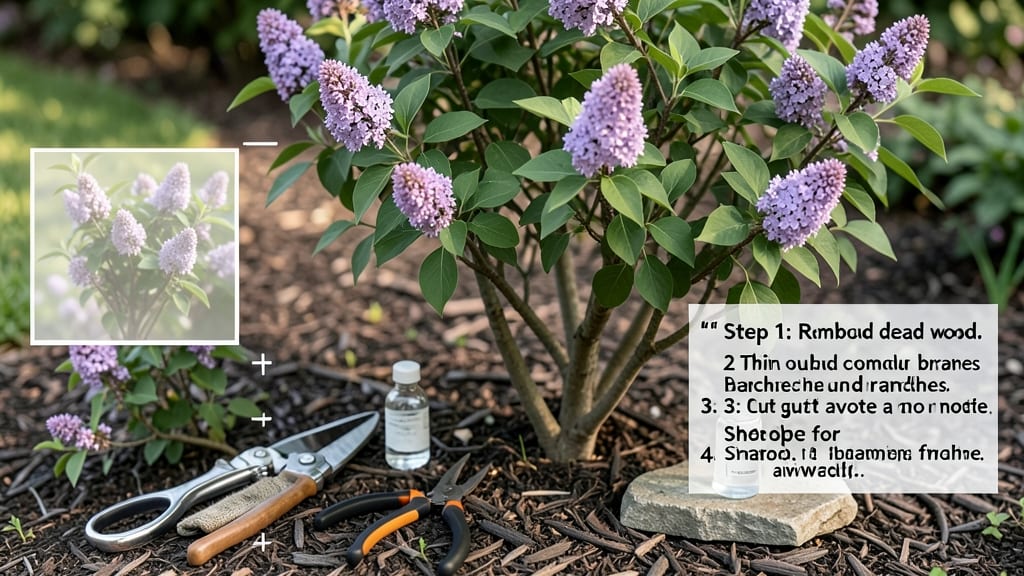
Seeing a lilac tree pruning diagram in action transforms your shrub from a tangled mess into a showstopper with lush, fragrant blooms every season. 🌸 I’ve pruned mine for years, and the difference between a well-maintained lilac and one left to its own devices is night and day—think dense foliage, stronger stems, and bigger clusters of flowers.
The key is timing: prune right after flowering, when the blooms fade but before the seeds form. Grab your pruners, gloves, and a bucket for clippings, then focus on removing old wood (any stems over 3 years old) and shaping the shrub.
Lilacs bloom on last year’s growth, so cutting back too aggressively means fewer flowers next spring. By summer’s end, your lilac will look neater, fuller, and healthier, with new growth pushing out for next year’s blooms.
The secret is patience—lilacs reward careful pruning with decades of reliable fragrance and color. This method works for common lilacs, French lilacs, and even dwarf varieties, so whether you’ve got a mature shrub or a young plant, these cuts will keep it thriving for years.
📚 In This Guide
- What you need
- Instructions
- Tips and common mistakes
- Wrapping up and next steps
What you need
- ● Pruning shears (bypass or anvil type) – Choose bypass shears for cleaner cuts (recommended for lilacs). Size: 6–8 inches, with sharp, stainless steel blades.
- ● Loppers – For thicker branches (½–1½ inches). Opt for bypass loppers with long handles (24–36 inches) for leverage.
- ● Pruning saw – For branches thicker than 1½ inches. A curved-tooth saw prevents tear-out.
- ● Garden gloves – Heavy-duty, cut-resistant (e.g., leather or Kevlar) to protect hands from thorns and sharp tools.
- ● Disinfectant (70% isopropyl alcohol or bleach solution) – 1 part bleach to 9 parts water to sterilize tools and prevent disease spread.
- ● Rags or paper towels – For wiping down tools between cuts.
- ● Ladder or step stool – If your lilac is taller than 6 feet, use a stable, non-slip ladder rated for your weight.
- ● Trash bags or bucket – For collecting pruned branches (check local regulations for disposal).
- ○ Permanent marker – To mark branches for removal (optional but helpful for complex pruning).
- ● Hand pruners with ratcheting mechanism – Reduces hand fatigue for extensive pruning.
- ● Safety glasses – Protects eyes from debris, especially when using a saw.
- ○ Tree wound dressing (optional) – Not recommended for lilacs (they heal naturally), but some gardeners use it for peace of mind.
- ● Notebook & pen – To sketch your lilac’s structure or track pruning progress over seasons.
- ● Extension pole pruners – For high branches without a ladder (great for large lilacs!).
Step-by-Step guide to pruning lilac trees for stunning seasonal blooms
Here's how to shape your lilac into a flowering powerhouse—without sacrificing next year's blossoms.
✂️ Step 1: Prune Immediately After First Flowering
Wait until two weeks after your lilacs finish blooming before making the first cut. This timing ensures you remove spent flowers while leaving next year's buds intact—those buds form on last year's growth. Use sharp, clean pruners to cut just above the first set of healthy leaves below each faded flower cluster.
Real talk: If you prune too early, you'll sacrifice next spring's blooms. If you wait too late, the tree puts energy into seed production instead of next year's flowers. Look for browned, papery petals as your cue—this signals the plant has finished flowering for the season.
✂️ Step 2: Thin Out Crowded Branches for Better Airflow
Remove one-third of the oldest stems at ground level, cutting them back to the base. These are the thickest, woodiest branches that no longer produce strong blooms. Focus on branches that cross or rub against others—these create wounds and invite disease. Make cuts at a 45-degree angle, about ¼ inch above an outward-facing bud to encourage outward growth.
I like to work from the inside out, removing branches that block sunlight from reaching the center. You'll see more blooms on the outer portions of the tree after this step—better light penetration means more flower buds forming on next year's growth.
✂️ Step 3: Shape the Tree for Optimal Form
Lightly trim any branches that grow inward or downward to maintain an open, vase-like shape. Never remove more than one-third of the tree's total growth in a single season—this stresses lilacs and weakens flowering. For larger branches over ½ inch thick, make a second cut 6-12 inches below your first cut to prevent tearing the bark.
Here's the thing—lilacs bloom on old wood, so avoid heavy pruning that removes last year's flower buds. Instead, focus on selective cuts that improve structure while preserving next year's blooming potential. Step back frequently to visualize the tree's natural shape.
✂️ Step 4: Light Summer Pruning to Encourage New Growth
During late June or early July, remove any weak, diseased, or crossing branches. This light pruning encourages new growth that will produce next year's flowers. Avoid heavy pruning during summer—it stimulates tender growth that won't harden off before winter.
Watch for new shoots emerging from the base of the tree. These are your future flowering stems. If you see any, leave them be—they'll become next year's blooming branches. Only remove branches that are clearly weak or damaged.
⏰ Step 5: Prepare for Winter Dormancy
After the first frost, remove any remaining dead or diseased wood. This prevents pests and diseases from overwintering in the tree. Apply a 2-3 inch layer of mulch around the base (but not touching the trunk) to protect roots from freezing temperatures.
Don't prune in fall—it stimulates new growth that won't survive winter. Instead, focus on cleaning up around the tree. Remove fallen leaves and debris to reduce disease pressure. Your lilac will thank you with stronger blooms next spring.
Tips & tricks for pruning lilac trees like a pro
Mastering the art of lilac pruning takes patience and precision—here's how to avoid common mistakes and transform your tree into a blooming masterpiece.
Timing is Everything: The two-week window after flowering (Step 1) is non-negotiable for preserving next year's buds. I've seen gardeners miss this and wonder why their lilacs never rebloom—those buds form on last year's growth, so timing is critical. Mark your calendar two weeks after your lilacs finish blooming to ensure you don't sacrifice next season's show.
Bud Orientation Matters: When making cuts in Step 2, always aim for outward-facing buds—this encourages the tree to grow outward rather than inward. I learned this the hard way after years of pruning that resulted in dense, unruly growth. That ¼-inch clearance above the bud makes all the difference in creating an open, airy structure that catches sunlight and promotes flowering.
Tool Maintenance Prevents Damage: Sharp pruners are your best friend, but they need to stay sharp. Dull blades tear bark and create wounds that invite disease. I keep a small file in my gardening kit to maintain my pruners between uses. For larger branches in Step 3, make your second cut just outside the branch collar—the swollen area where the branch meets the trunk—to promote proper healing.
Seasonal Strategy for Year-Round Health: The late June/early July pruning in Step 4 isn't just about aesthetics—it's about encouraging new growth that will produce next year's flowers. This is when you should remove any branches that are clearly weak or damaged. I've found that a little summer maintenance prevents major problems before winter, and it's the perfect time to shape the tree while new growth is still tender and responsive.
Pro Tips for Lilac Tree Pruning Diagram
- Mastering the art of lilac pruning takes patience and precision—here's how to avoid common mistakes and transform your tree into a blooming masterpiece.
- Timing is Everything: The two-week window after flowering (Step 1) is non-negotiable for preserving next year's buds.
- Bud Orientation Matters: When making cuts in Step 2, always aim for outward-facing buds—this encourages the tree to grow outward rather than inward.
Frequently asked questions
Got questions about pruning your lilac tree? You’re not alone! Here are some of the most common concerns—and straightforward answers to help you prune like a pro.
When is the best time to prune a lilac tree?
The ideal window is right after flowering (late spring to early summer). This ensures you don’t cut off next year’s blooms while still shaping the tree. Avoid pruning in fall or winter—it can stimulate new growth that’s vulnerable to frost damage.
How much can I trim back my lilac tree?
Never remove more than one-third of the plant’s height or width in a single year. For older lilacs, you can prune back to healthy, outward-facing buds to encourage fuller regrowth. Over-pruning weakens the tree and reduces flowering.
Why aren’t my lilacs blooming after pruning?
Lilacs bloom on old wood, so pruning too late (after mid-summer) can cut off next year’s flower buds. Also, check for over-fertilizing with high nitrogen, which promotes leafy growth over blooms. A balanced fertilizer in early spring can help!
Can I prune lilacs in rainy or humid weather?
It’s best to avoid pruning during wet conditions—tools can spread disease, and fresh cuts heal slower. Wait for a dry, overcast day to minimize stress on the tree. If you must prune in humidity, sterilize tools with rubbing alcohol between cuts.
What if my lilac tree is already overgrown? Can I fix it?
Yes! For severely overgrown lilacs, renewal pruning is an option: cut back one-third of the oldest stems each year for 3 years. This rejuvenates the tree while keeping it manageable. Pair this with regular seasonal pruning to maintain shape and health.
Wrapping up and next steps
Pruning your lilac tree isn’t just about keeping it tidy—it’s the secret to show-stopping blooms year after year! 🌸 With the right timing, tools, and technique (and maybe a handy lilac tree pruning diagram for reference), you’ll transform your yard into a fragrant paradise.
Remember: patience and precision pay off in lush, vibrant growth.
Ready to take action? Grab your pruners, dust off that diagram, and schedule your next pruning session—your lilac’s future beauty starts with your next cut! 🌿