
Container Gardens
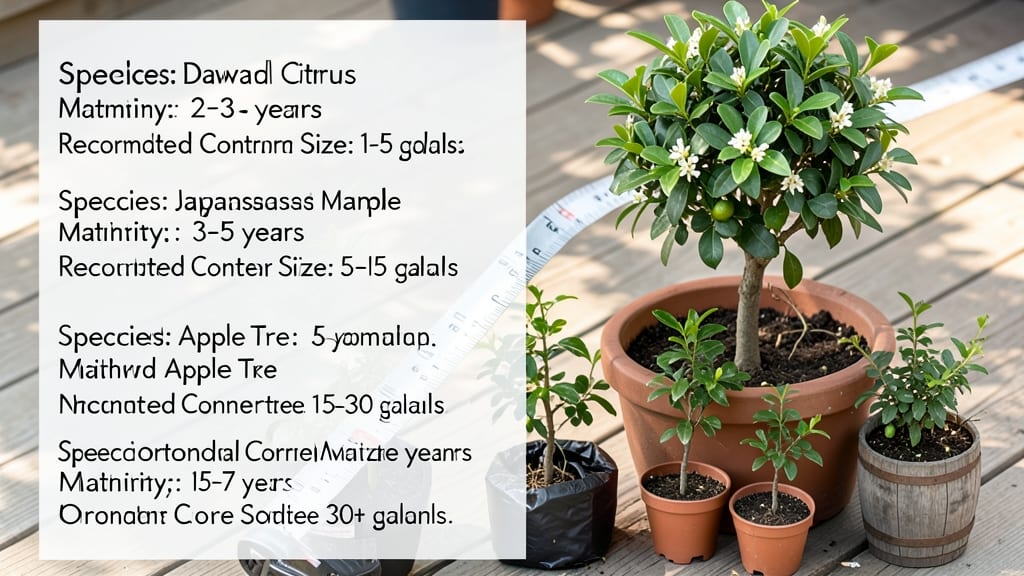
A tree container size chart helps you pair tree varieties with the right planter dimensions by matching mature heights to root space needs: dwarf trees (3–5 ft) thrive in 15–20 gallon containers, while small trees (6–10 ft) require 25–50 gallons, and large trees (15+ ft) need 75+ gallons for stability and healthy growth. Always verify each species' root spread requirements.
Choosing the right container size isn't just about height—root spread matters just as much. 🌳 A tree container size chart accounts for both, since roots need room to expand horizontally and downward.
For example, a 6-foot Japanese maple might fit in a 25-gallon pot, but its shallow roots demand a wider base rather than extra depth. I’ve seen many gardeners overlook this detail, leading to stunted growth or even root circling—a common issue where roots grow in tight loops instead of outward.
The key is balancing the pot’s diameter with its depth, especially for species prone to wind damage.
Container materials also play a role. Fabric grow bags offer flexibility for root expansion but require more frequent watering, while heavy ceramic pots provide stability for tall trees but can become top-heavy.
Always prioritize drainage holes—even the largest containers—and consider adding a 3-inch layer of gravel at the bottom to prevent soggy roots. For coastal areas, I recommend wider, shallower pots to improve wind resistance.
💡 In This Article
- How Root Ball Size Affects Tree Growth in Containers
- Best Container Materials and Dimensions by Tree Type
How root ball size affects tree growth in containers
Root ball size determines how efficiently a tree can absorb water and nutrients from its container. When roots outgrow their space, they become root-bound, which restricts nutrient flow and reduces oxygen uptake. This happens because roots grow in circular patterns within the pot, competing for the same resources.
For example, a 5-foot Japanese maple in a 15-gallon pot may struggle after 2-3 years, as its roots fill the space and start circling the container's edges.
The science behind this involves hydraulic lift—a process where roots draw moisture from deeper soil layers. In containers, this becomes difficult when the root ball is too compact.
Shallow-rooted species like dwarf fruit trees (e.g., apple or peach varieties) need wider pots to spread horizontally, while deep-rooted trees like olive trees require deeper containers to access moisture.
A 24-inch diameter pot provides about 15 gallons of root space, but adding 6 inches of depth can increase capacity to 25 gallons, benefiting deeper-rooted species.
Restricted root space also triggers stress hormones like ethylene, which can stunt growth or even kill the tree over time. I’ve noticed this in citrus trees confined to small pots—their leaves turn yellow, and new growth slows dramatically.
To mitigate this, use larger containers than recommended for fast-growing species, like willow or poplar trees, which can double in height within a year. Always leave at least 2-3 inches of space between the root ball and pot edges to encourage outward growth.
Another critical factor is soil aeration. Compacted soil in small pots reduces oxygen levels, suffocating roots. This is why well-draining potting mixes with perlite or sand are essential. For example, a 30-gallon container for a 10-foot crape myrtle should use a mix that’s 30% perlite to prevent compaction.
Without proper aeration, roots can’t expand efficiently, leading to poor nutrient absorption and weakened structural support.
Seasonal changes also impact root health. In winter, roots in small containers can freeze if the pot lacks insulation. I’ve seen evergreen trees in 10-gallon pots suffer frost damage because their shallow root systems couldn’t regulate temperature.
To prevent this, use insulated planters or bury the container partially in the ground during cold months. For coastal areas, wider pots improve stability against wind, reducing the risk of tipping—especially for tall, top-heavy trees like palms or cypress.
Finally, consider the tree’s lifespan when choosing a container. A 20-year-old olive tree in a 50-gallon pot will outgrow its space long before maturity. Plan for 5-10 years of growth by selecting a container that’s 25-50% larger than current recommendations.
This extra space allows roots to expand naturally, reducing the risk of root-bound stress and ensuring the tree thrives for decades.