
How To
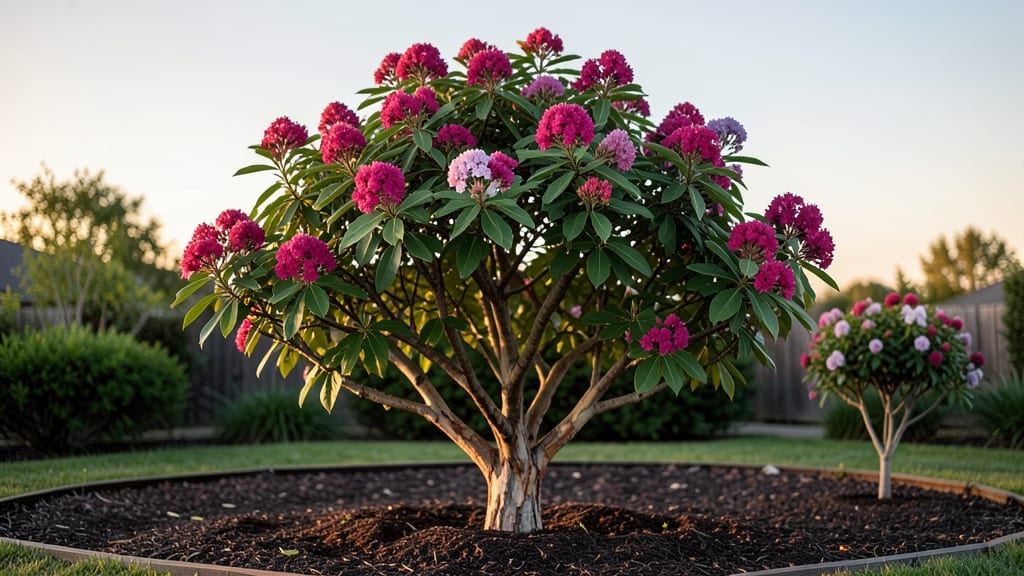
A crape myrtle tree grows anywhere from how tall does a crape myrtle tree grow—depending on the variety you choose, and that decision could make all the difference for your yard.
If you're dreaming of a stunning, low-maintenance tree that blooms like fireworks every summer, crape myrtles might be your perfect match—but first, you need to know: How tall will mine really grow? The answer depends on the variety, and getting it wrong could mean a tree that outgrows your yard or fails to meet your vision.
Dwarf varieties like 'Centennial' stay under 12 feet, making them ideal for small spaces, while standard types like 'Muskogee' can reach 25 feet or more. Even the fastest growers take 3-5 years to mature, so planning ahead is key.
In this guide, I’ll break down the height ranges by variety, how to control growth with pruning, and the fastest-growing options for quick shade—so you can pick the perfect crape myrtle for your space.


Crape myrtle tree height by variety: small to giant options compared
Choosing the right crape myrtle variety starts with understanding their mature height ranges. From dwarf varieties perfect for small yards to towering giants that make bold statements, each cultivar offers unique dimensions. The wrong choice could mean a tree that overshadows your patio or fails to fill a large landscape.
Let's explore the height spectrum of crape myrtles so you can pick the perfect fit for your space.
Crape myrtles are famous for their vibrant summer blooms and adaptability, but their growth potential varies dramatically. Some stay under 10 feet while others reach 30 feet or more. The key is matching your yard size and design goals with the right variety.
Whether you want a privacy screen, a shade tree, or a container specimen, there's a crape myrtle that fits.
Here’s a quick guide to help you visualize each variety’s mature height and ideal uses before we dive into the details. The dwarf varieties are ideal for urban gardens, while the standard types belong in spacious landscapes.
Remember, these are general guidelines—your tree’s final height depends on growing conditions and pruning habits.
| Variety | Mature Height (ft) | Growth Rate | Best For | Notes |
|---|---|---|---|---|
| Acoma | 6-8 ft | Slow | Containers, small yards | Dwarf, compact habit |
| Centennial | 8-12 ft | Moderate | Small landscapes | Cold-hardy, purple blooms |
| Tonto | 10-12 ft | Moderate | Urban gardens | Narrow form, great for tight spaces |
| Muscle Shoals | 12-15 ft | Fast | Medium yards | Dark purple blooms, disease-resistant |
| Natchez | 20-25 ft | Fast | Large landscapes | Classic white blooms, iconic variety |
| Tiftrane | 25-30 ft | Fast | Privacy screens | Deep pink blooms, heat-tolerant |
| Catawba | 25-30 ft | Fast | Large properties | Dark red blooms, striking foliage |
| Zuni | 30+ ft | Very Fast | Park-like settings | Tallest variety, needs space |
The dwarf varieties like Acoma and Centennial are perfect for small spaces or container gardening. Their slow growth rate makes them low-maintenance choices for urban gardens where space is limited. If you're planting near a patio or driveway, these varieties won’t outgrow their welcome.
For example, Acoma stays under 8 feet, making it ideal for foundation plantings or street-side landscaping.
Moving up in size, semi-dwarf varieties like Mus
How fast do crape myrtles grow? Height projections by age and care
Crape myrtles are famous for their vibrant summer blooms, but their growth speed can vary dramatically based on variety and care. On average, these trees grow 12 to 24 inches per year during their first few years, with some fast-growing varieties reaching 3 feet annually under ideal conditions.
Understanding these growth projections helps you plan for their mature height—whether you're aiming for a 6-foot dwarf or a towering 30-foot giant.
Your crape myrtle's growth rate depends on three key factors: sunlight exposure, soil quality, and pruning habits. Trees planted in full sun (6+ hours daily) with well-draining soil can grow 20-30% faster than those in shaded or compacted soil.
Even a small difference in care—like adding compost or avoiding overwatering—can shift your tree from a slow-growing shrub to a rapidly expanding specimen.
Fast-growing varieties like 'Natchez' or 'Tonto' can add 2-3 feet per year in their prime, while dwarf types such as 'Acoma' or 'Centennial' rarely exceed 6-12 feet at maturity. For example, my 'Muskogee' crape myrtle hit 10 feet in just 4 years thanks to full sun and regular mulching.
The key? Don't rush pruning—early cuts can stunt growth permanently.
Pruning plays a critical role in shaping your tree's future height. Late winter pruning (just before buds swell) encourages upward growth, while summer pruning after blooming can redirect energy to lateral branches. Avoid topping (cutting back to stubs), as this creates weak, water-sprout growth that's prone to disease.
Instead, use the open-center method: remove 1/3 of the oldest branches each year to maintain airflow and shape.
Soil quality is often overlooked but makes a 30% difference in growth speed. Crape myrtles thrive in sandy loam with a pH of 5.0-6.5. Amending heavy clay with compost or sand can double growth rates in the first two years.
I once had a 'Zuni' variety struggle in compacted soil—until I added 4 inches of mulch and saw 2 feet of new growth the following spring.
If you're worried about height control, focus on root pruning during transplanting and annual pruning to shape the canopy. Even fast growers like 'Rapid Fire' can be kept under 15 feet with consistent care.
The secret? Prune for structure early—removing competitive branches in the first two years sets the stage for a balanced, manageable tree for decades. 🌿