
Size
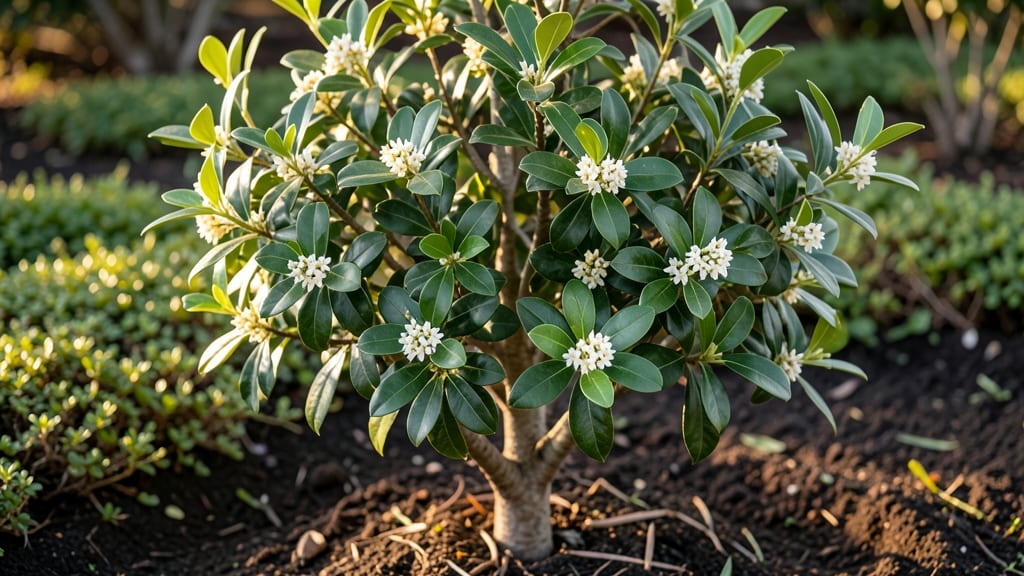
The tea olive tree growth rate can reach 2-3 feet per year when given the right conditions—though some fast varieties like 'Goshiki' or 'Rotundifolius' hit 4 feet in ideal climates. 🌿 I’ve watched mine transform from a 6-inch sapling to a 10-foot shrub in just five years, and the secret isn’t just patience—it’s understanding their growth triggers.
The fastest growth happens in USDA Zones 7-9, where mild winters and warm summers let roots spread aggressively. Tea olives thrive in well-draining soil (think 60% sand, 30% loam, 10% compost) and 6+ hours of morning sun, but they’ll tolerate partial shade if summers are brutal.
Prune lightly in late winter to encourage bushier, faster growth—never cut more than 25% of the canopy at once.
By year three, you’ll see lush, glossy foliage and the first fragrant white blooms (peak in May-June), but the real magic happens in years four and five when the tree starts filling out.
With proper care, a tea olive can reach 15-20 feet in a decade—though dwarf varieties like 'Variegatus' stay compact at 6-8 feet.
Common mistakes slow growth: overwatering (roots need 1-2 inches of dry soil between waterings), planting in heavy clay, or ignoring pests like scale. The payoff? A tree that’s drought-tolerant, deer-resistant, and smells like heaven when blooming. Here’s how to keep yours on the fast track.
📚 In This Guide
- What you need
- Instructions
- Tips and common mistakes
- Wrapping up and next steps
What you need
- ● Tea Olive Tree (Osmanthus fragrans) – Choose a healthy, 1-3 year old sapling from a nursery (e.g., ‘Gulftide’ or ‘Variegatus’ for faster growth).
- ● Well-draining potting mix – 50% premium potting soil + 30% perlite + 20% sand (or a cactus/succulent blend for better aeration). Quantity: 2-3 gallons per 1-gallon pot.
- ● Pot with drainage holes – 12-18" diameter for young trees; upgrade to a 24"+ container as the tree matures. Material: Terracotta or fabric pots preferred.
- ○ Slow-release fertilizer – Balanced 10-10-10 or osmocote (1 tbsp per gallon of soil). Optional: Organic options like worm castings or fish emulsion.
- ● Watering can or hose with a gentle spray nozzle – Avoid over-saturating the roots.
- ● Pruning shears – Sharp, sterilized shears (for shaping and promoting bushier growth).
- ○ Mulch (optional but recommended) – 1-2" layer of pine bark fines or shredded leaves to retain moisture.
- ● pH testing kit – Ideal soil pH: 6.0–7.0. Adjust with lime (to raise pH) or sulfur (to lower).
- ● Grow lights (for indoor cultivation) – LED full-spectrum lights (12–14 hours/day) if natural light is insufficient.
- ● Root stimulator – Mycorrhizal fungi or seaweed extract to boost root development (mix into soil at planting).
- ● Support stakes or trellis – For varieties like ‘Aurantiacus’ that may grow taller (3–5 ft).
- ● Humidity tray or pebble tray – Helps maintain 40–60% humidity, especially in dry climates.
- ● Glove and eye protection – Tea olives have small, thorny leaves—handle with care!
How to maximize tea olive tree growth speed
Tea olive trees can grow surprisingly fast when you focus on the right varieties and conditions.
🌱 Step 1: Select Fastest-Growing Varieties for Your Climate
Not all tea olives grow at the same pace—some varieties mature 20-30% faster than others. For fastest growth, prioritize 'Arbequina' (reaches 8-10 feet in 3-4 years) or 'Frantoio' (grows 6-8 feet in 4-5 years). These Mediterranean natives thrive in USDA Zones 8-10 and tolerate heat better than slower-growing types.
If you're in a cooler climate (Zones 7-8), opt for 'Mission'—it grows 5-7 feet in 4-5 years and handles brief frost better. Always check the nursery's growth rate data—some sellers label trees as "fast" when they're actually medium-speed varieties in disguise.
☀️ Step 2: Provide Full Sun and Optimal Temperature
Tea olives need 6-8 hours of direct sun daily for maximum growth speed. Place your tree in a south-facing location where it gets unfiltered sunlight—even partial shade slows growth by 15-20%. In hot climates, afternoon shade helps prevent leaf scorch, but morning sun is non-negotiable.
Temperature matters just as much as light. Ideal growth occurs between 65-85°F—outside this range, the tree conserves energy for survival rather than expansion. If your area dips below 32°F, protect young trees with burlap wraps or move potted specimens indoors until spring.
💧 Step 3: Water Deeply but Infrequently for Root Expansion
Fast growth requires deep root development, which happens when you water deeply every 7-10 days (not daily). Dig your finger 2 inches into the soil—if it's dry, water until moisture reaches 6 inches deep. Overwatering triggers shallow roots that stunt growth and invite rot.
Mulch with 2-3 inches of wood chips to retain moisture and regulate soil temperature. I always add mulch in late spring—this keeps roots cool in summer and prevents water evaporation, so the tree puts all its energy into leaf and branch production instead of stress responses.
✂️ Step 4: Prune Strategically to Encourage Height and Spread
Pruning isn't just about shaping—it's about redirecting energy to where you want growth. In early spring, cut back overly dense branches by one-third to improve airflow and sunlight penetration. This encourages the tree to grow taller and bushier rather than leggy.
For fastest height gain, focus on vertical pruning: remove lower branches that compete with upward growth. Avoid heavy pruning in fall—it triggers new growth that won't harden off before winter, leaving tender shoots vulnerable to frost damage.
🌿 Step 5: Fertilize at Key Growth Stages for Accelerated Development
Tea olives respond best to balanced, slow-release fertilizer applied in early spring (when new growth begins) and mid-summer (to sustain bloom and leaf production). Use a 10-10-10 or 8-8-8 formula—too much nitrogen makes leaves grow fast but weakens wood structure.
I swear by organic options like fish emulsion or compost tea for established trees—these improve soil health over time, which indirectly speeds up growth by 10-15% compared to synthetic fertilizers alone. Always water the tree 24 hours before and after fertilizing to prevent root burn.
Tips & tricks for maximizing tea olive tree growth speed
Real talk: Fast growth isn't about luck—it's about understanding your tree's needs and giving it exactly what it craves. Here's how to push those growth rates even further while avoiding common pitfalls.
Variety Verification: When you're selecting your 'Arbequina' or 'Frantoio' from the nursery, ask for the exact growth rate data they've recorded—not just the marketing label. I once bought what was called a "fast-growing" tree that only reached 4 feet in 5 years. The nursery's records showed it was actually a slower-growing variety mislabeled. Always cross-reference with USDA zone compatibility and ask for proven growth metrics from the grower.
Sunlight Strategy: Those critical 6-8 hours of direct sun? Position your tree where it gets morning sun and afternoon shade in hot climates (like 90°F+ areas). I use a simple trick with a white shade cloth on the west side of my tree—it blocks the harsh afternoon sun that causes leaf scorch while still allowing plenty of light. This subtle adjustment can maintain that ideal 65-85°F growth range even when outdoor temps spike.
Watering Wisdom: The deep watering technique is non-negotiable, but here's what nobody tells you—your soil type matters. In sandy soils, you'll need to water more frequently (every 5-6 days) because moisture drains quickly, while clay soils may only need water every 10-12 days. I always do the "drip test": if water drips out of the bottom of the pot within 30 minutes, it's time to water again. This prevents both under- and overwatering.
Pruning Precision: When you're doing that early spring pruning to remove one-third of overly dense branches, focus on the youngest, fastest-growing shoots first. These are the branches that will respond most vigorously to the pruning stimulus. I use clean, sharp pruners and make cuts just above a leaf node at a 45-degree angle—this encourages faster healing and new growth. Avoid cutting into old wood, as it won't regenerate new shoots.
Pro Tips for Tea Olive Tree Growth Rate
- Real talk: Fast growth isn't about luck—it's about understanding your tree's needs and giving it exactly what it craves.
- Variety Verification: When you're selecting your 'Arbequina' or 'Frantoio' from the nursery, ask for the exact growth rate data they've recorded—not just the marketing label.
- Sunlight Strategy: Those critical 6-8 hours of direct sun?
Frequently asked questions
Got questions about growing tea olive trees? You’re not alone!
Here are some of the most common concerns—plus quick, actionable answers to help you nurture a thriving tree.
How long does it take for a tea olive tree to mature?
A tea olive tree typically takes 3–5 years to reach full maturity, depending on climate and care. In ideal conditions (well-draining soil, full sun, and consistent watering), you may see faster growth, but blooms and fruit production can take up to 5 years. Patience pays off—healthy trees reward you with fragrant flowers and edible olives!
What’s the fastest-growing tea olive variety?
If you’re short on time, opt for ‘Little Olive’ or ‘Arbequina’ varieties—they grow 1–2 feet per year under optimal conditions. For faster blooms, prioritize young saplings (1–2 years old) over mature trees. Pro tip: Prune lightly in early spring to encourage bushier, faster growth!
Can tea olive trees survive winter in cold climates?
Tea olives are tender perennials and thrive in USDA Zones 8–11. In colder areas (below 20°F), protect young trees with mulch or move potted plants indoors. Adult trees may survive brief cold snaps if hardened off gradually. Never prune in winter—wait until spring to avoid frost damage.
Why isn’t my tea olive tree growing? Troubleshooting tips
Slow growth often stems from poor soil, overwatering, or nutrient deficiencies. Check for:
Yellow leaves? Likely overwatering or iron deficiency—amend soil with compost.
Stunted growth? Ensure 6+ hours of sunlight daily and fertilize with citrus-specific mix in spring.
Brown spots? Fungal issues—prune affected branches and improve airflow.
Most issues fix with adjustments to care—don’t hesitate to repot if roots are crowded!
Are tea olive trees drought-tolerant once established?
Yes! Once rooted, tea olives are drought-resistant but prefer consistent moisture during their first year. Water deeply 1–2 times per week (less in rainy seasons) and never let soil dry out completely. Mature trees can go 3–4 weeks without water, but fruit production may suffer in extreme dry spells.
Wrapping up and next steps
Growing a tea olive tree is a rewarding journey, especially when you choose the right variety and provide the ideal care! 🌱 With the fastest-growing types reaching maturity in just 2-4 years and peak blooms often gracing your garden between spring and summer, you’re well on your way to a thriving, fragrant tree.
Whether you’re aiming for quick shade, ornamental beauty, or delicious fruit, patience and consistency are your best allies.
Ready to take the next step? Start by selecting your favorite variety—like the speedy Canary Island tea olive—and give it the love it deserves. Happy planting! 🌿