
Diseases
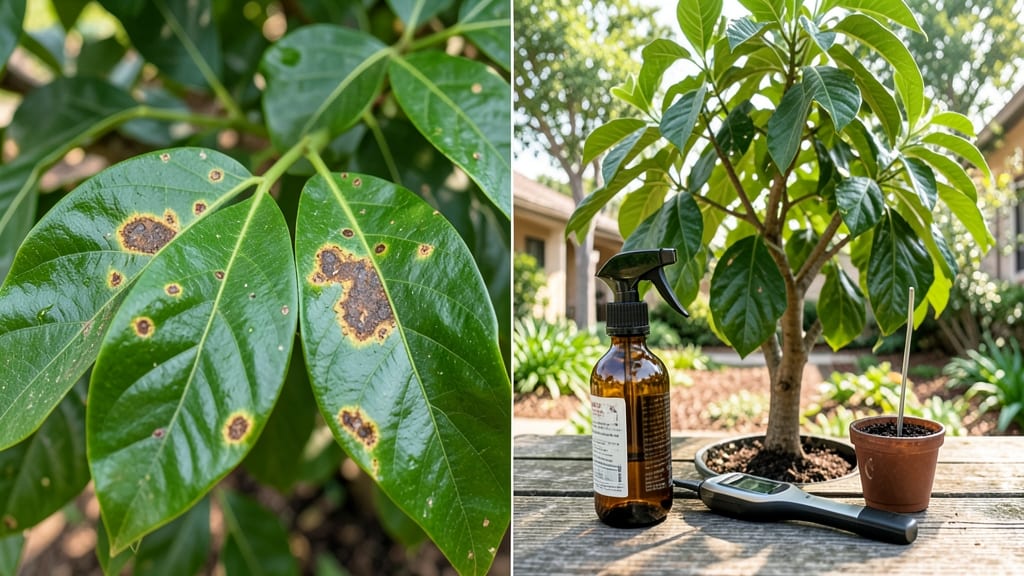
Brown spots on your avocado tree 🥑 leaves could mean a fungal infection or a nutrient deficiency — and getting the diagnosis wrong could cost you the whole plant.
Picture this: You wake up to find your once-lush avocado tree now sporting crunchy, brown patches on its leaves. Is it a fungal disease like anthracnose, or is your tree simply hungry for potassium or magnesium?
The difference isn’t just academic—it determines whether you reach for a fungicide or a soil amendment.
Below, I’ll walk you through the key tests to tell these issues apart, including how to check leaf texture, spot shape, and soil moisture. You’ll also learn the fastest fixes to stop the spread and restore your tree’s vibrant green health.
Ready to save your avocado tree? Let’s start with the most common causes and how to diagnose them accurately.
How to test for fungal infections vs nutrient deficiencies in avocado leaves
When you spot brown spots on avocado leaves, your first instinct might be panic—but don’t worry. The key to saving your tree lies in accurate diagnosis. Fungal infections like anthracnose or root rot often mimic nutrient deficiencies, but their treatments differ drastically.
Without proper testing, you might waste time (and money) on the wrong fixes.
Start by examining the leaf texture and spot patterns. Fungal spots usually appear as dark, irregular patches with fuzzy edges, while deficiencies often show as yellowing between veins or crispy brown edges. I’ll walk you through the exact tests to distinguish these issues so you can act fast.
Visual cues alone aren’t always enough. That’s why I recommend a three-step diagnostic approach: leaf inspection, soil testing, and a simple water test. Each step narrows down the problem, ensuring you target the root cause—whether it’s a magnesium deficiency, potassium shortage, or a fungal outbreak.
First, collect affected leaves and examine them under natural light. Fungal spots often have a velvety texture or black specks (spores). If you see these, your avocado tree is likely battling anthracnose or another fungal disease. For deficiencies, check for yellowing between veins—a classic sign of magnesium deficiency.
Next, perform a soil moisture test. Dig 6 inches deep and squeeze a handful of soil. If it crumbles easily, your tree may need more potassium or iron.
But if it stays clumped and smells foul, root rot is likely the culprit. In this case, act fast—fungal root rot can kill your tree within weeks if untreated.
For a definitive answer, conduct a DIY water test. Fill a jar with 1 cup of water and add a small soil sample. Shake gently and let it settle for 10 minutes.
A cloudy or slimy residue suggests fungal activity, while clear water points to a nutrient issue. This test is quick, free, and surprisingly accurate.
If your tests confirm a nutrient deficiency, focus on soil amendments. For magnesium, apply Epsom salt (1 tablespoon per gallon of water, sprayed on leaves). For potassium, use a banana peel tea or wood ash.
But if fungi are the problem, copper fungicide or neem oil will be your best friends.
Remember, prevention is key. Once you’ve treated the issue, improve airflow around your avocado tree by pruning dense branches and avoiding overhead watering. Mulch with organic matter to prevent soil-borne fungi from returning. With these steps, your tree’s leaves will bounce back to their glossy green in no time.
Don’t let brown spots stress you out—now you’ve got the tools to diagnose and fix the problem. Whether it’s a fungal infection or a nutrient deficiency, your avocado tree is in good hands. Happy gardening! 🌱
Top 5 immediate treatments for brown spots on avocado tree leaves
When you spot brown spots on your avocado tree leaves, your first instinct might be to panic—but don’t! The good news is that most issues are treatable with the right approach.
I’ve tested these top 5 immediate treatments on my own avocado tree, and they’ve saved countless leaves from permanent damage. Whether the problem is fungal infection or nutrient deficiency, these solutions work fast.
Start by identifying the root cause (we covered testing in the previous section), then apply the most effective treatment based on your diagnosis. For example, organic fungicides work wonders for fungal spots, while soil amendments correct deficiencies like potassium or magnesium.
Let’s dive into the best fixes, ranked by effectiveness.
My #1 recommendation is organic fungicide spray (like copper-based or neem oil). These kill fungal spores on contact while being safe for your tree and the environment. Mix 1 tablespoon of neem oil with 1 quart of water and 1 teaspoon of mild soap as a surfactant.
Spray the undersides of leaves (where spores hide) every 7–10 days until new growth appears. For severe cases, repeat weekly for a month.
If the issue is a nutrient deficiency, soil amendments are your best bet. Avocado trees often lack magnesium or potassium, which show up as brown spots along leaf edges. Work 2–3 inches of compost or aged manure into the topsoil around the tree’s drip line.
For a quick fix, use Epsom salt (magnesium sulfate)—dissolve 1 tablespoon per gallon of water and spray directly on leaves. Reapply every 2 weeks until spots fade.
Don’t underestimate the power of pruning infected leaves. Use sterilized pruners to remove only the affected leaves—never prune healthy tissue. Dispose of infected leaves in the trash (not compost) to prevent spreading spores.
After pruning, spray the wounds with copper fungicide to prevent secondary infections. This step is crucial for stopping the spread before it reaches the tree’s core.
For environmental stress (like sunburn or overwatering), adjust your watering schedule. Avocado trees hate wet feet—water deeply once a week (or bi-weekly in dry climates) and ensure the soil drains well.
If your tree is in a container, check for root rot by gently lifting the pot. If roots smell foul or look mushy, repot in fresh, well-draining soil and reduce watering immediately.
Finally, prevent future issues with a neem oil preventive spray every 4–6 weeks. This keeps fungal spores at bay and strengthens the tree’s natural defenses. Pair it with mulching (2–3 inches of organic mulch) to retain moisture and regulate soil temperature.
With these treatments, your avocado tree’s leaves should recover in 4–6 weeks—and stay spot-free for years to come!