
Trees
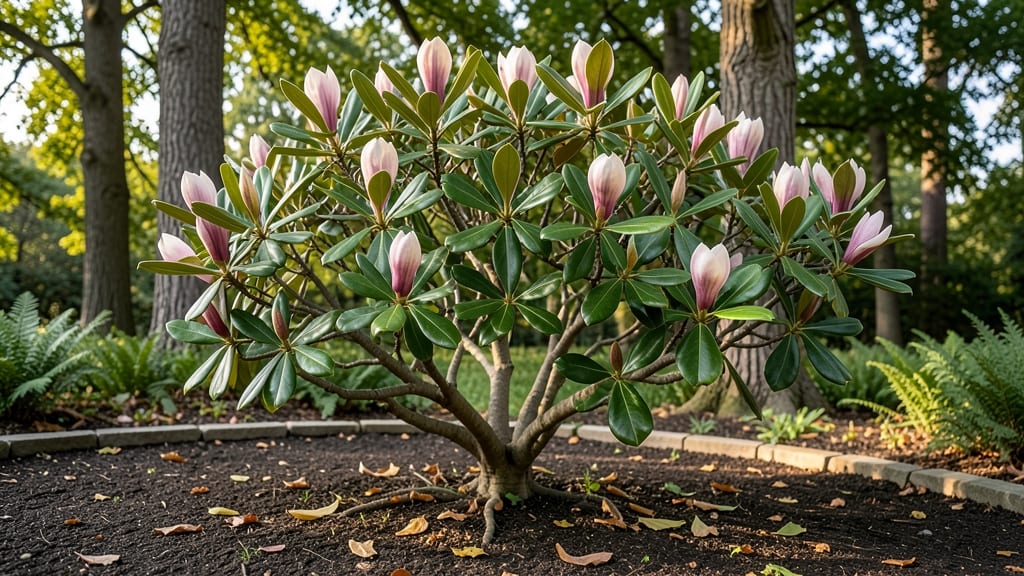
Your saucer magnolia tree leaves are screaming for attention when they yellow, spot, or droop—don’t ignore them. 🌿 These iconic trees reward proper care with stunning blooms and glossy foliage, but pests, disease, and simple neglect can turn their leaves into a mess.
I’ve diagnosed everything from powdery mildew to scale infestations, and the fixes are simpler than you’d think.
Start by checking the undersides of leaves for tiny pests or fungal spots—those are your clues. Aphids leave sticky residue, while brown patches often mean too much sun or water stress.
The key is acting fast: prune affected branches, adjust watering, and apply neem oil or insecticidal soap before problems spread. With the right approach, your magnolia’s leaves stay vibrant all season long.
📚 In This Guide
- What you need
- Instructions
- Tips and common mistakes
- Wrapping up and next steps
What you need
- ● Pruning shears or loppers – Sharp, sterilized tools (for trimming dead/diseased leaves and shaping). Quantity: 1 pair.
- ● Gloves – Garden gloves (to protect hands from thorns and sap). Quantity: 1 pair.
- ○ Pruning sealant – Optional but helpful for sealing larger cuts to prevent disease.
- ● Fertilizer – Balanced, slow-release granular fertilizer (e.g., 10-10-10 or magnolia-specific blend). Quantity: ~1 lb per 100 sq ft.
- ● Mulch – Organic mulch (shredded bark or pine straw). Quantity: 2–3 inches, spread in a 3-foot radius around the base.
- ● Watering can or hose – With adjustable nozzle for gentle watering.
- ○ pH testing kit – Optional but useful to check soil acidity (ideal: 5.0–6.0).
- ● Leaf rake – For clearing fallen leaves (especially in autumn).
- ● Location – A sunny to partially shaded spot (6+ hours of sunlight for optimal blooms).
- ● Soil type – Well-draining, slightly acidic soil (amend with compost if needed).
- ● Water access – Consistent moisture (especially during first year and droughts).
- ● Patience – Saucer magnolias mature slowly (full size in 10–15 years!).
How to identify and care for saucer magnolia tree leaves
Here's how to recognize and nurture those stunning saucer magnolia leaves that keep your garden vibrant all year.
🌿 Step 1: Identify Saucer Magnolia Leaves Correctly
Saucer magnolia (Magnolia × soulangeana) leaves are broad, oval, and glossy with a deep green color that turns yellow in fall. They're simple (not lobed) and grow alternately along the stems. The key identifier? Their size—typically 4-7 inches long and 2-3 inches wide—with smooth edges and a slightly pointed tip.
New growth emerges a rich bronze-purple before maturing to green, which is your first clue if you're unsure. The leaves also have a subtle, pleasant scent when crushed—something I always notice when pruning. If you see fuzzy buds forming in late winter, that's another dead giveaway.
☀️ Step 2: Provide the Right Growing Conditions
Saucer magnolias thrive in full sun to partial shade—at least 6 hours of direct sunlight daily. I've seen them struggle in deep shade, where leaves grow pale and sparse. In hot climates, afternoon shade prevents leaf scorch, but morning sun is essential for strong growth.
They tolerate a range of soils but prefer well-draining, slightly acidic soil (pH 5.0-6.5). Amend heavy clay with 2-3 inches of compost before planting. The roots spread widely, so avoid planting too close to sidewalks or foundations.
💧 Step 3: Water Deeply and Consistently
Water newly planted magnolias 1-2 times per week until established (about 2 years), providing 1-2 gallons per watering to encourage deep root growth. Mature trees need less—water when the top 2-3 inches of soil feel dry. Overwatering causes yellowing leaves, while underwatering leads to crispy edges.
Mulch around the base with 2-3 inches of organic mulch (like wood chips) to retain moisture and regulate soil temperature. Keep mulch 6 inches away from the trunk to prevent rot. I always check the soil moisture by hand rather than relying on a schedule—your fingers are the best gauge.
✂️ Step 4: Prune for Health and Shape
Prune saucer magnolias immediately after flowering (late spring) to avoid cutting off next year's blooms. Remove dead, diseased, or crossing branches first. For shaping, I make cuts just above a bud or outward-facing leaf to encourage new growth in the right direction.
Never prune in fall or winter—you'll risk damaging buds that form over winter. Thin out dense areas to improve airflow, which prevents fungal issues like powdery mildew. A light pruning keeps the tree's natural saucer shape while maintaining those gorgeous leaves.
🌱 Step 5: Fertilize for Year-Round Leaf Health
Apply a balanced, slow-release fertilizer (10-10-10) in early spring before new growth begins. Use about ½ cup per inch of trunk diameter. Avoid high-nitrogen fertilizers—they promote leafy growth at the expense of flowers, which is the whole point of a saucer magnolia!
In fall, switch to a low-nitrogen, high-phosphorus fertilizer (like 5-10-10) to support root development and prepare for winter. I always water the soil thoroughly before and after fertilizing to prevent root burn. Yellowing leaves in spring often signal over-fertilization—cut back if you see that happen.
Tips & tricks for perfect saucer magnolia leaf care
These simple strategies will help you keep your saucer magnolia leaves looking their best all season long.
Leaf Identification: When checking leaf size in Step 1, hold a ruler up to the leaf along its longest edge—this helps you spot underdeveloped leaves (they'll be smaller than 4 inches) or overgrown ones (closer to 7 inches). I keep a small measuring tape in my gardening tool belt for quick checks during pruning season. The bronze-purple new growth is your best clue in early spring when leaves aren't fully mature yet.
Sunlight Strategy: For the 6 hours of sunlight mentioned in Step 2, I recommend positioning your tree to catch morning sun (which is less intense) and afternoon shade in hot climates. You can test your tree's sunlight exposure by placing a white board where the tree would be planted—if it gets sun for 6+ hours, that spot works perfectly. In containers, rotate the pot every few weeks to ensure even sunlight exposure all around.
Watering Wisdom: The 1-2 gallons per watering in Step 3 should create a saturated soil zone about 12 inches deep. To test this, stick a long screwdriver into the soil after watering—it should slide in easily up to 12 inches. For mature trees, I water deeply every 10-14 days rather than frequent shallow waterings, which encourages stronger root growth. Always water at the base rather than overhead to prevent fungal diseases on those gorgeous leaves.
Pruning Precision: When pruning in Step 4, I look for the tiny "bud eyes" along branches—these are the little bumps where next year's growth will emerge. Making cuts just above these ensures new growth will continue in the right direction. For shaping, I use a string tied between two branches as a guide to maintain the tree's natural saucer shape while removing only the necessary branches.
Pro Tips for Saucer Magnolia Tree Leaves
- These simple strategies will help you keep your saucer magnolia leaves looking their best all season long.
- I keep a small measuring tape in my gardening tool belt for quick checks during pruning season.
- Sunlight Strategy: For the 6 hours of sunlight mentioned in Step 2, I recommend positioning your tree to catch morning sun (which is less intense) and afternoon shade in hot climates.
Frequently asked questions
Got questions about your saucer magnolia tree leaves? You’re not alone! Here are answers to the most common queries to keep your tree thriving year-round.
Why are my saucer magnolia leaves turning yellow?
Yellowing leaves (chlorosis) often signal iron deficiency or overwatering. Test your soil’s pH—saucer magnolias prefer acidic soil (pH 5.0-6.5). Apply iron chelate or compost to replenish nutrients. Avoid soggy roots by ensuring proper drainage.
When do saucer magnolia leaves change color in fall?
Unlike some trees, saucer magnolias don’t turn vibrant fall colors. Their glossy green leaves may yellow slightly in late fall, then drop by winter. The real show happens in spring with their large, fragrant blooms—often before leaves emerge!
Can I prune saucer magnolia leaves or branches in summer?
Prune only after flowering (late spring/early summer) to avoid cutting off next year’s blooms. Remove dead, crossing, or weak branches with clean cuts. Avoid heavy pruning—saucer magnolias have delicate wood that heals slowly. Wait until fall for major shaping.
Are saucer magnolia leaves prone to pests or diseases?
Watch for scale insects, spider mites, or powdery mildew on leaves. Treat pests with horticultural oil or insecticidal soap. Improve airflow by pruning dense growth. Fungal issues? Remove infected leaves and apply fungicide if needed. Healthy soil = fewer problems!
What’s a good alternative tree if I don’t want saucer magnolia leaves?
If you love large, glossy leaves but want lower maintenance, try:
- Japanese maple (Acer palmatum) – Stunning fall color
- Sweetgum (Liquidambar styraciflua) – Star-shaped leaves
- Crapemyrtle (Lagerstroemia) – Drought-tolerant blooms
Wrapping up and next steps
Your saucer magnolia tree is a stunning addition to any landscape, and with the right care, its glossy, saucer-shaped leaves will reward you with year-round beauty. 🌿 From proper pruning to seasonal adjustments, you now have the tools to keep this tree thriving.
The key is staying consistent—whether it’s monitoring soil health, protecting against pests, or enjoying its early spring blooms.
Ready to level up your gardening game? Grab your gloves, step outside, and give your magnolia the love it deserves. Next, why not explore companion plants that pair perfectly with its elegance? 🌸