
Watering
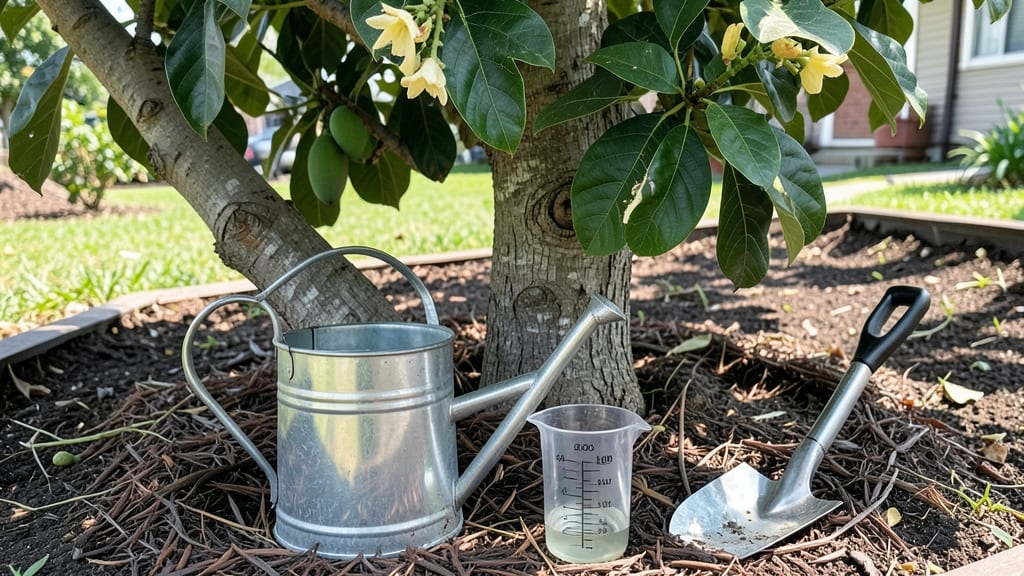
A mango tree needs consistent, deep watering to thrive in General (Tropical/Subtropical) zones, especially during its 6-8 month fruit development phase.
Wondering why your mango tree’s leaves are wilting—or why it’s not bearing fruit? Watering is often the missing link between a struggling and a thriving 🥭 tree.
Too little water stresses roots, while too much drowns them—both can stunt growth. The key is deep, infrequent soaks that reach 12-18 inches below the soil, paired with morning watering to prevent fungal issues.
In this guide, I’ll break down seasonal adjustments, soil checks, and how to spot over- or under-watering before it’s too late. Let’s get your tree the perfect balance for sweet, bountiful harvests.


Mango tree watering requirements by season: a month-by-month breakdown
Mastering your mango tree’s watering schedule is the secret to avoiding wilting leaves and poor fruit production. Unlike many fruit trees, mangoes thrive on consistent moisture but despise soggy roots. The key lies in adjusting your watering frequency based on the season, your tree’s age, and your local climate.
A young mango sapling needs more frequent watering than a mature 10-year-old tree, while summer heat demands deep soaks every few days.
In tropical climates (USDA Zones 10-11), mango trees experience monsoon seasons and dry spells that drastically alter their needs. For example, during June-August, your tree might need 3x weekly watering, while December-February could drop to bi-weekly.
The trick? Always check the soil moisture 2-3 inches deep—if it’s dry, water deeply; if it’s damp, wait.
Here’s how to tailor your watering routine month by month, with adjustments for young vs. mature trees to keep your mango tree flourishing year-round.
| Month | Young Tree (0-3 yrs) | Mature Tree (3+ yrs) | Soil Check | Notes |
|---|---|---|---|---|
| January | 3x/week (5-10 gallons) | 2x/week (20-30 gallons) | Dry 1-2" deep | Post-harvest recovery; avoid overwatering |
| February | 3x/week (5-10 gallons) | 2x/week (20-30 gallons) | Dry 1-2" deep | Flowering season; reduce stress |
| March | 3x/week (5-10 gallons) | 2x/week (20-30 gallons) | Dry 1-2" deep | Pre-monsoon; increase mulch |
| April | 2x/week (10-15 gallons) | Weekly (30-40 gallons) | Dry 2-3" deep | Monsoon begins; reduce frequency |
| May | Weekly (10-15 gallons) | Bi-weekly (30-40 gallons) | Dry 3" deep | Heavy rains; check drainage |
| June | Weekly (10-15 gallons) | Bi-weekly (30-40 gallons) | Dry 3" deep | Monsoon peak; avoid waterlogging |
| July | Weekly (10-15 gallons) | Bi-weekly (30-40 gallons) | Dry 3" deep |
Signs your mango tree is overwatered or underwatered (and how to fix it)Your mango tree might be silently screaming for help—through yellowing leaves, wilting branches, or even root rot. Overwatering and underwatering both cause stress, but the symptoms look surprisingly similar at first glance. The key is learning to read your tree’s visual and tactile cues, like soggy soil or dry, brittle bark, to diagnose the problem before it’s too late. Mango trees thrive on consistent moisture but despise soggy roots. In my USDA Zone 10 garden, I’ve seen root rot take down healthy trees in just weeks if they’re watered too frequently. On the flip side, underwatered trees drop fruit prematurely and develop thick, leathery leaves as a survival tactic. Let’s decode these signs so you can rescue your tree before it’s too late. 💧 Mango Tree Watering Balance
✅ Correct Watering
⚠️ Overwatering Risks
⚠️ Underwatering Risks
✅ Fixing Overwatering
Pro Tip: Stick your finger 2-3 inches deep—if soil is damp, wait before watering.
If your mango tree shows signs of overwatering, like yellow leaves with brown edges or a foul odor near the base, act fast. Start by improving drainage—amend the soil with perlite or coarse sand to prevent compaction. I’ve had success with a gravel trench around the root zone to redirect excess water. For severe root rot, prune affected roots and treat with a copper-based fungicide. Underwatered trees, on the other hand, need a deep watering schedule. Water slowly until it seeps 12-18 inches deep—this encourages roots to grow downward. In my Zone 10 garden, I use a soaker hose for 2-3 hours twice a week during summer to mimic natural rainfall. Pair this with organic mulch (like wood chips) to lock in moisture and regulate soil temperature. Don’t forget to adjust your approach based on your mango tree’s age. Young trees need more frequent watering (every 2-3 days) to establish roots, while mature trees can handle longer dry spells between waterings. Always check the soil—if it’s dry 2 inches down, it’s time to water. Consistency is key to keeping your tree healthy and productive. With these fixes, your mango tree will bounce back in no time. Remember, the goal is balanced moisture—neither soggy nor bone-dry. Happy growing! 🌱 |