
Watering
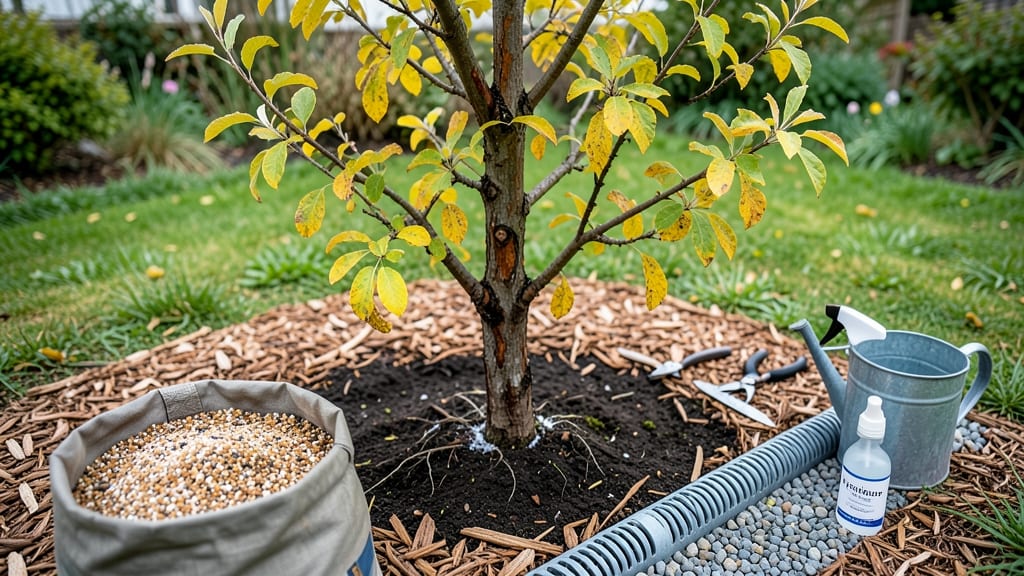
Your overwatered tree recovery starts with pruning and drainage—before it’s too late. 🌳 I’ve watched overwatered trees go from lush to lifeless, but these steps brought mine back from the brink. The key? Stopping the rot at the roots while giving the soil room to breathe.
First, check for mushy, dark roots—those are your red flags. Then prune back any dead branches (they’re just leaching energy), and improve drainage with sand or gravel if your soil stays soggy. This isn’t a quick fix, but within 6-8 weeks, you’ll see new growth pushing through.
The real payoff? A tree that’s not just surviving, but thriving again—with fewer yellow leaves and more vibrant green. You’ll also learn to water smarter, so this never happens again. Here’s how to do it step by step.
Works for any backyard tree, from young saplings to mature oaks. Let’s get your tree back on track.
Root Rot’s Silent Invaders
Overwatering may seem like a harmless gardening mistake, but it’s often the unseen trigger behind a tree’s decline. When roots drown in excess moisture, they lose their ability to absorb oxygen—a critical need for cellular respiration.
Without oxygen, roots suffocate, paving the way for Pythium, Phytophthora, and other fungal pathogens to take hold. These microbes thrive in waterlogged soil, breaking down root tissues and starving the tree of nutrients. The result? A slow, silent death disguised as "too much love."
Let’s break down the key culprits turning your tree’s roots into a microbial buffet.
Most gardeners assume "more water = healthier tree," but frequency and duration are the real villains. Trees need intermittent drying periods between waterings to develop deep, resilient roots. When soil stays soggy for days—or worse, weeks—roots asphyxiate, unable to exchange gases. This is especially true for:
- Clay-heavy soils: Water pools instead of draining, creating anaerobic (oxygen-free) zones. Example: A 2-inch daily rainfall on clay soil can keep roots waterlogged for 10+ days.
- Compacted soil: Heavy foot traffic or machinery crushes soil pores, reducing oxygen flow by up to 50%.
- Automatic sprinklers: Mist settings or prolonged cycles (e.g., 30+ minutes) saturate the root zone without allowing evaporation.
Pro tip: Use the "finger test"—stick your finger 2–3 inches deep. If soil feels damp, wait. If it’s bone-dry, water deeply but slowly (1–2 inches per session).
Nature designed trees to handle occasional floods, not chronic sogginess. When drainage fails—whether due to improper grading, clogged French drains, or landscaping mistakes—water pools around roots. Here’s how it happens:
| Cause | Science Behind It | Red Flag Signs |
|---|---|---|
| Sloped yard pointing toward the tree | Water flows directly into the root zone, mimicking a bathtub. Roots in saturated soil can’t uptake oxygen, leading to hypoxia (oxygen starvation). | Puddles lasting >48 hours, mushrooms sprouting near the base. |
| Buried tree roots in impermeable layers (e.g., plastic, hardpan) | Roots can’t spread horizontally or vertically, trapping water. Studies show 90% of root rot cases in urban areas stem from compacted or sealed soil. | Surface roots exposed after rain, gnarled growth near the trunk. |
| Missing or broken drainage pipes | French drains or swales (designed to divert water) can corrode or clog with sediment, redirecting water back to the tree. | Soggy soil downhill from the tree, even after rain stops. |
Fix it fast: Regrade soil to slope away from the tree (6 inches of fall over 3 feet). For clay soil, amend with coarse sand or perlite (30% mix) to improve aeration.
Waterlogged soil is a fungal paradise. Pathogens like Phytophthora cinnamomi (the "root rot express") release enzymes that digest root cell walls, turning roots into a mushy, brown mess. These microbes spread via:
- Splashing rainwater: Droplets carry spores up to 3 feet from infected soil.
- Contaminated tools/mulch: Pruners or wood chips from diseased trees introduce spores to healthy roots.
- Overhead irrigation: Sprinklers create a microclimate that keeps foliage damp, inviting fungal spores to land and germinate.
💡 Early warning: Look for:
- Yellowing leaves even when soil is wet (a classic hypoxia sign).
- Black, mushy roots when gently scraped (smells rotten).
- Wilting despite plenty of water (roots can’t absorb H2O).
✨ Prevention hack: Apply copper fungicide (e.g., CuSO4) to soil in early spring to disable fungal spores. For severe cases, solarize soil (cover with clear plastic for 4–6 weeks) to bake out pathogens.
Not all trees are equal when it comes to water tolerance. Shallow-rooted species (e.g., willows, poplars) or those native to well-draining ecosystems (e.g., oaks, pines) are high-risk. Here’s the breakdown:
| Tree Type | Why It Struggles | Recovery Risk |
|---|---|---|
| Willows (Salix spp.) | Evolved for floodplains, but prolonged saturation triggers root decay within 2–4 weeks. | Moderate (can regrow from stumps if roots survive). |
| Maples (Acer spp.) | Sensitive to anaerobic soil; roots produce ethanol as a byproduct of fermentation, toxic to cells. | Low (often fatal without intervention). |
| Pines (Pinus spp.) | Need acidic, sandy soil; clay or waterlogged conditions cause needle drop and root suffocation. | High (if drainage improves early). |
Action step: Research your tree’s native habitat. If it thrives in dry, rocky soil (e.g., junipers), never let it sit in wet conditions. For high-risk species, install a tree well (a raised bed with amended soil) to keep roots elevated.
How to solve it
Reviving an overwatered tree isn’t just about stopping the water—it’s about rebalancing its environment to encourage root recovery and long-term health. The key is addressing the root cause (literally!) with targeted fixes.
Below, we map common overwatering symptoms to actionable solutions, plus preventive steps to keep your tree thriving. Let’s get those roots breathing again!
Before diving in, diagnose the severity of the issue. Gently scrape away a small section of soil near the trunk (about 6–12 inches deep) and inspect the roots:
- Healthy roots: Firm, white or tan, with a slight sheen (like a carrot).
- Rotten roots: Mushy, black/brown, or crumbly—these need urgent attention.
- Stressed roots: Darkened but still firm (salvageable with quick fixes).
Pro tip: 🔍 Use a clean trowel and wear gloves—root rot can harbor harmful fungi.
Cause: Compacted or poorly draining soil traps excess moisture, suffocating roots.
Solution: Improve soil aeration and water flow with these steps:
🔥🏗️ Improve Soil Structure
- 👨🍳 Dig deeper: Loosen soil 12–18 inches deep around the tree’s drip line (the edge of its canopy).
Avoid damaging large roots—stick to the outer perimeter. - 🥘 Add organic matter: Mix in 50% compost or aged manure with the existing soil to boost drainage and microbial activity.
Avoid fresh mulch, which can compact further. - 🌡️ Test your soil: If drainage is still poor, consider sand or perlite (for sandy soils) or gypsum (for clay-heavy soils) to break up compaction.
⏰ Install a French Drain (For Severe Cases)
If water pools near the base even after loosening soil, redirect it:
- Dig a trench 1–2 feet deep and 6–12 inches wide around the tree’s perimeter.
- Line it with landscape fabric, then fill with gravel or crushed stone.
- Cover with soil and mulch to blend it in.
Pro tip: ✨ For large trees, slope the trench away from the trunk to prevent water from refilling the root zone.
Cause: Overwatering weakens the tree’s ability to support foliage, leading to yellowing leaves, wilting, or fungal growth.
Solution: Prune to reduce stress and promote airflow:
🍳 Remove Dead or Diseased Branches
- 🔪 Cut back: Any branches with black spots, mold, or hollow centers (signs of rot or fungal infection).
Use sterilized pruners and seal cuts with pruning sealant (optional for small cuts). - 🌿 Target 20% max: Never remove more than 20% of the canopy at once—this shocks the tree further.
👨🍳 Thin the Canopy
- 🌳 Focus on: Overcrowded branches to improve air circulation and light penetration.
- ⏰ Best time: Prune in late winter or early spring (dormant season) to minimize stress.
Pro tip: 💡 If the tree is severely weakened, hold off on heavy pruning until roots recover (3–6 months). Focus on removing only the most damaged branches first.
Cause: Prolonged soggy soil creates the perfect breeding ground for Phytophthora and other root-rot fungi.
Solution: Disrupt fungal growth and restore root health:
🌡️ Apply Fungicide (For Active Rot)
- 📊 Use: A copper-based fungicide (e.g., copper sulfate) or phosphite fungicides (like Phostrol) as directed on the label.
- 💧 Spray or soil-drench: Follow package instructions for root zone treatment.
🌿 Boost Beneficial Microbes
- 🥗 Add: Mycorrhizal fungi (available as powder or granules) to the soil. These good fungi outcompete pathogens and improve root absorption.
- 🍎 Pair with compost tea: Brew compost tea (aerobically!) and water the base to introduce beneficial bacteria.
Pro tip: 🎯 Avoid chemical fertilizers until roots recover—they can burn weakened roots. Stick to low-nitrogen, high-phosphorus options (like bone meal) to encourage root growth.
Cause: Overwatering (or poor timing) keeps roots waterlogged, preventing oxygen uptake.
Solution: Rewrite your watering routine:
⏰ Water Less, But Deeply
- 💧 Rule of thumb: Water deeply 2–3 times per week (instead of daily light sprinkles) to encourage roots to grow downward.
- 🌧️ Check soil moisture: Stick your finger 3 inches deep—if it’s damp, wait.
If dry, water until moisture reaches 12 inches deep.
🌡️ Mulch Correctly
- 🍂 Apply: A 3–4 inch layer of mulch (wood chips, bark) around the drip line, keeping it 6 inches away from the trunk.
- ❌ Avoid: Piling mulch against the trunk (can trap moisture and cause rot).
Pro tip: 🔥 For container trees, ensure pots have drainage holes and use a well-draining potting mix. Water only when the top 1–2 inches are dry.
Once your tree is on the mend, lock in these habits to prevent future overwatering:
- 🌦️ Rain check: Skip watering if rain is forecasted for 24+ hours.
- 🌿 Soil test: Every 2–3 years to monitor drainage and pH.
- 🚫 Avoid compacting soil: Don’t park heavy equipment near the tree or walk on the root zone.
- 🌳 Monitor leaf color: Yellowing between veins? Less water. Brown edges? More.
- 🌱 Plant wisely: Choose native or drought-tolerant species if your area has heavy clay or poor drainage.
Frequently asked questions about saving overwatered trees
How do I know if my tree has root rot from overwatering?
Check for these key signs: mushy, black or brown roots when gently scraped, leaves that yellow even when soil is wet, and a foul smell near the base. Healthy roots should be firm and white/tan. If you see these, act fast—root rot spreads quickly!
Can I save a tree with severe root rot?
It depends! If more than 50% of roots are rotted, recovery is unlikely. For trees with some healthy roots remaining, focus on improving drainage, pruning dead branches, and applying fungicide. Even then, recovery may take 6-12 months or longer.
What's the best way to improve drainage around my tree?
Start by loosening soil 12-18 inches deep around the drip line (canopy edge), then mix in 50% compost or coarse sand. For clay soil, add gypsum. Install a French drain if water pools persistently. Always slope soil away from the trunk.
Should I prune my tree if it's overwatered?
Yes, but carefully! Remove only dead or diseased branches (20% max of canopy) to reduce stress. Avoid heavy pruning until roots recover (3-6 months). Focus on improving airflow by thinning crowded branches. Sterilize tools between cuts to prevent spreading disease.
How often should I water my tree after recovery?
Water deeply 2-3 times per week (1-2 inches per session) instead of daily light watering. Check soil moisture 3 inches deep—water only when dry. Use drip irrigation to avoid wetting foliage. Mulch 3-4 inches deep (keep 6" from trunk) to retain moisture.