
Watering
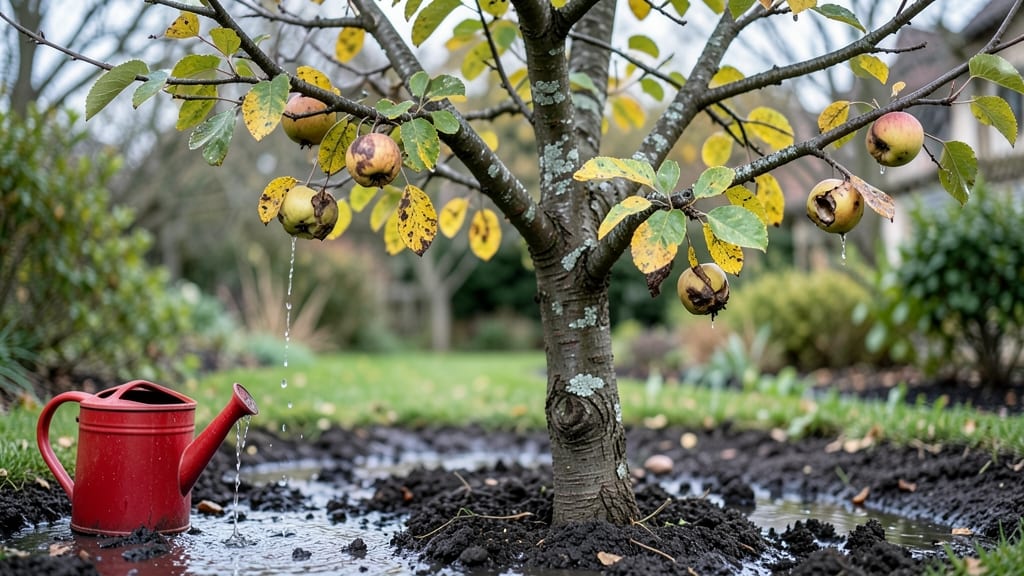
Overwatering your apple tree can turn its roots into a soggy mess—literally. 🌱 I’ve seen firsthand how yellowing leaves, wilting branches, and that telltale foul smell from the soil signal root rot, and the good news is, there’s a straightforward way to fix it before it’s too late.
The key? Drainage, aeration, and a little patience.
Most people think apple trees need constant watering, but they’re actually drought-tolerant once established. Overwatering suffocates roots by cutting off oxygen, leading to rot and fungal growth. The soil should feel like a damp sponge—not a swamp—when you check it. If it’s heavy or smells sour, that’s your warning sign.
Start by improving drainage: mix in coarse sand or perlite to compacted soil, and consider raised beds if your yard stays soggy. Prune back any dead branches, then water deeply but only once a week—unless it’s a heatwave.
Within a few weeks, you’ll see new green growth as the roots recover and regain their strength.
This isn’t a quick fix, but with consistent care, your apple tree can bounce back stronger. The first harvest might be smaller, but the roots will thank you for years to come. Let’s get those roots breathing again!
The Hidden Triggers Behind Excess Water
Overwatering an apple tree isn’t just a matter of giving it too much love—it’s often the result of subtle but critical mistakes that disrupt the tree’s delicate balance. Understanding these root causes (literally and figuratively) is the first step to saving your tree from root rot and other waterlogged woes.
Here’s why it happens, broken down into the most common culprits.
Apple trees thrive in well-draining soil, but when water can’t escape quickly enough, it pools around the roots, suffocating them. This is the #1 reason for overwatering—even if you’re not intentionally drowning the tree.
Why it happens:
- Clay-heavy soil acts like a sponge, absorbing water and holding it for days or weeks. Roots in clay struggle to breathe, leading to anaerobic conditions (lack of oxygen), which triggers root rot pathogens like Phytophthora.
- Compacted soil from foot traffic, construction, or heavy machinery prevents water from percolating downward. A simple tap test—if the soil feels hard 2–3 inches down—means drainage is compromised.
- Improper planting depth: Burying the root flare (the swollen area at the base of the trunk) too deep traps water against the roots, mimicking a swampy environment.
Actionable fix: Test your soil’s drainage by digging a 12-inch hole, filling it with water, and timing how long it takes to drain. If it’s slower than 4–6 hours, amend with organic matter (compost, sand, or perlite) to improve aeration.
Even the most well-meaning watering habits can backfire if timing, frequency, or method is off. Automated systems (like drip irrigation or sprinklers) are especially sneaky culprits.
Why it happens:
- Overly frequent watering: Apple trees need 1–1.5 inches of water per week (including rain), but many gardeners water daily in dry spells, leading to soggy soil. Fun fact: Roots can’t absorb water if the soil is already saturated.
- Shallow watering (e.g., sprinklers that only wet the top inch) encourages roots to stay near the surface, where they’re more vulnerable to evaporation and waterlogging.
- Automatic systems running too long: A miscalibrated drip line or timer can dump 2+ inches of water in a single session, overwhelming the tree’s roots.
- Watering at the wrong time: Evening watering (after sunset) prevents soil from drying overnight, while morning watering lets excess moisture evaporate.
Actionable fix:
- Switch to deep, infrequent watering—aim for the root zone (12–18 inches deep) using soaker hoses or a garden fork to create channels for water penetration.
- Install a rain gauge to track natural water input and adjust accordingly.
- If using automation, check emitters weekly for clogs or leaks.
Apple trees in pots or raised beds are far more prone to overwatering because their root systems are confined, with no escape route for excess water. Even a slight miscalculation can turn a container into a death trap.
Why it happens:
- Small or shallow pots dry out quickly but also drain poorly. Roots circle the container, creating a hydroponic-like environment where water stagnates.
- Lack of drainage holes: Without exits, water pools at the bottom, leading to root suffocation and fungal infections like Pythium.
- Overpotting: A tree in a pot that’s too large fills with water that sits unused, while the roots struggle to reach the edges.
- Incorrect potting mix: Heavy mixes (like straight garden soil) compact and hold water, while lightweight blends (with perlite or coconut coir) drain too fast, requiring overwatering to compensate.
Actionable fix:
- Use pots with drainage holes and elevate them on feet to prevent saucer buildup.
- Repot into a container only 2–3 inches larger than the root ball to encourage deeper root growth.
- Water only when the top 2 inches of soil are dry—stick your finger in to check!
Not all water comes from your hose. Rain, humidity, and even wind can turn your apple tree’s environment into a soggy nightmare—especially if you’re not accounting for these invisible factors.
Why it happens:
- Heavy or prolonged rain: A single storm can deliver 1–2 inches of water in hours, saturating the soil for days. If you water after a downpour, you’re doubling the damage.
- High humidity: Air that’s already moisture-rich slows evaporation, keeping soil damp longer. In humid climates (like the Southeast U.S.), roots can suffocate even with "normal" watering.
- Windbreaks and shade: Trees planted near fences, buildings, or dense shrubs retain more moisture because airflow is restricted. Without wind to dry the soil, water lingers.
- Seasonal changes: Spring and fall are high-risk periods because cooler temps slow root activity, making trees less able to process excess water.
Actionable fix:
- Install a rain gauge and skip watering for 3–5 days after heavy rain.
- In humid areas, water in the morning to allow soil to dry slightly before evening humidity sets in.
- Prune nearby plants or add airflow-promoting gaps around the tree’s base.
Most overwatering issues stem from a mix of these factors—often compounded by well-intentioned but misinformed habits. The good news? Once you identify the specific triggers affecting your apple tree, fixing them is straightforward. Next up: 3 simple fixes to revive your tree and prevent future disasters.
Fixing Overwatered Apple Trees
Now that you recognize the signs of overwatering—yellowing leaves, mushy roots, or a foul smell—it’s time to take action. The good news? With the right steps, your apple tree can bounce back! Below, we’ll map out cause-specific solutions, along with prevention tips to keep your tree thriving.
---
Cause: Compacted, waterlogged soil or poor drainage. Fix: Improve soil aeration and water flow.
1. 🔥 Test Your Soil Dig a small hole (6–8 inches deep) near the tree’s base. If the soil feels soggy or smells like rot, drainage is the issue.
2. 🍳 Amend the Soil Mix in organic matter like compost, coconut coir, or perlite to loosen heavy clay. For severe cases, consider sand or gravel (but avoid overdoing it—too much sand can dry out roots).
3. 👨🍳 Raise the Tree (If Needed) If your tree sits in a low-lying area, mound soil or create a berm around the base to encourage water runoff.
4. ⏰ Space Out Waterings Let the top 2–3 inches of soil dry out before watering again. Stick your finger in the soil—if it’s damp, wait!
💡 Pro Tip: Install French drains or swales (shallow trenches) around the tree to redirect excess water.
---
Cause: Root rot or fungal growth from prolonged sogginess. Fix: Remove affected areas to stop the spread.
1. 🔪 Trim Dead Leaves & Branches Use sterilized pruners to cut back yellowed, wilted, or mushy leaves. Dispose of them in a sealed bag (not compost).
2. 🌡️ Inspect Roots (Carefully!) Gently loosen the top 6 inches of soil and check for: - Black, mushy roots (rot) → Trim these with clean shears. - Healthy white/tan roots → Leave alone!
3. ✨ Apply Fungicide (If Needed) If you spot mold or fungus, spray copper-based fungicide or hydrogen peroxide (3%) on roots before replanting.
💡 Pro Tip: Avoid pruning during wet weather—wait for dry conditions to prevent further infection.
---
Cause: Overzealous or inconsistent watering. Fix: Train yourself (and your hose!) to water smarter.
1. 📊 Deep & Infrequent Watering - Young trees (1–3 years): Water 2–3 times per week, 10–15 gallons each time. - Mature trees (4+ years): Water 1–2 times per week, 20–30 gallons. - Always water at the base, not the leaves, to prevent fungal diseases.
2. 🎯 Mulch Like a Pro Spread 2–4 inches of organic mulch (wood chips, straw) around the tree—but keep it 6 inches away from the trunk to avoid rot.
3. 🌧️ Check the Weather If rain is forecasted, skip watering. Overwatering + rain = double trouble.
💡 Pro Tip: Use a moisture meter ($10–$20) to track soil dampness—no more guesswork!
---
If your tree is already in critical condition (wilted, oozing sap, or no leaves), act fast:
1. 🚑 Root Pruning & Transplanting - Dig up the tree, trim 1/3 of the roots, and replant in well-draining soil with a sand/soil mix. - Best time: Early spring or fall (avoid summer heat).
2. 💊 Hydrogen Peroxide Soak Mix 1 part 3% hydrogen peroxide with 20 parts water and pour it around the roots to kill fungi and bacteria.
3. 🌿 Support with Fertilizer Once roots are stable, feed with low-nitrogen, high-phosphorus fertilizer (e.g., 5-10-10) to encourage root regrowth.
⚠️ Warning: If the tree is completely dead (no green leaves, brittle bark), it may need removal to prevent disease spread.
---
- ✅ Test your soil’s drainage (DIY: Fill a hole with water—if it drains in <1 hour, you’re good). - ✅ Avoid heavy foot traffic near the tree (compacts soil). - ✅ Use drip irrigation (not sprinklers) to control water flow. - ✅ Monitor for pests (like borers) that weaken trees, making them more susceptible to rot.
--- Final Thought: Overwatering is reversible—but speed matters. The sooner you act, the better your apple tree’s chances of recovery. With these fixes, you’ll have a stronger, healthier tree (and maybe even more apples next season! 🍏).
Frequently asked questions
How do I know if my apple tree is getting too much water?
Check for yellowing leaves (especially on lower branches), mushy or blackened roots when you dig near the base, and a sour or rotten smell from the soil. If the ground stays soggy for more than 24 hours after watering, that’s a red flag.
Can I save an apple tree with root rot from overwatering?
Yes, but act fast! Trim away black, mushy roots, improve drainage by amending soil with compost or perlite, and reduce watering to once a week. For severe cases, a hydrogen peroxide soak (1:20 ratio) can help kill fungus before replanting.
How often should I water an established apple tree?
Mature apple trees need 1–1.5 inches of water per week (including rain). Water deeply but infrequently—aim for the root zone (12–18 inches down)—and let the top 2–3 inches of soil dry out between waterings. Use a moisture meter to avoid guesswork!
What’s the best way to fix compacted soil around my apple tree?
Loosen the soil with a garden fork (don’t dig deeper than 12 inches), then mix in organic matter like compost or coconut coir. For clay-heavy soil, add coarse sand or perlite to improve drainage. Avoid walking near the tree to prevent further compaction.
Is it better to water apple trees in the morning or evening?
Water in the early morning (before 10 AM) to let foliage dry quickly, reducing fungal risks. Avoid evening watering—wet leaves overnight invite blight or mildew. If you must water in the evening, use a soaker hose to keep leaves dry.