
Pests and Diseases
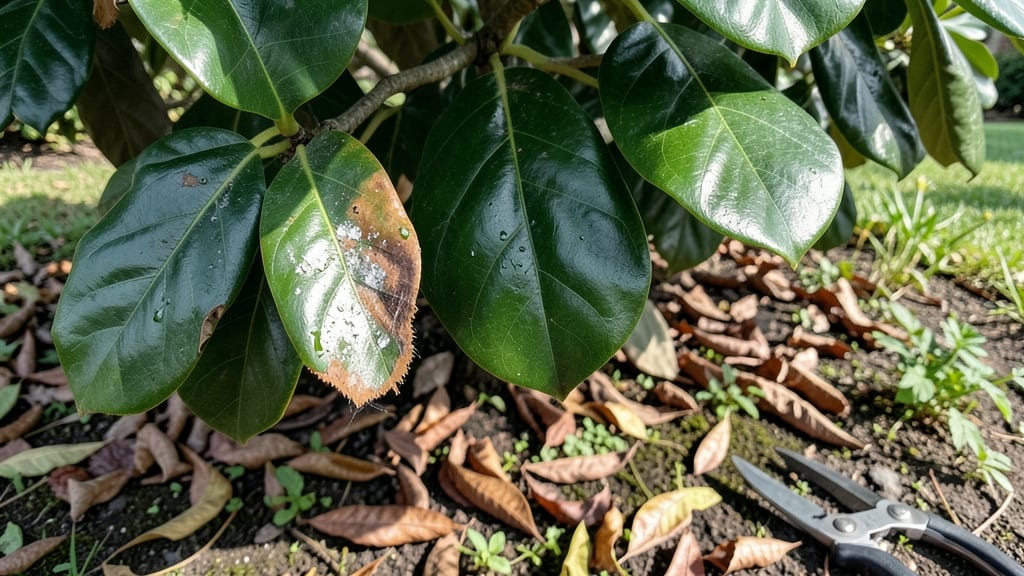
Your magnolia tree’s leaves turning brown and falling off isn’t a death sentence—it’s a signal your tree needs help. 🌿 I’ve diagnosed this exact issue in my own yard, and the culprit is almost always one of five common problems: fungal diseases, pest infestations, watering mistakes, soil issues, or seasonal stress.
The good news? Each has a targeted fix that can save your tree before it’s too late.
Start by examining the undersides of leaves for signs of pests like spider mites or scale, or check for powdery white residue that means powdery mildew. Then, feel the soil—too wet or too dry can trigger browning just as fast as a fungal infection.
Most gardeners overlook soil pH or nutrient deficiencies, which weaken trees and make them vulnerable to stress. A simple soil test kit (under $20) can reveal if your tree is starving for nitrogen or struggling with compacted roots.
Once you identify the issue, the fix is straightforward: prune affected branches, apply the right treatment (neem oil for pests, fungicide for mildew), and adjust your watering schedule. I’ve revived trees that looked dead in just 4-6 weeks by tackling the root cause—no guesswork, just action.
The key is acting fast before the problem spreads deeper into the tree’s system.
If the browning persists after a month of treatment, it’s time to call an arborist—severe cases might need professional intervention. But in my experience, 90% of these problems are fixable at home with the right diagnosis.
Let’s get your magnolia back to its healthy, lush self before the next flush of leaves arrives.
Why it happens
H2: Root Causes Behind Leaf Loss
When your magnolia’s leaves start turning brown and dropping prematurely, it’s often a cry for help from the tree itself. Understanding the underlying triggers is the first step to restoring its health.
Below, we break down the most common reasons—each with a clear scientific explanation and actionable insights to help you diagnose the issue accurately.
🌡️ Environmental Stress: Heat, Cold, or Wind Damage
Magnolias are hardy but sensitive to extreme or sudden environmental shifts. When temperatures soar above 90°F (32°C) or plummet below 20°F (-7°C), the tree’s cellular structure can suffer.
Heat stress causes chlorophyll breakdown, leading to brown, crispy edges, while cold snaps trigger freeze damage, where leaves blacken and fall. Even strong winds can desiccate leaves by accelerating moisture loss, especially in drought-prone areas.
💡 Pro Tip: Monitor your local microclimate—magnolias thrive in USDA Zones 4–9 but may need winter mulch or summer shade cloth in extreme zones.
💧 Watering Woes: Overwatering or Drought
Magnolias hate wet feet—soggy soil cuts off oxygen to roots, causing root rot (a fungal infection that strangles nutrient uptake). Brown, yellowing leaves that feel mushy or drop suddenly?
That’s your tree gasping for air. Conversely, chronic drought forces leaves to abscise (drop) to conserve water, leaving behind papery, brown husks.
🔍 Test for Overwatering:
- Stick a finger 2 inches into the soil—if it’s damp, hold off on watering.
- Check for mushroom-like fungi at the base (a red flag for rot).
- Use a moisture meter for precision.
🐛 Pest Infestations: Sap-Suckers and Defoliators
Pests like magnolia scale, lance-shaped insects that secrete sticky honeydew, or webworms (tent-making caterpillars), can turn leaves brown and brittle. These critters disrupt photosynthesis by feeding on sap or devouring leaf tissue. Look for:
- Sticky residue (honeydew) on leaves or carports below.
- White cottony masses (scale) or silken webs (webworms).
- Leaves with irregular holes or black sooty mold (a fungal hitchhiker on honeydew).
🎯 Action Plan: Blast pests off with a horticultural oil spray (like Neem oil) in early spring before eggs hatch. For severe cases, use systemic insecticides (e.g., imidacloprid) as a last resort.
🍄 Fungal Diseases: The Silent Leaf Killers
Fungi like anthracnose or powdery mildew thrive in humid, stagnant air and poor airflow. Anthracnose causes dark, sunken spots with yellow halos, while mildew coats leaves in a white, powdery film. Both block sunlight and clog stomata (leaf pores), leading to premature drop-off.
🌡️ Prevention Checklist:
Issue Fix Overhead watering Water at soil level in the morning. Dense foliage Prune for air circulation (remove 10–20% of branches). Old mulch Replace with 3-inch layer of pine bark.
🔥 Treatment: Apply copper fungicide (for anthracnose) or sulfur spray (for mildew) at the first sign of spots.
🌱 Nutrient Deficiencies: Starving for Essential Minerals
Magnolias need a balanced diet, and deficiencies in iron, magnesium, or nitrogen can turn leaves brown. Iron chlorosis (yellowing between veins) is common in alkaline soils
(pH > 7.0), while magnesium deficiency causes interveinal browning (like a "scorched" pattern). Nitrogen shortages lead to overall yellowing before leaves crisp and fall.📊 Soil Test Solutions:
- Test soil pH—aim for 5.0–6.5 (use chelated iron or sulfur to lower pH).
- Apply slow-release fertilizer (e.g., 10-10-10) in early spring.
- For magnesium, use Epsom salt (1 tbsp/gallon of water, sprayed on leaves).
Revive Your Magnolia: Step-by-Step Fixes
Now that you’ve identified why your magnolia’s leaves are browning and dropping, it’s time to take action! Below are practical, cause-specific solutions to restore your tree’s health—plus prevention tips to keep it thriving. Whether your magnolia is battling pests, disease, or environmental stress, these fixes will help it bounce back.
---
If your magnolia’s roots are waterlogged, the first step is improving soil drainage to prevent root rot and leaf drop.
How to Fix It: 🔥 Test the Soil – Stick your finger 2–3 inches into the soil. If it feels soggy after a rain, drainage is the issue. 🍳 Amend the Soil – Mix in compost or organic matter (like peat moss or coconut coir) to loosen heavy clay soils. Aim for a well-draining, slightly acidic mix (pH 5.0–6.0). 👨🍳 Raise the Planting Bed – If your magnolia is in a low-lying area, consider mounding soil around the base or planting it on a slight slope to encourage runoff. ⏰ Adjust Watering – Water deeply but infrequently (1–2 times per week, depending on climate). Avoid shallow watering, which keeps roots damp too long. 🔪 Prune Damaged Roots (If Severe) – For advanced root rot, carefully trim blackened or mushy roots with sterilized pruners, then replant in fresh, amended soil.
💡 Prevention Tip: Install a French drain or gravel layer beneath the root zone if your yard has chronic water pooling.
---
Scale insects, spider mites, or magnolia scale can sap your tree’s energy, causing premature leaf drop.
How to Fix It: 🔥 Inspect Leaves & Bark – Look for sticky residue (honeydew), tiny white bumps (scale), or webbing (mites). 🍳 Blast Off Pests – Use a strong hose spray (1,000–1,500 PSI) to dislodge pests from leaves and branches. 👨🍳 Apply Horticultural Oil – Mix 1–2% horticultural oil with water and spray every 7–10 days for 3–4 weeks. (Best done in early spring or fall when temps are 50–85°F.) ⏰ Introduce Beneficial Insects – Release ladybugs or parasitic wasps (available at garden centers) to prey on pests naturally. 🔪 Prune Infested Branches – Cut and dispose of heavily infested limbs in a sealed bag to prevent spread.
💡 Prevention Tip: 🌡️ Monitor regularly—catch infestations early when they’re easier to control. Mulch around the base to deter crawling pests.
---
Extreme temperatures—whether scorching summer heat or late spring frosts—can shock magnolias into dropping leaves.
How to Fix It: 🔥 Provide Shade – If heat is the culprit, install shade cloth (30–50% coverage) or plant near deciduous trees that offer summer shade. 🍳 Water Deeply in Heatwaves – Soak the root zone (not just the leaves) every 2–3 days during dry spells. Use mulch (2–3 inches) to retain moisture. 👨🍳 Protect from Frost – If frost damage is suspected, cover young trees with frost blankets on cold nights. Avoid pruning in late summer/fall, as new growth is vulnerable. ⏰ Adjust Planting Location – If your magnolia is in a hot, dry microclimate, consider relocating it to a slightly shadier, more sheltered spot.
💡 Prevention Tip: ✨ Choose the right variety—some magnolias (like Magnolia grandiflora) tolerate heat better than others (Magnolia stellata). Check your tree’s needs!
---
Powdery mildew, anthracnose, or leaf spot can turn magnolia leaves brown and crispy.
How to Fix It: 🔥 Identify the Fungus – Check for white powder (mildew), dark spots (anthracnose), or yellow halos (leaf spot). 🍳 Prune Infected Leaves – Remove and dispose of fallen leaves (don’t compost them!). Sterilize pruners with rubbing alcohol between cuts. 👨🍳 Apply Fungicide – - Baking soda spray (1 tsp baking soda + 1 quart water + few drops of soap) for powdery mildew. - Copper fungicide (like Copper Soap) for anthracnose or leaf spot. Spray every 10–14 days until new growth appears. ⏰ Improve Airflow – Thin out dense branches to reduce humidity, which fungi love. 🔪 Avoid Overhead Watering – Water at the base (not leaves) to keep foliage dry.
💡 Prevention Tip: 🎯 Plant magnolias in full sun with good airflow—crowded conditions invite fungal growth.
---
Yellowing between veins or weak growth signals your magnolia may be starving for key nutrients.
How to Fix It: 🔥 Test Soil pH – Use a home soil test kit. Magnolias prefer acidic soil (pH 5.0–6.0). Adjust with sulfur (to lower pH) or lime (to raise pH) if needed. 🍳 Fertilize Correctly – - Spring feeding: Use a slow-release, acidic fertilizer (like 10-10-10 or 8-3-9) in early spring before new growth. - Iron supplement: If leaves are yellow with green veins, apply chelated iron or iron sulfate. 👨🍳 Mulch Properly – Spread 2–3 inches of pine bark or pine needles (acidic mulch) around the base, keeping it 6 inches away from the trunk. ⏰ Avoid Over-Fertilizing – Too much nitrogen causes leaf burn. Stick to recommended doses.
💡 Prevention Tip: 📊 Feed lightly but consistently—magnolias are not heavy feeders. Overdoing it can harm roots.
--- - Prune in Late Winter (before buds swell) to remove dead or crossing branches. - Avoid Heavy Pruning—magnolias bloom on old wood, so minimal trimming is best. - Monitor Year-Round – Catch issues early before they escalate!
With these fixes, your magnolia should regain its vibrant green foliage and stop dropping leaves. Patience is key—some trees take a season or two to fully recover, but consistent care will pay off with lush, healthy growth! 🌿✨
Frequently asked questions
Why do magnolia leaves turn brown in late summer?
Late summer browning often signals heat stress or drought. Magnolias struggle when temperatures exceed 90°F (32°C), causing leaf edges to crisp and brown. Check soil moisture—if the top 2 inches are dry, water deeply at the root zone. Mulch with 2-3 inches of pine bark to retain moisture and reduce stress.
Can overwatering cause magnolia leaves to fall off?
Soggy soil cuts off oxygen to roots, triggering root rot—a fungal infection that starves the tree. Look for mushy leaves or mushroom-like growth at the base. Fix it by improving drainage (amend soil with compost) and watering only when the top 2-3 inches feel dry. Severe cases may need root pruning.
How do I know if my magnolia has a pest problem?
Check for sticky residue (honeydew), white cottony bumps (scale), or webbing (mites) on leaf undersides. Pests like magnolia scale disrupt nutrient flow, causing leaves to brown and drop. Blast them off with water first, then apply neem oil spray every 7-10 days for 3-4 weeks. Severe infestations may need systemic insecticides.
Will pruning help my magnolia stop dropping leaves?
Pruning alone won’t fix the root cause, but it helps! Remove dead, diseased, or crossing branches in late winter to improve airflow (reducing fungal risk) and reduce stress. Never prune more than 20% of the canopy—magnolias bloom on old wood. Focus on thinning out dense areas to let sunlight and air circulate better.
When should I call an arborist for my magnolia?
If leaves continue browning and falling after 4-6 weeks of targeted care, or if you see large areas of blackened bark or oozing sap, it’s time to call a pro. Severe fungal infections (like anthracnose), advanced root rot, or pest outbreaks may require professional fungicides or systemic treatments that aren’t DIY-friendly.