
Diseases
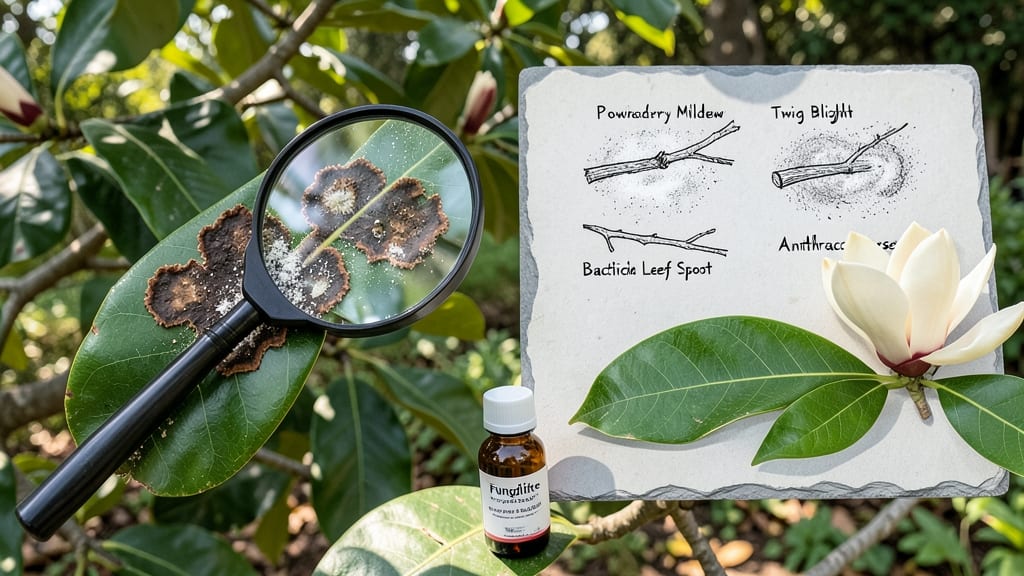
When your magnolia tree develops brown magnolia tree diseases—like crispy, brittle leaves—it’s not just a sign of age, but a warning that something’s wrong. 🌿 Fungal blight and root rot are the sneaky villains behind most magnolia decline, and spotting the difference early can save your tree.
I’ve seen healthy magnolias go from lush to lifeless in weeks when these diseases take hold, but the right diagnosis turns panic into action.
The first step is checking the roots and leaves for telltale signs: dark, mushy roots scream root rot, while brown spots with yellow halos on leaves mean fungal blight. Both thrive in wet soil, but blight spreads faster in humid summers, while rot fests when drainage fails.
The good news? Both respond to targeted fixes—once you know what you’re dealing with.
You’ll restore your magnolia’s health with a mix of pruning diseased branches, improving drainage, and applying the right fungicide (organic or chemical). Within a season, you’ll see fresh green leaves pushing through, and the tree’s structure stays strong. The key is acting before the disease moves from leaves to limbs.
Works for all magnolia varieties, from Southern beauties to cold-hardy types. Here’s how to diagnose and treat before it’s too late—your tree’s comeback starts with these steps.
Root Causes Of Leaf Discoloration
Brown magnolia tree diseases often stem from a mix of environmental stress, microbial invasions, and poor cultural practices. Understanding these underlying triggers is key to prevention and treatment. Below, we break down the primary reasons why magnolia leaves turn brown, from fungal infections to physiological disorders.
---
Fungi are the most common culprits behind brown magnolia foliage. These microscopic organisms thrive in warm, humid conditions and exploit weakened trees through wounds or natural openings.
- Anthracnose (Colletotrichum spp.) This fungal disease targets young leaves, buds, and stems, causing dark brown to black lesions with yellow halos.
Anthracnose spreads rapidly in wet springs, when prolonged leaf moisture (from rain or overhead watering) creates the perfect breeding ground. 🌧️➡️🍃 Why it happens: The fungus overwinters in infected debris or buds, then germinates when temperatures rise (60–80°F) and humidity stays high.
Magnolias with poor air circulation or dense canopies are especially vulnerable.
- Target Spot (Corynespora cassiicola) Characterized by circular brown spots with gray centers, target spot thrives in hot, humid climates.
The fungus enters leaves through stomata (tiny pores) or injured tissue, blocking nutrient flow and causing premature leaf drop. Why it happens: Overhead irrigation or frequent leaf wetness (like morning dew in summer) encourages spore germination. Weakened trees—due to drought, poor soil, or nutrient deficiencies—are prime targets.
- Root Rot Fungi (Phytophthora, Armillaria) While root rot primarily affects roots, its symptoms often manifest as brown, wilting leaves above ground.
These water-loving fungi thrive in soggy, compacted soil, suffocating roots and cutting off water/nutrient uptake. Why it happens: Poor drainage, clay-heavy soils, or overwatering create anaerobic conditions that fungi exploit. Phytophthora spreads via water splashing, while Armillaria (shoestring root rot) invades through root grafts or fresh wounds.
---
Not all brown leaves stem from disease—environmental conditions can mimic (or worsen) symptoms, making diagnosis tricky.
- Water Stress (Drought or Overwatering) Magnolias prefer consistently moist but well-drained soil.
Too little water causes leaf edges to crisp and brown (a process called scorch), while excess water leads to root suffocation and nutrient deficiencies. Why it happens: - Drought stress: When roots can’t absorb enough water, leaves curl, yellow, and develop brown margins.
This is especially common in sandy soils or during heatwaves. - Overwatering: Waterlogged soil cuts off oxygen to roots, triggering anaerobic respiration—a toxic process that releases ethanol and kills cells. Brown, mushy leaves follow.
- Extreme Temperature Fluctuations Magnolias are sensitive to sudden temperature swings, particularly late spring frosts or early fall freezes. Cold damage disrupts cell membranes, causing brown, water-soaked spots that later turn papery. Why it happens: New growth is most vulnerable.
A hard freeze (<28°F) after bud break can kill emerging leaves, while rapid temperature drops (e.g., sunny days followed by nighttime frosts) stress the tree’s vascular system.
- Poor Air Circulation Dense foliage or nearby structures (like fences or walls) trap humidity, creating a greenhouse effect that encourages fungal growth.
Stagnant air also delays leaf drying after rain, prolonging fungal spore germination. Why it happens: Magnolias with compact growth habits or those planted too closely to other trees suffer from reduced airflow. This trapped moisture promotes target spot and anthracnose, accelerating browning.
---
Improper care can leave magnolias defenseless against diseases. These human errors often create the perfect storm for pathogens.
- Improper Pruning Cutting branches incorrectly (e.g., leaving stubs, pruning during wet seasons, or removing too much foliage at once) opens wounds that fungi like Armillaria can exploit. Why it happens: Pruning in spring (when fungal spores are active) increases infection risk.
Poor cuts create entry points for pathogens, while over-pruning stresses the tree, reducing its ability to fight off invaders.
- Nutrient Deficiencies Magnolias need balanced nutrients (especially nitrogen, phosphorus, and micronutrients like iron and manganese) to maintain healthy foliage.
Deficiencies weaken leaves, making them susceptible to browning and disease. Why it happens: - Iron chlorosis (yellowing between veins) often leads to brown, crispy edges due to poor chlorophyll production. - Magnesium deficiency causes interveinal browning because it’s crucial for photosynthesis. - Soil pH imbalances (too acidic or alkaline) lock out essential nutrients, starving the tree.
- Incorrect Watering Practices Overhead irrigation (especially in the evening) keeps leaves wet for long periods, promoting fungal spores.
Drip irrigation is ideal, but even this can cause issues if the soil doesn’t drain properly. Why it happens: Water splashing from the ground can carry fungal spores up to leaves, while inconsistent watering leads to root stress and weakened defenses.
--- Brown magnolia leaves can result from either physiological stress or infection. Here’s how to distinguish them:
| Symptom | Likely Cause | Key Difference | |---------------------------|---------------------------------|---------------------------------------------| | Uniform browning (no spots)| Drought or overwatering | Affects entire leaf; no distinct lesions | | Brown edges with green center | Scorch (drought, wind) | Crispy, dry edges; no fungal growth | | Circular brown spots | Target spot or anthracnose | Spots have defined edges; may ooze spores | | Wilting + brown leaves | Root rot (Phytophthora) | Leaves droop first; roots are mushy/moldy | | Blackened buds/flowers | Anthracnose | Buds fail to open; leaves have yellow halos|
💡 Pro Tip: Scrape a brown spot—if you see a fuzzy mold layer or black specks (spores), it’s fungal. No mold? Check soil moisture and recent weather changes.
How to Treat and Prevent Damage
When your magnolia tree starts showing signs of browning leaves, wilting branches, or suspicious discoloration, acting quickly can make all the difference. Below, we’ve mapped out practical solutions tailored to each common cause—from fungal infections to environmental stressors—along with prevention tips to keep your tree thriving.
Think of this as your step-by-step guide to revival and long-term care.
Fungal diseases like anthracnose or leaf spot thrive in damp, humid conditions, turning your magnolia’s foliage into a brown, crunchy mess. Here’s how to fight back: #### 🔥 Step 1: Remove Infected Foliage - What to do: Snip off and dispose of (not compost!) all brown, spotted, or diseased leaves. Use clean, sharp pruners and sterilize them with a 10% bleach solution (1 part bleach to 9 parts water) between cuts. - Why it works: Removing infected parts stops the fungus from spreading to healthy leaves. #### 🍳 Step 2: Apply Fungicidal Treatment - What to do: Use a copper-based fungicide (like copper sulfate) or a systemic fungicide containing propiconazole or myclobutanil. Follow label instructions for concentration and application timing. - When to apply: Spray in the early morning or late afternoon to avoid burning leaves. Reapply every 7–14 days during wet seasons or after heavy rain. - Pro tip: 💡 For organic options, try a baking soda spray (1 tbsp baking soda + 1 tsp oil + 1 gallon water) as a preventive measure. #### 👨🍳 Step 3: Improve Air Circulation - What to do: - Thin out dense branches to allow sunlight and air to reach the center of the tree. - Avoid overwatering—let the top 2–3 inches of soil dry out between waterings. - Why it works: Fungi love stagnant, moist environments. Better airflow = fewer fungal hotspots. #### 🌡️ Prevention Tips for Fungal Recurrence - 🌧️ Mulch properly: Use 2–4 inches of organic mulch (like pine straw or wood chips) but keep it 6 inches away from the trunk to prevent moisture buildup. - 🌿 Water wisely: Water at the base of the tree in the morning to reduce leaf wetness. - ✨ Sanitize tools: Always clean pruners with rubbing alcohol after each use to prevent cross-contamination. Root rot—often caused by Phytophthora or overwatering—turns your magnolia’s roots mushy and brown, choking the tree from below. Here’s how to save it: #### 🔪 Step 1: Diagnose the Root Health - What to do: Gently dig around the outer roots (be careful not to damage healthy roots). Healthy roots are firm and white/tan; rotten roots are dark, soft, and smelly. - If roots are severely rotten: The tree may need removal to prevent the disease from spreading to other plants. #### 💧 Step 2: Fix Waterlogged Soil - What to do: - Improve drainage: Amend the soil with compost or sand to loosen heavy clay. For container-grown magnolias, ensure pots have drainage holes and use a well-draining mix. - Raise the tree: If planted in a low spot, consider mounding soil around the base to elevate it slightly. - Why it works: Root rot thrives in soggy soil. Better drainage = happier roots. #### 🌱 Step 3: Adjust Watering Habits - What to do: - Water deeply but infrequently: Let the soil dry out 3–4 inches deep between waterings. - Avoid overhead watering: Use a soaker hose or drip irrigation to deliver water directly to the roots. - Pro tip: 💡 Install a French drain around the tree’s perimeter if your yard has poor drainage. #### 🎯 Prevention Tips for Root Rot - 🌧️ Plant in the right spot: Magnolias need well-draining soil—avoid depressions or areas where water pools. - 🔄 Monitor soil moisture: Stick your finger in the soil—if it’s damp more than 1 inch down after 24 hours, you’re overwatering. - 🌿 Choose resistant varieties: Some magnolia species (like Magnolia grandiflora) tolerate wetter conditions better than others. Brown leaves can also signal stress from heat, drought, or improper pruning. Here’s how to nurse your magnolia back to health: #### 🌡️ Step 1: Check Water and Sun Exposure - What to do: - Water deeply during dry spells (1–2 inches per week, including rainfall). - Provide afternoon shade if your tree is in a hot, sunny location (use shade cloth or plant near taller trees). - Why it works: Magnolias prefer partial shade and consistent moisture. #### 🍃 Step 2: Prune for Health, Not Aesthetics - What to do: - Remove only dead or crossing branches—avoid "thinning out" healthy foliage. - Prune in late winter or early spring (never in fall) to reduce stress. - Pro tip: ✨ Use sealed pruning paint on large cuts (>1 inch in diameter) to prevent disease entry. #### 💪 Step 3: Fertilize Gently - What to do: - Apply a balanced, slow-release fertilizer (like 10-10-10) in early spring. - Avoid high-nitrogen fertilizers—they can burn roots and worsen stress. - Why it works: Magnolias are not heavy feeders; too much fertilizer can do more harm than good. #### 🎯 Prevention Tips for Stress-Related Browning - 🌿 Mulch correctly: Use 3–4 inches of mulch but never pile it against the trunk (keep it 6+ inches away). - 🌧️ Prepare for winter: In cold climates, wrap young trees with burlap to protect against windburn. - 🌱 Plant at the right time: Transplant magnolias in early spring or fall to give roots time to establish before extreme weather.With these targeted fixes, your magnolia tree can bounce back from browning—whether it’s battling fungi, root rot, or simply struggling with stress. Act fast, stay consistent, and your tree will reward you with lush, green foliage for years to come.
Frequently asked questions
Why do my magnolia leaves turn brown in patches but stay green in others?
Those patchy brown spots are likely target spot or anthracnose, two common fungal diseases that thrive in humid conditions. The fungus attacks specific leaf areas while leaving healthy tissue untouched. Check for circular brown spots with yellow halos—this confirms fungal infection rather than environmental stress.
Can I still save my magnolia if the roots look mushy and brown?
It depends on how severe the root rot is. If only the outer roots are affected, you can improve drainage and adjust watering habits to help recovery. However, if the rot extends deep into the root system, the tree may not survive. For early-stage rot, amend soil with compost and avoid overwatering immediately.
Is it safe to prune diseased branches now, or should I wait?
Prune immediately—but do it carefully! Remove all visibly diseased branches first, then sterilize your tools with rubbing alcohol. Wait until dry weather to prune if possible, as wet conditions spread fungal spores. Never prune during rainy seasons unless absolutely necessary.
Will copper fungicide harm my magnolia if I apply it too often?
Copper fungicides are generally safe when used as directed, but overapplication can cause leaf burn. Stick to the label's recommended frequency (usually every 7–14 days during outbreaks) and apply in the early morning or late afternoon. For extra safety, dilute concentrations slightly if your tree shows sensitivity.
How can I tell if my magnolia's brown leaves are from disease or just drought?
Disease-caused browning shows as distinct spots with yellow halos or blackened edges, while drought stress causes uniform browning starting at leaf edges. Check the soil moisture—if it's dry 2–3 inches deep, water deeply. If spots appear, fungal infection is likely the culprit.