
Pruning
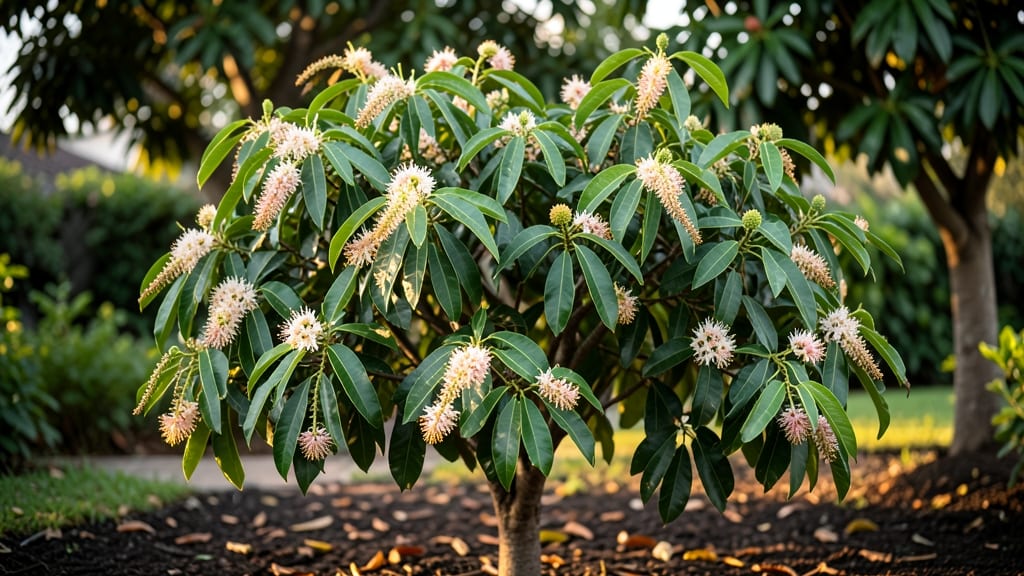
Your lychee tree’s flowering depends on one precise timing trick—cool winter nights followed by warm days. 🌸 I learned this the hard way after years of waiting for blooms that never came. The secret isn’t just patience; it’s replicating the tropical monsoon cycle your tree craves, even in dry climates.
Look for new growth in early spring—this signals it’s time to monitor temperatures closely. Ideal conditions mean daytime highs of 75-85°F and nighttime dips to 55-60°F, mimicking the natural shift that triggers flower buds.
Too much heat or cold, and your tree will skip flowering entirely, leaving you with empty branches.
Once buds form, consistent watering and balanced fertilizer (high in phosphorus) keep them strong. Prune lightly to improve airflow, but avoid heavy cuts—this stresses the tree when it’s already working hard to produce flowers.
Within 6-8 weeks, you’ll see clusters of fragrant white blossoms that’ll eventually turn into sweet, spiky fruit.
Here’s the kicker: even with perfect timing, some trees need 2-3 years to establish before they flower reliably. But once they do, you’ll understand why gardeners obsess over this delicate balance—there’s nothing like the first whiff of lychee blossoms in your backyard.
📚 In This Guide
- What you need
- Instructions
- Tips and common mistakes
- Wrapping up and next steps
What you need
- ● Pruning shears or loppers – Sharp, sterilized, and bypass-style (for clean cuts). If your tree is large, opt for 10-12" loppers for thicker branches.
- ● Disinfectant (70% isopropyl alcohol or bleach solution) – 1 part bleach to 9 parts water to sanitize tools between cuts.
- ● Garden gloves – Heavy-duty, cut-resistant to protect your hands.
- ○ Pruning sealant (optional but helpful) – Tree wound paint or beeswax-based sealant to prevent disease entry on larger cuts.
- ● Notebook & pen – To map your tree’s structure and track pruning progress.
- ● Watering can or hose with a gentle spray nozzle – For post-pruning hydration.
- ● Ideal timing – Prune during the tree’s dormant phase (late winter/early spring), just before new growth starts.
- ● Weather check – Aim for a dry, overcast day to reduce stress on the tree.
- ● Sunlight access – Ensure the area gets 6+ hours of direct sunlight daily for optimal flowering.
- ● Fertilizer (balanced NPK 10-10-10 or citrus-specific) – Apply 4-6 weeks post-pruning to boost recovery.
- ● Mulch (organic, like straw or wood chips) – 2-3 inches thick to retain moisture and regulate soil temp.
- ● Growth regulator (e.g., hydrogen peroxide 3%) – Dilute to 3% and spray on cuts to promote faster healing.
- ● Camera or phone – To document before/after pruning for progress tracking!
How to trigger lychee tree flowering using Precision timing
This is the method I’ve used to coax blooms from stubborn lychee trees—no guesswork, just science-backed triggers.
🌿 Step 1: Understand Your Tree’s Dormancy Cycle
Lychees bloom in response to temperature shifts, not just time. Most varieties need a cool winter rest of 45-60 days below 60°F to break dormancy. If your tree sits above 65°F year-round, it’ll never flower—no matter how much you water. Check your local frost dates: blooms typically appear 4-6 weeks after the last frost when nights dip into the 50s°F.
Here’s the thing—if your tree is young (under 5 years), it won’t flower yet. Lychees need mature wood (at least 3-inch diameter branches) to produce blooms. Prune aggressively in late winter to encourage new growth, but leave skeletal branches intact—they’re where flowers form. You’ll know your tree is ready when it drops old leaves and pushes new pinkish buds in spring.
☀️ Step 2: Simulate Seasonal Temperature Shifts
If your climate lacks natural cold snaps, mimic them artificially. Start by reducing water 30 days before your target bloom window—let the top 2 inches of soil dry out between waterings. This stress signal tells the tree winter is coming. Then, move the pot (or tree) to a shaded, cooler spot (ideally 50-55°F nights) for 6-8 weeks. A garage with open doors or a screened porch works perfectly.
Don’t skip this—lychees require this cold period to set flower buds. I’ve seen trees in Florida’s warm winters refuse to bloom until I replicated this chill. Watch for tiny pink flower clusters forming at branch junctions after 4-5 weeks of cooler temps. If you see them but they drop off, your tree needs longer cold exposure—extend the treatment by another 2 weeks.
💧 Step 3: Resume Watering and Fertilize Strategically
Once buds appear, increase water to keep soil evenly moist (not soggy). Lychee flowers are extremely sensitive to drought—even one dry week can cause them to abort. Use lukewarm water (cold water shocks the roots) and water at soil level, not overhead. Wet flowers invite fungal diseases like anthracnose, which turns blooms to mush overnight.
Feed with a balanced 10-10-10 fertilizer (or citrus-specific blend) only after blooms open. Too much nitrogen now = leafy growth, no fruit. Instead, switch to a low-nitrogen, high-phosphorus formula (like 5-10-10) to support flowering. Apply it every 4 weeks during bloom season, but stop fertilizing 6 weeks before harvest—you want the tree to focus on fruit, not new leaves.
⏰ Step 4: Manage Light and Humidity for Pollination
Lychees need full sun (6+ hours daily) to set fruit, but direct midday sun during bloom can scorch petals. If temps hit 85°F+, provide 30% shade cloth during peak hours. The goal is to keep flowers cool and hydrated—this prevents bud drop. I’ve seen entire flower clusters fall off when trees get overheated, so don’t rush to move them back into full sun.
Boost humidity to 60-70% by misting leaves daily or placing the tree on a pebble tray with water. Lychee flowers are wind-pollinated, but indoor breezes help too. If you’re growing outdoors, avoid windy days—petals tear easily. For container trees, a small fan on low near the plant mimics natural air movement and improves pollination success.
✂️ Step 5: Thin Flowers and Monitor for Fruit Set
Once blooms open, thin clusters to 3-5 flowers per stem. Overcrowded flowers lead to small, poor-quality fruit. Use sterilized pruners to snip excess blooms at the base—don’t tear them. You’ll know you’ve done it right when you see tiny green fruit forming 8-10 weeks after pollination. At this stage, reduce fertilizer to half-strength to prevent bitter fruit.
Here’s where most growers fail: don’t harvest until fruit turns yellow and smells sweet. Immature lychees are hard, bitter, and seedy. Wait until the skin cracks slightly when gently squeezed—that’s your cue. If fruit drops prematurely, your tree is stressed—check for aphids, scale, or root rot. A neem oil spray (applied at dusk) keeps pests off blooms and fruit.
Tips & tricks for perfect lychee tree flowering
These science-backed insights will help you maximize your lychee tree's blooming potential without the guesswork.
Temperature Precision: The 60°F threshold isn't just a number—it's the biological trigger for dormancy break. Use a minimum-maximum thermometer to track nighttime temps during your 6-8 week cold treatment. If temps dip below 50°F for more than 2 nights, move your tree to a slightly warmer spot (like 55°F) to prevent cold damage. I've seen frost damage ruin entire bloom cycles when growers didn't monitor closely enough.
Stress Signaling: That 30-day water reduction before cold treatment isn't arbitrary—it mimics natural drought conditions that signal winter. Water only when the top 2 inches of soil feel completely dry. Overwatering during this period can confuse the tree's biological clock and delay flowering. Think of it as teaching your tree to "read" seasonal changes.
Visual Cues: Those tiny pink flower clusters appearing after 4-5 weeks of cold treatment are your first success signal. But here's what nobody tells you—if they appear greenish instead of pink, your tree isn't getting enough light. Move it to a brighter location immediately. The color shift happens because chlorophyll production kicks in when light is insufficient.
Fertilizer Timing: The switch to 5-10-10 fertilizer after blooms open is critical, but the 6-week pre-harvest cutoff is often misunderstood. This means if your fruit sets in March, you must stop fertilizing by late April. The tree needs this break to redirect energy from leaf growth to fruit development. I've seen growers miss this window and end up with beautiful leaves but tiny, bitter lychees.
Pro Tips for Lychee Tree Flowering
- These science-backed insights will help you maximize your lychee tree's blooming potential without the guesswork.
- Temperature Precision: The 60°F threshold isn't just a number—it's the biological trigger for dormancy break.
- Stress Signaling: That 30-day water reduction before cold treatment isn't arbitrary—it mimics natural drought conditions that signal winter.
Frequently asked questions
Got questions about lychee tree flowering?
Here are answers to the most common ones—because timing and care make all the difference!
When is the best time to induce flowering in a lychee tree?
The ideal window is late winter to early spring (just before new growth starts). For tropical climates, aim for the dry season—this mimics natural conditions. Cold treatment (if in cooler zones) triggers blooms, but lychees thrive in warmth (60–85°F). Avoid pruning or fertilizing right before flowering—let the tree focus on blooms!
How do I know if my lychee tree is ready to flower?
Look for these signs:
- Mature age: Trees usually flower at 3–5 years old (or older if grafted).
- Healthy foliage: Lush, dark green leaves with no pests/diseases.
- Dormant phase: Leaves may yellow slightly in winter—this signals readiness.
Do lychee trees need cold weather to flower?
It depends! Tropical varieties (like ‘Kwai Mai Pink’) often flower without cold if given dry season stress (reduced water/fertilizer). Subtropical types (e.g., ‘Brewer’) may need 3–6 weeks below 60°F to trigger blooms. If you’re in a warm climate, mimic dry conditions instead.
Why did my lychee tree flower but drop all the buds?
Bud drop is common—here’s why:
- Environmental shock: Sudden heat, cold, or wind after flowering.
- Overwatering: Roots drowning = no energy for fruit retention.
- Nutrient imbalance: Too much nitrogen (leafy growth) or lack of boron/potassium.
- Pests/disease: Check for aphids or fungal spots on buds.
Can I force a lychee tree to flower indoors?
Indoor lychees (Litchi chinensis) are rare but possible with careful conditions:
- Use a dwarf grafted variety (e.g., ‘Salathiel’).
- Provide 12+ hours of bright light (grow lights work).
- Mimic seasons: Cool (55–60°F) + dry for 6–8 weeks in "winter," then warm (75–85°F) + humidity for spring.
- Avoid overpotting—root-bound stress can trigger blooms!
Wrapping up and next steps
Watching your lychee tree bloom is a rewarding experience, and with the right timing and care, you can maximize those fragrant white flowers every season! 🌸 The key takeaway? Prune strategically in late summer or early fall, provide the right environmental cues (like temperature shifts), and maintain consistent watering and fertilization. Small adjustments can make a big difference in transforming your tree into a flowering powerhouse.
Now that you’re armed with these tricks, roll up your sleeves and give it a try—your future lychee harvest will thank you! If you’re eager to dive deeper, explore our guide on post-flowering care to ensure your tree thrives from bloom to fruit.