
Advice
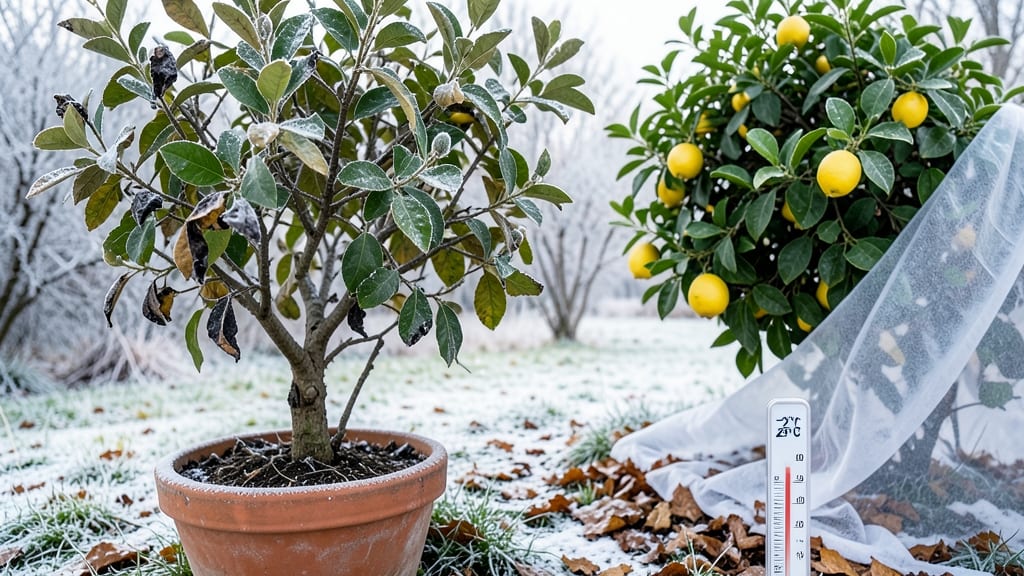
Can a lemon tree survive a freeze? Yes, but only if the cold snap is brief and temperatures stay above 20°F (-7°C) for short periods. Prolonged exposure below 28°F (-2°C) will damage or kill most lemon trees, with young plants and tender varieties being most at risk. Hardier types may recover with proper protection and care.
A lemon tree's ability to withstand cold depends on its variety and how long the freeze lasts. 🌱 Most citrus plants—including lemons—originate in warm climates, so their natural cold tolerance is limited.
When temperatures dip below 28°F (-2°C), ice crystals form inside plant cells, disrupting their structure and causing damage. However, some hardier lemon varieties, like the Meyer lemon, can tolerate brief cold snaps better than others.
The key is acting fast: covering the tree with frost cloth or blankets during sudden drops can make all the difference in preventing irreversible harm.
Even if your lemon tree survives a freeze, it may need extra care afterward. Prune any blackened or mushy branches immediately, as these won’t recover. 🌿 Monitor the tree closely for new growth—healthy leaves and buds are a good sign of recovery.
If the tree looks completely dead, don’t give up: sometimes roots survive, and new shoots can emerge from the base. For future protection, consider planting in a sheltered spot or using a heat lamp during unexpected cold snaps.
💡 In This Article
- Understanding Lemon Tree Cold Tolerance and Hardiness Zones
- Protecting and Reviving Lemon Trees After Freeze Damage
Understanding lemon tree cold tolerance and hardiness zones
Lemon trees are tropical plants at heart, which means their cells lack the natural antifreeze proteins found in cold-hardy species like apples or pears. When temperatures drop below 28°F (-2°C), ice crystals form in the plant's vascular system, rupturing cell walls and blocking water flow.
This process, called cold acclimation failure, is why most citrus varieties wilt or die during prolonged freezes. The damage starts at the tips of leaves and branches, where cold-sensitive tissues are most exposed.
USDA hardiness zones 8-11 represent the safe range for lemon trees, where winter lows rarely dip below 10°F (-12°C) for extended periods. Outside these zones, growers must use artificial protection.
For example, the Meyer lemon, a hybrid variety, can tolerate brief dips to 20°F (-7°C) due to its slightly thicker bark and waxy leaf coating, while the Eureka lemon—a classic bearing variety—struggles below 25°F (-4°C).
The difference lies in their genetic adaptations: Meyer lemons have a more resilient root structure, allowing them to recover faster from minor cold stress.
What most people don’t realize is that lemon trees can enter a state of partial dormancy when nights cool below 50°F (10°C), slowing metabolic processes to conserve energy. However, this isn’t true hibernation—unlike deciduous trees, citrus can’t fully shut down.
Their evergreen leaves continue photosynthesizing, making them vulnerable to sudden temperature swings. 🌿 For instance, a tree that survives a 25°F (-4°C) night might still suffer leaf burn if daytime temperatures rebound to 70°F (21°C) too quickly, causing moisture loss through damaged foliage.
Geographic location plays a critical role in survival. Coastal areas with moderating ocean breezes (like Zone 9b) often protect lemon trees better than inland valleys, where cold air pools.
In Zone 8, growers might get away with unprotected Meyer lemons if winters are mild, but a single 15°F (-9°C) night can turn a thriving tree into a firewood candidate.
The key is matching the right variety to your microclimate—some gardeners even grow dwarf varieties in containers and roll them indoors during winter.
Cold damage isn’t always immediate. Sometimes, a lemon tree will look fine after a freeze only to collapse weeks later when new growth emerges and reveals hidden internal damage.
This delayed reaction happens because the plant’s energy reserves are depleted trying to repair cell damage. 💫 That’s why post-freeze care—like avoiding heavy fertilization until new leaves appear—is just as important as protection during the cold snap.
For those in Zone 7 or colder, growing lemon trees outdoors is a gamble unless you’re prepared to use greenhouses or heated enclosures.
Even then, the root zone temperature (often colder than the air) is the real killer—citrus roots freeze at 28°F (-2°C), cutting off water and nutrient supply to the rest of the plant.
That’s why mulching with 6-12 inches of straw can add 4-8°F (2-4°C) of insulation to the soil, buying critical time during borderline freezes.