
Pests and Diseases
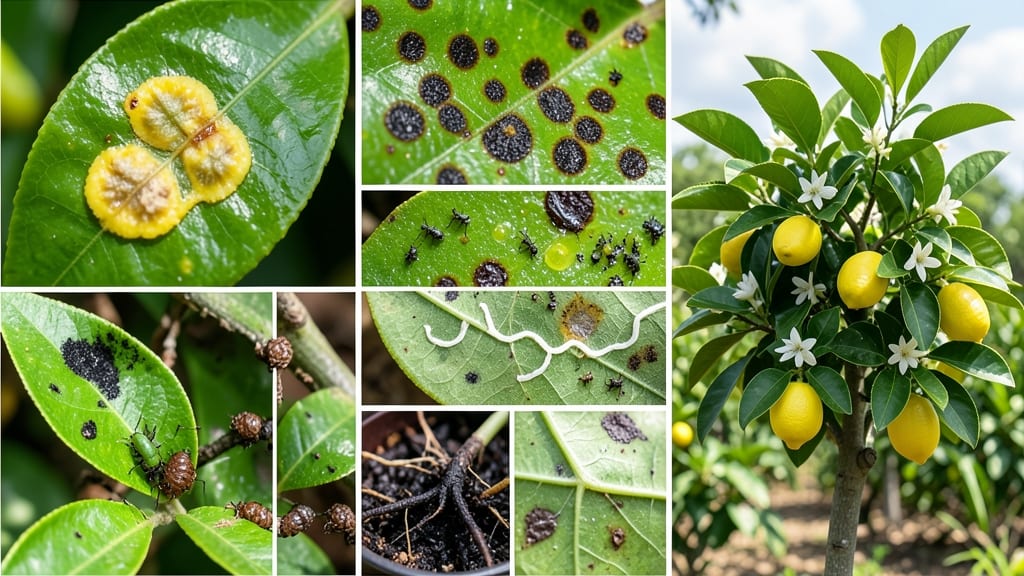
Your lemon tree’s health starts with spotting lemon tree diseases and pests early—before those yellow spots or sticky leaves ruin your harvest. 🌿 I’ve watched citrus canker and scale insects turn vibrant trees into sad shadows, but catching these issues early keeps your fruit sweet and your tree thriving.
The key? Knowing what to look for and acting fast.
Most problems begin with stress—too much water, poor drainage, or neglect. Citrus canker starts as tiny water-soaked spots that ooze, while scale insects leave behind a glossy, white residue. Root rot sneaks in when soil stays soggy, and greasy spot shows up as greasy brown patches on leaves.
The good news? All of these have fixes, from pruning to organic sprays.
With the right prevention—like copper sprays for canker or neem oil for pests—you’ll protect your tree before issues take hold. I’ve saved trees from total collapse just by acting at the first sign of trouble. A healthy tree means juicy lemons all season, not a sad, diseased mess.
Whether you’re dealing with a backyard citrus or a container-grown tree, these early warnings give you the upper hand. Let’s get your lemon tree back to its best—and keep it that way all year.
Root Causes Of Tree Stress
Lemon trees, like all citrus varieties, are susceptible to diseases and pests when their natural defenses weaken. Understanding why these issues arise helps you take proactive steps to protect your tree.
Below, we break down the key factors that create an inviting environment for problems—so you can address them before they escalate.
Lemon trees thrive in well-draining soil but drown when waterlogged. Excess moisture creates the perfect breeding ground for fungal diseases like root rot (caused by Phytophthora species) and citrus scab (Elsinoë fawcettii). Here’s why it happens:
- Compacted or clay-heavy soil prevents oxygen from reaching roots, suffocating them and inviting fungal pathogens.
- Improper irrigation—like watering on a schedule without checking soil moisture—keeps roots saturated, weakening their resistance.
- Container-grown trees are especially vulnerable if pots lack drainage holes, trapping excess water.
Actionable fix: Test soil moisture by sticking your finger 2–3 inches deep; water only when dry. Amend heavy soil with perlite or sand, and ensure containers have drainage.
While lemon trees love sunlight, intense heat without shade adaptation can scorch leaves and fruit, making them susceptible to sunburn and secondary infections. Here’s the science:
- Direct midday sun (especially in hot climates) causes leaf edges to dry out and turn brown—a condition called sun scald. Damaged tissue becomes entry points for pests like aphids or citrus leaf miners.
- Thin or waxy leaf cuticles (common in young trees) offer little protection against UV radiation.
- Water stress from heat exacerbates the issue by reducing the tree’s ability to photosynthesize efficiently.
Actionable fix: Provide afternoon shade (especially for young trees) with shade cloth or strategic planting near taller trees. Mulch around the base to retain moisture and reduce temperature fluctuations.
A lemon tree’s health hinges on balanced nutrition. Deficiencies or excesses disrupt cellular function, making the tree more vulnerable to pests and diseases. Key culprits:
| Nutrient | Deficiency Symptoms | Why It Weakens Defenses |
|---|---|---|
| Nitrogen (N) | Yellowing leaves (chlorosis), stunted growth | Reduces protein synthesis, weakening leaf structure and making it easier for pests like scale insects to latch on. |
| Zinc (Zn) | Small, distorted leaves; poor fruit set | Zinc is critical for enzyme activity; deficiency impairs wound healing, increasing susceptibility to bacterial infections. |
| Potassium (K) | Brown leaf edges ("scorch"), weak stems | Potassium regulates osmotic balance; low levels reduce disease resistance and make fruit more prone to citrus canker. |
| Iron (Fe) | Yellowing between leaf veins (interveinal chlorosis) | Iron is essential for chlorophyll production; deficiency stresses the tree, attracting sap-sucking pests like whiteflies. |
Actionable fix: Conduct a soil test every 2–3 years and amend with organic matter (compost) or targeted fertilizers. Avoid over-fertilizing with nitrogen, which can burn roots and attract pests.
Some pests don’t just harm lemon trees—they create conditions for diseases to take hold. For example:
- Aphids and scale insects excrete honeydew, a sticky residue that fosters sooty mold (a fungal growth that blocks sunlight and weakens the tree).
- Citrus leaf miners (Phyllocnistis citrella) burrow into leaves, creating wounds that invite bacterial infections like citrus bacterial spot.
- Mealybugs spread viruses (e.g., Citrus Tristeza Virus) through their feeding, which further compromises tree health.
Actionable fix: Monitor trees regularly for early signs of pests (e.g., sticky residue, chewed leaves, or visible bugs). Use neem oil or insecticidal soap for mild infestations, and introduce beneficial predators like lady beetles for long-term control.
Incorrect pruning disrupts the tree’s natural defense mechanisms, leaving it vulnerable to infections and pests. Common mistakes:
- Cutting too close to the trunk creates large wounds that take longer to heal, inviting fungal pathogens like Nectria canker.
- Over-pruning reduces leaf canopy, which limits the tree’s ability to photosynthesize and produce protective compounds.
- Using contaminated tools spreads bacteria or fungi from one cut to another, accelerating disease spread.
Actionable fix: Prune during dormant seasons (late winter/early spring), use sterilized tools (rubbing alcohol or bleach solution), and make cuts at a 45-degree angle just outside the branch collar.
Fixing Lemon Tree Troubles Quickly
Now that you’ve identified the issue, it’s time to act! Early intervention is key to saving your lemon tree and ensuring a bountiful harvest. Below, we’ve mapped out practical, step-by-step solutions for each common disease and pest, along with prevention tips to keep your tree thriving.
Think of this as your lemon tree’s first-aid kit—ready when you need it!
---
Fungal infections like citrus greening (HLB), powdery mildew, and root rot thrive in damp conditions. Here’s how to tackle them:
#### 🔥 Treat Citrus Greening (HLB) – No Cure, But Manage It Since HLB is incurable, focus on slowing progression and strengthening the tree’s defenses: - Remove infected leaves/fruit 🍋➡️🗑️ – Burn or dispose of them far from the tree to prevent spread. - Prune for airflow 🌿💨 – Thin out dense foliage to improve circulation and reduce humidity. - Apply copper-based fungicides 🛡️🍃 – Spray every 2–4 weeks (e.g., copper hydroxide) to inhibit fungal spores. - Fertilize with zinc & manganese 💪🌱 – HLB weakens trees; use a balanced citrus fertilizer (like 6-6-6) to support health. - Monitor for psyllids 🐜🚨 – These insects spread HLB.
Use neem oil or insecticidal soap to control them.
💡 Prevention Tip: Quarantine new plants for 30 days before adding them to your garden. HLB spreads via infected sap!
---
#### 🍳 Fight Powdery Mildew – Scrub & Spray Powdery mildew looks like white dust on leaves?
Act fast: - Prune affected branches ✂️🌿 – Remove heavily infected leaves and dispose of them. - Spray with baking soda mix 🧃🍃 – Mix 1 tsp baking soda + 1 tsp horticultural oil + 1 tsp soap per gallon of water.
Spray every 7–10 days. - Improve airflow 🌬️🌳 – Space trees properly and avoid overwatering. - Use fungicidal sprays 🛡️🍄 – Apply sulfur or potassium bicarbonate as a preventive measure.
💡 Prevention Tip: Water at the base (not overhead) to keep leaves dry. Early morning watering helps leaves dry faster.
---
#### 👨🍳 Root Rot Rescue – Drain & Disinfect Mushy roots and yellowing leaves? Root rot is lurking. - Stop watering immediately 💧➡️🚫 – Let the soil dry out completely. - Repot in fresh, well-draining soil 🏺🌱 – Use a mix of sand, perlite, and compost to improve drainage. - Apply fungicide to roots 🛡️🍄 – Dip roots in hydrogen peroxide (3%) or use mycorrhizal fungi to promote healthy root growth. - Ensure proper drainage 🚿🌳 – If in-ground, amend soil with gravel or raised beds.
💡 Prevention Tip: Never let lemon trees sit in soggy soil. Use pots with drainage holes and avoid saucers that trap water.
---
Pests like aphids, citrus leaf miners, and scale insects can drain your tree’s vitality. Here’s how to evict them:
#### 🔪 Scale & Mealybugs – Scrape & Suffocate These sap-sucking pests leave sticky residue (🍯🐜). Kill them with these steps: - Scrape off visible bugs ✋🐛 – Use a soft brush or cotton swab dipped in rubbing alcohol. - Spray with horticultural oil 🛢️🌿 – Apply every 5–7 days to smother eggs and adults. - Introduce ladybugs 🐞🛡️ – These natural predators love scale insects! - Use systemic insecticides 💉🍃 – For severe infestations, try imidacloprid (follow label instructions).
💡 Prevention Tip: Inspect new plants before bringing them home. Quarantine for 2 weeks to catch hitchhikers.
---
#### 🍳 Aphids & Spider Mites – Blast Them Away Tiny but terrible for your tree. Drown them with these tactics: - Blast off with water 💦🚿 – Use a strong hose spray to knock them off leaves. - Neem oil spray 🌿🛡️ – Mix 1 tbsp neem oil + 1 tsp soap per gallon of water.
Spray every 3–5 days. - Sticky traps 🕸️🛡️ – Hang yellow sticky traps near the tree to catch flying pests. - Encourage predator insects 🐞🕷️ – Lacewings and ladybugs feast on aphids. Buy them online or attract them with dill or fennel plants.
💡 Prevention Tip: Keep your lemon tree healthy—stressed trees attract more pests! Fertilize regularly and prune for sunlight.
---
#### ⏰ Citrus Leaf Miners – Trap & Trap Again These tiny worms burrow into leaves, causing zigzag trails. Stop them in their tracks: - Remove infested leaves 🍃🗑️ – Destroy them immediately to prevent spread. - Use pheromone traps 🕷️🛡️ – Place leaf miner traps near the tree to catch adults. - Apply kaolin clay 🏺🌿 – Sprinkle Surround WP (kaolin clay) to create a non-toxic barrier. - Spray with Bt (Bacillus thuringiensis) 💊🐛 – A natural bacterial spray that kills larvae.
💡 Prevention Tip: Monitor leaves regularly—early detection means easier control!
---
A healthy lemon tree resists diseases and pests better.
Follow these year-round tips: - Water deeply but infrequently 💧🌱 – 1–2 times per week (adjust for climate). - Mulch around the base 🌿🏺 – Use wood chips or straw to retain moisture and block weeds. - Fertilize in spring & summer 💪🍋 – Use a citrus-specific fertilizer (high in nitrogen for growth, potassium for fruit). - Prune for sunlight ☀️🌿 – Remove dead or crossing branches to improve airflow. - Rotate sprays 🔄🛡️ – Avoid overusing one treatment; mix neem oil, copper, and insecticidal soap for variety.
--- Final Thought: 🎯 The best cure is prevention! Regular inspections, proper care, and quick action at the first sign of trouble will keep your lemon tree happy, healthy, and productive for years. Now grab your gloves and get to work—your tree’s future harvest depends on it! 🍋✨
Frequently asked questions
What are the first signs my lemon tree has citrus canker?
Look for small, water-soaked spots on leaves that turn yellow with raised edges. These spots often ooze a brownish liquid and may fall out, leaving holes. Check both upper and lower leaf surfaces—early detection is key to stopping its spread.
How do I tell if sticky leaves mean pests or honeydew from mildew?
Pest-related honeydew is usually thicker and shinier, while mildew residue feels powdery. Check for tiny bugs (like aphids or scale) on leaves or stems—if you find them, that’s your culprit. A quick water spray test helps too: wipe some residue with a damp cloth. Sticky = pests; powdery = mildew.
Can I use the same spray for both fungal diseases AND pests?
No—mixing treatments can reduce effectiveness. Use copper-based sprays for fungal diseases (like citrus greening) and neem oil or insecticidal soap for pests. For severe cases, alternate treatments with a 24-hour gap between applications to avoid chemical conflicts.
Why does my lemon tree keep getting root rot even with good drainage?
Root rot thrives on consistent moisture, not just occasional soggy soil. Check for clay soil (which compacts easily) or overwatering habits. Even with drainage, roots can suffocate if the soil stays damp for days. Test soil moisture by sticking your finger 3 inches deep—only water when it feels dry.
Are there any organic ways to prevent citrus leaf miners?
Yes! Start with kaolin clay (like Surround WP) to create a protective barrier. Also, introduce parasitic wasps (like Aphytis melinus) or release lacewings—both naturally control leaf miners. Remove infested leaves immediately and use yellow sticky traps to catch adults.