
Pruning
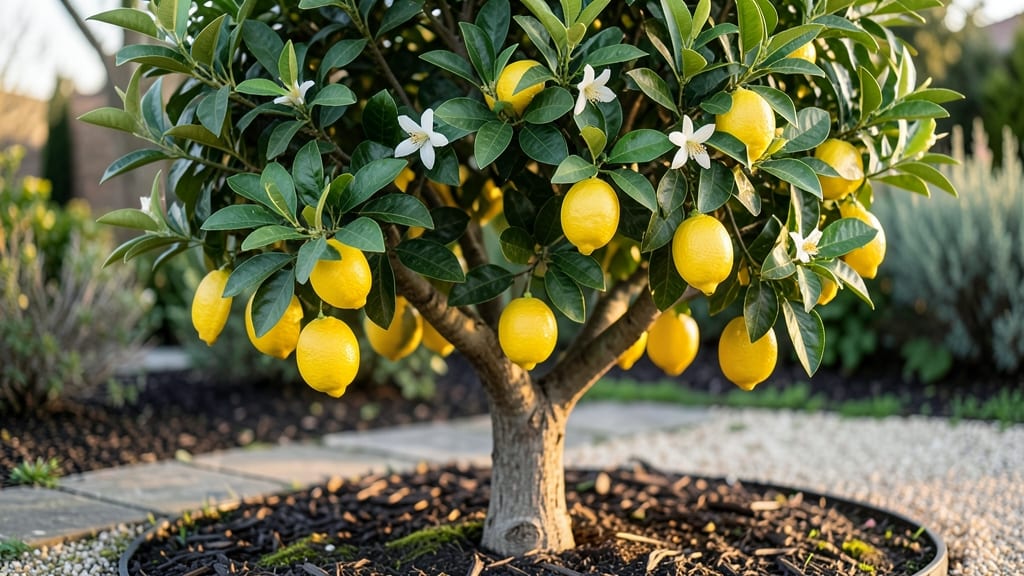
Your lemon tree thrives best within the temp range of 60°F to 85°F—anything outside that risks stunted growth or fruit drop. 🌿 I learned this the hard way when my first tree lost leaves during a sudden cold snap, but now I keep it in a sunny spot with just enough shade to prevent heat stress.
Lemon trees love USDA Zones 9-11, but with protection, you can grow them in cooler zones too. Indoor growers should keep them near a sunny window or under grow lights, while outdoor trees need winter wraps or indoor relocation when temps dip below 40°F.
The payoff? Sweet, fragrant fruit all year when you nail the temperature game. My tree now produces lemons year-round, and the scent alone makes it worth the effort. For hot climates, afternoon shade prevents leaf scorch, while cold snaps call for frost cloths or even a heated mat.
Small adjustments make all the difference!
Temperature Stress Explained
Lemon trees thrive in specific temperature ranges, and when those limits are crossed—whether too hot or too cold—they react with visible stress. Understanding why these temperature extremes disrupt growth is key to preventing damage and ensuring a healthy, fruitful tree.
Let’s break down the science behind temperature-related stress in lemon trees.
Lemon trees (Citrus × limon) are tropical/subtropical plants, meaning they evolved in warm climates with minimal temperature fluctuations. When exposed to prolonged cold (below 35°F/2°C), several physiological processes go haywire:
- Cell Membrane Damage: Cold temperatures cause water inside plant cells to crystallize, rupturing delicate cell membranes. This disrupts nutrient and water transport, leading to wilting or brown, mushy spots on leaves.
- Enzyme Dysfunction: Enzymes responsible for photosynthesis and respiration slow down or denature (lose shape) in cold conditions. Without these enzymes, the tree can’t process energy efficiently, stunting growth.
- Root Freezing: Roots are especially vulnerable because they’re in direct contact with cold soil. Frozen roots can’t absorb water or nutrients, causing the entire tree to suffer from dehydration.
Actionable Insight: Lemon trees in USDA Zones 9–11 (their ideal range) can tolerate brief dips to 28°F/-2°C if acclimated, but sudden freezes or prolonged cold are deadly. Use frost cloths or move potted trees indoors before temperatures drop.
While cold is lethal, extreme heat (above 95°F/35°C) also stresses lemon trees, but in different ways. Heat stress primarily affects the tree’s ability to regulate water and cool itself:
- Stomatal Closure: To conserve water, the tree’s stomata (tiny leaf pores) close. While this prevents dehydration, it also blocks CO₂ intake, halting photosynthesis. Leaves may curl or turn yellow.
- Protein Denaturation: High temperatures cause proteins in the chloroplasts (where photosynthesis occurs) to unfold. This reduces the tree’s ability to convert sunlight into energy.
- Root Suffocation: Hot soil bakes out oxygen, smothering roots. Without oxygen, roots can’t absorb water or nutrients, even if the soil appears moist.
Actionable Insight: Lemon trees need consistent moisture in heat—water deeply 2–3 times per week (not just surface-level sprinkles). Mulch with straw or wood chips to retain soil moisture and provide shade with a 30% shade cloth if temps exceed 100°F/38°C.
Wind doesn’t directly cause temperature stress, but it accelerates heat and cold damage by increasing evaporative water loss. Here’s how:
- Transpiration Overload: Wind strips away the thin layer of moisture around leaves, forcing the tree to work harder to replace it. In heat, this leads to rapid dehydration; in cold, it exacerbates frost damage.
- Physical Leaf Damage: Whipping branches can tear leaves, creating open wounds that invite fungal infections (like Citrus Canker). Weakened leaves also photosynthesize less efficiently.
Actionable Insight: Plant lemon trees in sheltered spots (e.g., near fences or walls) or use windbreaks like bamboo screens. Prune trees to improve airflow within the canopy but reduce exposure to harsh winds.
💡 Pro Tip: Monitor your lemon tree’s microclimate—even a small patio or greenhouse can create a 10°F+ difference from outdoor temps. Use a digital thermometer to track conditions and adjust care accordingly.
Adjusting Your Lemon Tree’s Climate
Now that you understand how temperature swings affect your lemon tree, let’s tackle the fixes—whether you’re dealing with chilly drafts, scorching heat, or sudden freezes. These solutions are practical, budget-friendly, and designed to keep your tree happy year-round.
Problem: Your lemon tree shivers in temps below 30°F (-1°C) or struggles with late-winter frosts.
How to Revive & Protect: ✅ 🔥 Emergency Warm-Up for Damaged Leaves
- If frost has already hit, prune blackened branches (use sterilized shears 🔪) to prevent rot. Cut back to healthy green growth—new shoots will sprout faster in spring.
- Wrap the trunk with burlap or frost cloth (like a cozy blanket!) to shield it from wind chill. Secure it loosely so air can circulate.
✅ 🏡 Long-Term Cold-Proofing - Move potted trees indoors (or to a garage/shed) if temps drop below 40°F (4°C).
Place near a south-facing window for sunlight. - Insulate outdoor trees with a tree wrap or mulch the base (3–4 inches of straw or wood chips) to lock in warmth. - Choose cold-hardy varieties like Meyer lemons (tolerate 25°F/-4°C briefly) or Ponderosa lemons if you’re in USDA Zones 8–10.
💡 Pro Tip: Avoid pruning in winter—wait until spring when the tree can heal faster. Cold snaps stress new cuts!
Problem: Your lemon tree wilts in temps above 90°F (32°C), with yellow leaves, crispy edges, or dropped fruit.
How to Revive & Shield: ✅ 💦 Hydration First Aid
- Deep-water the tree (1–2 inches per week) early in the morning to reduce evaporation. Use a soaker hose to avoid wetting leaves (fungus risk!).
- Mulch heavily (4–6 inches of organic mulch) to keep roots cool. Straw or shredded bark work best—avoid plastic.
✅ 🌿 Shade & Airflow Boosters - Install shade cloth (30–50% coverage) over young trees or plant nearby with taller, fast-growing companions like bamboo or sunflowers for natural shade. - Prune dense foliage to improve airflow—aim for an open canopy (like a dome with gaps).
Use sharp pruners and cut at a 45° angle 🍳. - Mist leaves lightly in early morning (not evening!) to lower temp by 5–10°F. Use a spray bottle for small trees.
💡 Pro Tip: Avoid fertilizing in extreme heat—it stresses the tree. Wait until temps drop below 85°F (29°C).
Problem: Your tree thrives in 60–80°F (15–27°C) but struggles with rapid swings (e.g., hot days → freezing nights).
How to Stabilize the Climate: ✅ 🏗️ Microclimate Engineering
- Plant near a wall or fence (south-facing) to absorb and radiate heat during the day.
- Use black plastic mulch under the tree—it absorbs heat and warms the soil by 5–10°F.
- Group trees together (if space allows) to create a shared warm zone.
✅ 🌡️ Smart Watering for Temperature Buffers
- Water deeply before sunrise—moist soil releases heat slowly, keeping roots cooler.
- Avoid evening watering—wet leaves + night chill = fungus risk (like citrus scab).
💡 Pro Tip: Monitor soil temp with a thermometer—ideal root zone temps are 60–75°F (15–24°C). If it’s below 50°F (10°C), take action!
| Season | Do This | Avoid This |
|---|---|---|
| Spring | Prune after last frost, fertilize | Overwatering (wait for dry soil) |
| Summer | Mulch, shade cloth, deep watering | Pruning (stresses the tree) |
| Fall | Reduce watering, harvest lemons | Fertilizing late in the season |
| Winter | Protect trunk, move pots indoors | Pruning (wait for spring) |
Final Thought: Lemon trees are tropical divas—they hate surprises! By adjusting their environment (not just reacting to damage), you’ll keep them thriving for decades. Start with one fix (like mulching or shade cloth) and build from there! 🌿✨
Frequently asked questions
What’s the safest temperature range for my lemon tree?
Lemon trees thrive in a 60°F to 85°F range, but they can tolerate brief dips to 50°F or spikes to 90°F if acclimated. Prolonged exposure below 40°F or above 95°F risks leaf drop, stunted growth, or even death. Meyer lemons are slightly more cold-hardy than standard varieties.
Can I grow a lemon tree indoors if I live in a cold climate?
Yes! Place your potted lemon tree near a south-facing window where it gets 6–8 hours of sunlight daily. Use a grow light if natural light is insufficient. Keep temps between 65°F–75°F and avoid drafts from AC vents or heaters. Rotate the pot weekly for even growth.
How do I protect my outdoor lemon tree from frost?
Cover the tree with frost cloth or a lightweight blanket when temps drop below 35°F. Wrap the trunk with burlap and mulch the base with straw or wood chips (3–4 inches deep). For potted trees, move them to a garage or indoors before frost hits.
Why are my lemon tree’s leaves turning yellow in summer?
Yellow leaves in heat are often a sign of overwatering or root stress. Lemon trees need deep watering 2–3 times per week in summer, but soggy soil suffocates roots. Let the top 1–2 inches of soil dry between waterings. Also check for shade cloth—direct sun above 95°F can scorch leaves.
Can lemon trees survive a sudden freeze?
Most lemon trees can’t survive sudden freezes below 28°F, but Meyer lemons may tolerate brief dips to 25°F if hardened off. Act fast: Drape bubble wrap or frost cloth over the tree and wrap the trunk. If frost damage occurs, prune dead branches in spring—new growth will emerge from healthy buds.