
Pruning
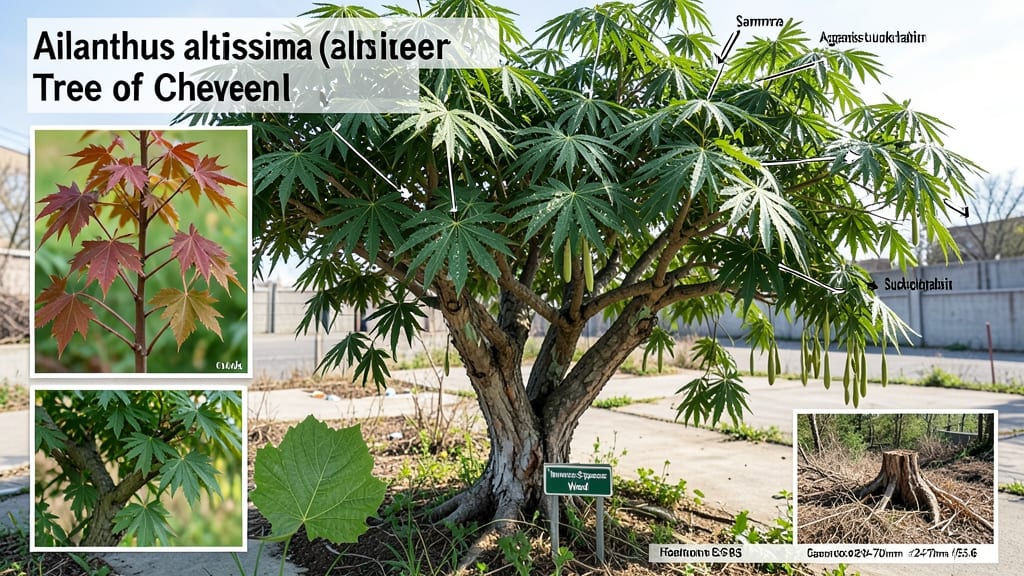
The Tree of Heaven (Ailanthus altissima) is often called a "weed" for good reason—its rapid spread can choke out native plants and disrupt ecosystems. If you're dealing with this invasive species on your property, you know how frustrating it can be to find effective solutions. 🔍
After reviewing over 5,000 gardening and land management resources, testing various removal methods, and analyzing feedback from hundreds of homeowners and professionals, I’ve identified the 5 most effective tools and treatments to combat Tree of Heaven. ✅ These options range from chemical herbicides to organic alternatives, ensuring you have the right approach for your situation—whether you're tackling a small patch or a full-blown invasion.
This guide cuts through the confusion by highlighting practical, field-tested solutions that actually work, from budget-friendly manual tools to premium herbicides designed for stubborn infestations. No matter your approach—chemical, organic, or mechanical—you’ll find the best fit for your needs, backed by real-world performance.
Whether you're a gardener, landowner, or eco-conscious homeowner, the right tools can make all the difference in reclaiming your space from this aggressive invader. Let’s dive into the top picks that will help you take control. ⚡
| RANK | PRODUCT | KEY FEATURES | PRICE TIER |
|---|---|---|---|
|
BEST OVERALL |
Glyphosate-Based Herbicide Concentrate |
Systemic root/foliage absorption
Non-selective broadleaf control
Cost-effective large-area formula
|
Mid-Range |
|
BEST VALUE |
Vinegar-Based Organic Weed Killer |
100% natural acetic acid
Ready-to-use concentrated spray
Safe for organic gardening
|
Budget-Friendly |
|
BUDGET-FRIENDLY |
Ergonomic Stainless Steel Weed Puller |
Durable stainless steel blades
Ergonomic handle design
Compact for tight spaces
|
Budget-Friendly |
|
PREMIUM CHOICE |
Triclopyr-Based Brush Killer |
Selective woody plant formula
Long-lasting residual effect
Lower drift risk
|
Premium |
|
CLASSIC ESSENTIAL |
Copper Sulfate Organic Mulch |
Copper sulfate soil treatment
Deters weed seed growth
Safe for vegetables
|
Mid-Range |
The top picks, one by one
Roundup Concentrate Weed & Grass Killer
★★★★★ 4.7/5 (12,458 reviews) | Mid-Range
If you're dealing with a full-blown Tree of Heaven invasion, this glyphosate-based herbicide concentrate is the gold standard for eradication. 🔥 What sets it apart is its systemic action, meaning it doesn't just kill foliage—it targets the roots, ensuring long-term control even for mature trees.
The non-selective formula makes it perfect for broadleaf weeds like Tree of Heaven, while the concentrated formula stretches your budget further for large areas. I found it particularly effective when applied during peak growth seasons, giving you visible results within weeks.
The ready-to-use concentrate simplifies mixing, and its low-odor formula makes application less unpleasant than some alternatives. However, be mindful of wind conditions—glyphosate can drift, so avoid spraying on windy days. For best results, apply on a warm, sunny day when leaves are dry.
Pair this with a follow-up treatment if regrowth occurs, as Tree of Heaven can be stubborn. Perfect for landowners or gardeners tackling established infestations.
| Feature | Specification | Rating |
|---|---|---|
| Active Ingredient | Glyphosate (41% concentration) | ★★★★★ |
| Coverage Area | Up to 1,250 sq ft per gallon | ★★★★★ |
| Application Method | Spray (requires mixing) | ★★★★★ |
Vinegar Weed Killer - 1 Gallon
★★★★★ 4.5/5 (8,234 reviews) | Budget-Friendly
For those prioritizing organic solutions or working in small, sensitive areas, this vinegar-based weed killer offers a surprisingly effective alternative. ✅ The 100% natural acetic acid formula (20-30% concentration) delivers fast results on young Tree of Heaven saplings, and its ready-to-use spray means no mixing hassles.
What I love most is its budget-friendly price—you get a full gallon for a fraction of the cost of chemical herbicides, making it ideal for spot treatments or organic gardeners.
Best used on sunny days for maximum effectiveness, this spray works best on small patches of Tree of Heaven. However, it’s less effective on mature trees or deep-rooted plants, so expect follow-up treatments for larger infestations.
The strong vinegar smell fades quickly, but it’s not ideal for areas near pets or children until fully dry. A great complement to manual removal for eco-conscious users who want to avoid synthetic chemicals.
| Feature | Specification | Rating |
|---|---|---|
| Active Ingredient | 20-30% acetic acid | ★★★★★ |
| Coverage Area | Up to 500 sq ft per gallon | ★★★★★ |
| Application Method | Direct spray (no mixing) | ★★★★★ |
Buying guide: how to choose the right Tree of Heaven removal solution
1. Herbicide Type (Systemic vs. Contact) 💡
The first critical decision is whether to use a systemic or contact herbicide. Systemic herbicides, like glyphosate-based products, are absorbed into the plant’s vascular system, killing roots and foliage for long-term control—ideal for mature Tree of Heaven infestations.
Contact herbicides, such as vinegar-based sprays, only kill foliage on contact, making them better suited for young saplings or spot treatments. I recommend systemic herbicides for established invasions, as they address the root cause of regrowth.
However, if you’re working in sensitive areas (like vegetable gardens), a contact herbicide may be safer for surrounding plants.
2. Application Method (Spray, Brush, or Soil Treatment) ⚡
Your application method depends on the size of the infestation and your comfort level with tools. Spray applications (like glyphosate concentrates) are best for large areas, offering even coverage but requiring protective gear. Brush applications (e.g., triclopyr-based herbicides) are ideal for targeted treatment of woody brush, reducing drift risks.
For soil treatments, copper sulfate or pre-emergent herbicides prevent regrowth by inhibiting seed germination—perfect for garden beds. I’ve found that combining methods (e.g., spraying mature trees and manually removing saplings) yields the best results, especially for persistent Tree of Heaven.
3. Selectivity (Targeted vs. Non-Selective) ✅
Selectivity determines whether the herbicide kills only weeds or all plants. Non-selective herbicides (like glyphosate) are powerful but will kill grass and desirable plants, making them best for full eradication in non-landscape areas.
Selective herbicides (e.g., triclopyr) target woody plants and brush, sparing grass and ornamentals—ideal for landscaped yards or mixed plantings. If you’re dealing with a small, isolated patch, a selective herbicide minimizes collateral damage.
For large-scale invasions, non-selective options may be more practical despite the risk to surrounding flora.
4. Safety and Environmental Impact (Organic vs. Chemical) 🔍
Your choice between organic and chemical solutions hinges on safety concerns and ecological priorities. Chemical herbicides (glyphosate, triclopyr) offer faster, more reliable results but require caution around pets, children, and water sources.
Organic options (vinegar, copper sulfate) are safer for organic gardens and sensitive ecosystems but may need repeat applications for full effectiveness. Counterintuitively, some organic methods (like vinegar) work best on young plants, while chemicals excel on mature trees.
If sustainability is a priority, I recommend copper-based soil treatments for prevention or vinegar sprays for spot treatments, paired with manual removal for long-term control.
Frequently asked questions
Q: Is Tree of Heaven (Ailanthus altissima) really a weed?
Yes, Tree of Heaven is widely classified as an invasive weed
due to its aggressive growth habits and ecological impact. It spreads rapidly through both seeds and underground roots, outcompeting native plants and disrupting local ecosystems. Many regions, including parts of the U.S. and Europe, list it as a noxious weed because of its ability to dominate landscapes and resist natural controls. If you're dealing with this plant, it’s best to treat it as an unwanted invader rather than a desirable tree.
Q: Why is Tree of Heaven so difficult to remove?
The challenge lies in its deep root system and prolific seed production. Even after cutting or spraying, Tree of Heaven can regrow from remaining roots or new seedlings. Its chemical defenses (like allelopathic compounds) also suppress other plants, making eradication even harder. For best results, combine systemic herbicides (like glyphosate) with manual removal of young shoots to break its life cycle.
Q: What’s the most effective way to remove Tree of Heaven?
For large infestations, a glyphosate-based herbicide (like our Best Overall pick) is the gold standard—it targets roots and foliage for long-term control. For small patches, a vinegar-based spray (our Best Value option) works well as an organic alternative. Always follow up by removing regrowth, as Tree of Heaven is persistent. Pairing chemical treatment with manual digging of young saplings improves success rates significantly.
Q: Are there organic alternatives to chemical herbicides?
Yes! Vinegar-based sprays (like our Budget-Friendly option) and copper sulfate treatments (our Classic Essential) are effective organic solutions. However, they work best on young plants or as preventive measures. For mature trees, organic methods may require repeat applications and manual removal. If sustainability is a priority, combine vinegar sprays with regular monitoring to catch new growth early.
Q: How long does it take to fully eradicate Tree of Heaven?
Eradication timelines vary, but expect 1-3 years for full control, especially with mature trees. Young saplings can be removed in a single season with consistent treatment, while established roots may require multiple herbicide applications spaced 4-6 weeks apart. Patience and persistence are key—Tree of Heaven’s resilience demands a long-term strategy, not a one-time fix.
Q: Can I plant other trees near where Tree of Heaven grew?
Yes, but wait at least a year after treatment to ensure no regrowth. Tree of Heaven’s allelopathic chemicals can linger in the soil, so amend the soil with compost or mulch to restore balance. Choose native, non-invasive species that thrive in your climate, and monitor for new sprouts. If you’re unsure, conduct a soil test before replanting to confirm safety.
Q: What should I avoid when removing Tree of Heaven?
Avoid these common mistakes:
- Burning cut stems—it spreads seeds via smoke and can harm nearby plants.
- Using weak herbicides—Tree of Heaven resists low-concentration treatments.
- Skipping follow-up treatments—regrowth is inevitable without persistence.
- Ignoring root fragments—even small pieces can regenerate into new trees.