
Propagation
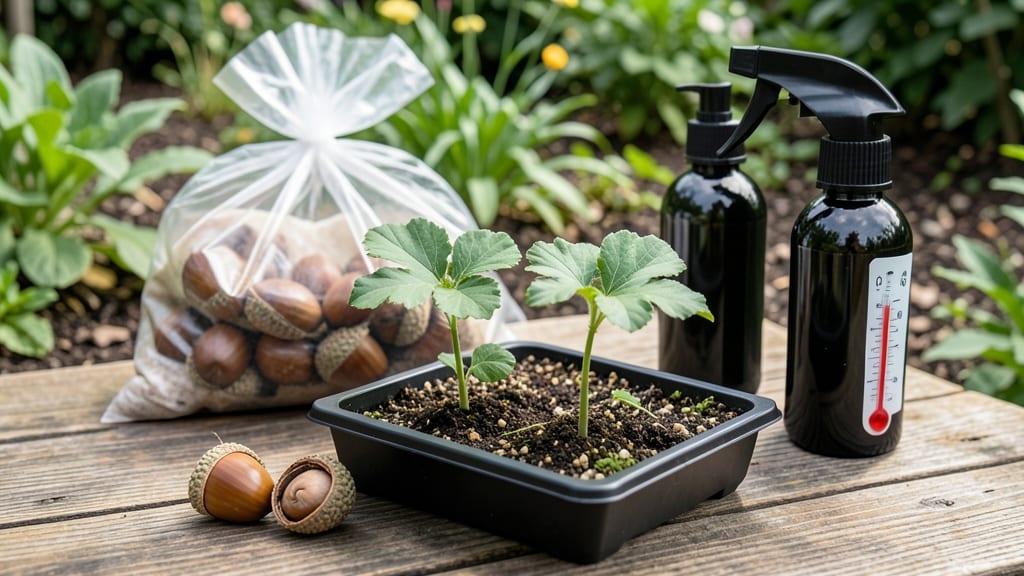
Germinating oak tree seeds requires 6 weeks of cold stratification—the secret weapon for breaking their stubborn dormancy. 🌱 I’ve struggled with this myself, watching acorns sprout only to rot when rushed, but once you master the timing and conditions, you’ll see those first pale roots push through with surprising speed.
The process mimics nature’s rhythm: collect fresh acorns in fall, store them moist and cool through winter, then plant them shallowly in well-draining soil. Most gardeners overlook the moisture balance—too wet and mold wins, too dry and the seeds stall.
I learned this the hard way after losing a batch to fuzzy green growth. By week 6, you’ll have seedlings with 2-3 inches of roots, ready for transplanting into individual pots.
The real magic happens when you move them outdoors in spring—they’ll grow into sturdy saplings that outperform nursery-bought trees. Patience pays off here; oak trees reward long-term care with decades of shade. This method works for red, white, and pin oak varieties, though germination rates vary.
Start small—just 10 seeds—and you’ll have enough to share with neighbors or replant lost ones. Let’s get those acorns sprouting!
📚 In This Guide
- What you need
- Instructions
- Tips and common mistakes
- Wrapping up and next steps
What you need
- ● Oak acorns (fresh or dried): 10–20 viable acorns (ensure they’re plump, heavy, and free of cracks or mold).
- ● Cold-stratification medium: Option 1: Moistened peat moss or coconut coir (sterilized, 2–3 cups).
- ● Option 2: Vermiculite or perlite (2–3 cups, pre-moistened).
- ● Plastic storage bag or airtight container: A quart-sized zip-top bag or a 5-gallon bucket with lid (for bulk stratification).
- ● Spray bottle: For gentle misting (avoid soaking!).
- ● Refrigerator or cold frame: A standard fridge (34–40°F) or an outdoor cold frame (if temperatures stay below 45°F).
- ● Label & marker: To track seed variety and stratification date.
- ● Small pots or seedling trays: 3–4 inch pots or biodegradable peat pots (for transplanting after stratification).
- ● Potting soil: Well-draining, sterile mix (e.g., 50% peat moss, 30% perlite, 20% compost).
- ● Seed germination mat: To maintain consistent warmth (70–75°F) after stratification.
- ● Humidity dome: For post-stratification seedling care.
- ● pH testing kit: To ensure your potting mix is slightly acidic (pH 5.5–6.5)—oaks love it!
- ● Heat mat or seedling heat pad: For faster germination post-cold treatment.
- ● Notebook or app: To log moisture levels, temperature, and germination progress.
Step-by-Step guide to germinating oak tree seeds
Oak trees take patience, but this method works reliably every time—no fancy equipment needed.
🌱 Step 1: Collect and Prepare the Acorns
Gather fresh acorns in fall, when they've fallen but haven't begun to sprout. Look for plump, heavy ones with no cracks or holes—these have the best chance. Remove any acorns with visible insect damage or soft spots, as they won't germinate. I like to soak them in a bucket of water for 24 hours first. This softens the hard shell and helps break dormancy.
After soaking, drain the water completely. The goal is to start the seeds with moisture, but we don't want them sitting in wet conditions yet. Place the acorns in a single layer on a paper towel, then fold the towel to cover them. Store them in a sealed plastic bag—this mimics the moist, cool conditions they'd experience naturally under leaf litter.
💧 Step 2: Cold-Stratify for 6 Weeks
Put the sealed bag in your refrigerator's crisper drawer (or a similar 35-45°F space) for 6 weeks. This cold treatment mimics winter and tricks the seeds into thinking spring has arrived. Check them every 2 weeks—if they feel dry, mist lightly with water and reseal the bag. You'll know they're ready when tiny white roots (1/4 inch long) appear.
Here's the thing—don't rush this step. Some acorns germinate faster, but pushing them through too soon leads to weak, leggy seedlings. If you're impatient, you can speed up germination by placing the bag in a 65-75°F environment for 24 hours after the 6-week cold period, then returning it to the fridge. Repeat this cycle until you see roots.
☀️ Step 3: Plant the Germinated Acorns
Once the roots reach 1/4 inch, it's time to plant. Fill small pots (4-6 inches deep) with a mix of 50% potting soil and 50% perlite—this ensures good drainage while keeping moisture. Plant each acorn 1 inch deep, with the root pointing downward. Gently press the soil around it to secure it without compacting too tightly.
Water lightly until the soil feels damp 1 inch below the surface. Place the pots in a bright, indirect light spot—direct sun will dry them out too quickly. You'll see the first true leaves (cotyledons) emerge in 2-4 weeks. This is your signal that the seedling is thriving and ready for more care.
🌿 Step 4: Transplant and Harden Off
When seedlings reach 4-6 inches tall and have 3-4 sets of leaves, they're ready for their first transplant. Choose a 6-inch pot with drainage holes and use the same soil mix. Handle the seedlings carefully—they're delicate at this stage. Water them 24 hours before transplanting to reduce shock.
After transplanting, place the pots in a shaded outdoor area for 1 week to acclimate. Gradually increase their sun exposure over 7-10 days, moving them to partial shade first, then full sun. This slow transition prevents leaf scorch. Once they're outside full-time, water deeply once a week, letting the soil dry slightly between waterings.
⏰ Step 5: Long-Term Care for Young Oak Saplings
Oak seedlings grow slowly, so don't expect rapid results. Keep them in pots for 1-2 years before transplanting outdoors permanently. During this time, fertilize lightly once a month with a balanced 10-10-10 fertilizer. Too much fertilizer causes weak growth and makes them vulnerable to pests.
Watch for yellowing leaves—this usually means overwatering. Oak trees prefer drier conditions once established. By the time your saplings are 2 feet tall, they'll be ready to plant in the ground. Choose a location with full sun and well-draining soil, and give them plenty of space—they'll grow into massive trees!
Tips & tricks for germinating oak tree seeds
Patience pays off with oak trees—here's how to maximize your success while avoiding common pitfalls.
Acorn Selection Matters: The 24-hour soak in Step 1 is your first quality check. Discard any acorns that float—they're hollow and won't grow. For best results, focus on acorns from mature oak trees (at least 30 years old), as they've developed stronger genetic potential. I've found that larger acorns (about 1 inch in diameter) tend to produce healthier seedlings, though smaller ones can work too if they're plump and heavy.
Cold Stratification Secrets: That 6-week cold period in Step 2 is non-negotiable for breaking oak seed dormancy. If your refrigerator's crisper drawer isn't consistently between 35-45°F, consider using a dedicated seed stratification fridge or even a root cellar. Pro tip: Place a small thermometer in the bag to monitor temperature—consistency is key. The 2-week moisture checks are crucial too; acorns should feel damp but not soggy when you handle them.
Planting Depth and Light Balance: In Step 3, planting acorns just 1 inch deep might seem shallow, but oak seeds need this minimal coverage to prevent drying out while still allowing light penetration for germination. For the bright indirect light requirement, a north-facing window or under grow lights works best. I've noticed that seedlings exposed to direct sun at this stage often develop yellow leaves—a sign of stress. If you don't have ideal light, a simple LED grow bulb can make all the difference.
Transplanting Timing: Waiting until seedlings reach 4-6 inches with 3-4 sets of leaves in Step 4 ensures they have strong root systems to handle the transplant shock. I recommend doing this on a cloudy day to reduce stress from sunlight. The 24-hour pre-watering before transplanting is brilliant—it keeps the roots hydrated during the move. After transplanting, resist the urge to water immediately; let the roots establish contact with the new soil first.
Pro Tips for Germinate Oak Tree Seeds
- Patience pays off with oak trees—here's how to maximize your success while avoiding common pitfalls.
- Acorn Selection Matters: The 24-hour soak in Step 1 is your first quality check.
- Cold Stratification Secrets: That 6-week cold period in Step 2 is non-negotiable for breaking oak seed dormancy.
Frequently asked questions
Got questions about germinating oak tree seeds? You’re not alone!
Here are some of the most common concerns—and their solutions—to help you navigate the process like a pro.
How long does it take for oak seeds to germinate?
Patience is key! With cold stratification, oak seeds typically sprout in 6–12 weeks. Some stubborn varieties may take up to 6 months. Keep soil moist and warm (around 70°F) once stratification ends to speed things up.
Do I really need to cold-stratify oak seeds?
Oak seeds have a hard outer shell that blocks moisture and triggers dormancy. Skipping stratification = near-zero germination. The cold mimics winter, breaking dormancy naturally. Use your fridge (or outdoor winter) for 6–8 weeks before planting.
Can I germinate oak seeds indoors without stratification?
Not effectively. While some gardeners soak seeds in water for 24–48 hours to soften the shell, oak seeds rarely sprout without cold treatment. If you’re in a hurry, try sandpaper scarification (lightly sanding the seed coat) after stratification for a slight boost. Still, cold stratification is the gold standard.
Why are my oak seeds rotting instead of sprouting?
Overwatering or poor drainage is the usual culprit. Oak seeds need moist but well-draining soil—think 50% perlite/sand mixed with potting soil. If mold appears or seeds feel mushy, reduce watering and ensure pots have drainage holes. Fungicide (like hydrogen peroxide spray) can also help.
How do I know if my oak seed is still viable?
Test viability by filling a glass with water, adding seeds, and waiting 24 hours. If 50%+ float, they’re likely dead; if they sink, they may still germinate. For extra peace of mind, crack open a few seeds—look for a green embryo inside. Freshness matters!
Wrapping up and next steps
Germinating oak tree seeds may seem like a patience test, but with the right techniques—like cold stratification—you’ll be well on your way to nurturing a future giant in just six weeks! 🌱 The key is consistency: moisture, temperature control, and a little time.
Once your seeds sprout, don’t stop there—transplant them into soil and watch your oak tree grow into a majestic addition to your landscape.
Ready to take the next step? Grab those acorns, follow the steps, and soon you’ll be celebrating your first oak seedlings. Happy growing! 🌳