
Trees
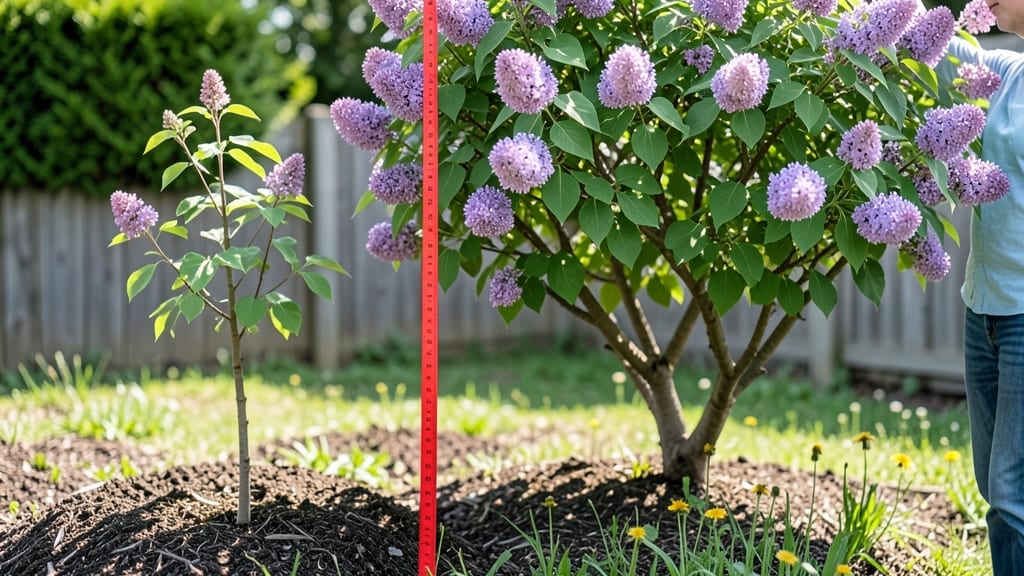
A lilac tree grows how tall does a lilac tree grow anywhere from 4 feet to towering 15 feet at maturity, depending on the variety and how you prune it—so your garden’s layout depends on which type you choose.
If you’re eyeing a fragrant hedge but lack the space for a full-sized shrub, you’ll love the dwarf varieties that stay under 6 feet, while standard lilacs need room to shine in the backyard corner.
Below, I break down the height ranges for the top 5 cultivars, how pruning shapes their growth, and which compact types work in containers or tight spaces.
You’ll also discover how to control height through simple pruning techniques, ensuring your lilac tree fits perfectly in your landscape—no matter how big (or small) your dream design is.


Lilac tree height guide: mature sizes for top 5 cultivars
Choosing a lilac cultivar is like picking a garden centerpiece—its mature height determines where it thrives. The Common Lilac (Syringa vulgaris) typically reaches 8-15 feet at maturity, while dwarf varieties like 'Little Lime' stay under 3 feet.
These differences aren't just about space; they impact pruning needs, flowering intensity, and even your garden's layout. Let's explore how each variety grows so you can plan your planting strategy with confidence.
Lilacs grow fastest in their first 3-5 years, with some varieties like the Korean Lilac (Syringa meyeri) gaining 2 feet annually in ideal conditions. Soil quality, sunlight exposure, and watering habits all influence final height.
For example, a French Lilac (Syringa vulgaris 'Madame Lemoine') might stay shorter in partial shade but stretch taller in full sun. Understanding these factors helps you control growth naturally without aggressive pruning.
Here's how the top 5 lilac cultivars compare in height—plus how pruning affects their mature size:
The Common Lilac is the tallest standard variety, often reaching 15 feet in ideal conditions. This makes it perfect for creating natural privacy barriers or anchoring large garden beds.
However, its rapid growth means you'll need to plan for regular pruning—especially if you want to control its height. I've seen Common Lilacs
How to control lilac tree height through pruning techniques
Lilac trees (Syringa vulgaris) can grow 8 to 15 feet tall if left unpruned, but with the right techniques, you can easily shape them to fit your garden. The key is understanding when and how to prune based on your cultivar and desired height.
For example, dwarf varieties like 'Little Lila' stay under 4 feet, while standard types need aggressive pruning to keep them compact.
Timing is everything—pruning at the wrong time can reduce next year's blooms. Always prune right after flowering (late spring to early summer) to allow new growth to harden before winter. Avoid heavy pruning in fall or winter, as this stresses the plant and invites disease.
Using the right tools, like bypass pruners and a sharp saw, ensures clean cuts that heal properly.
- Step 1: Identify your goal – Decide if you want to reduce height, shape the tree, or encourage bushier growth. Dwarf varieties need minimal pruning, while standard types may require 50% height reduction every few years.
- Step 2: Gather tools – Use sterilized pruners, a ladder (for tall trees), and gloves to protect from thorns. Keep a bucket of rubbing alcohol to wipe tools between cuts and prevent disease spread.
- Step 3: Remove dead/diseased wood – Cut out any dead, crossing, or weak branches first. These cuts should be made at the branch collar to promote fast healing.
- Step 4: Thin the canopy – Selectively remove 1/3 of the oldest stems at the base to rejuvenate the plant and improve airflow. This step is critical for standard lilacs to prevent overcrowding.
- Step 5: Shape the tree – For height control, cut just above a leaf bud (about 1/4 inch above) on branches that are growing upward. Avoid cutting into old wood, as lilacs bloom on new growth.
- Step 6: Clean up – Remove all pruned branches and sterilize tools again. Apply a light mulch around the base to protect roots and retain moisture.
For dwarf lilacs, focus on light shaping rather than drastic height reduction. These varieties, like 'Bloomerang' or 'Miss Canada,' typically need only annual tip trimming to maintain their 3-4 foot height.
On the other hand, standard lilacs may require renewal pruning every 3-5 years to keep them under 10 feet.
Seasonal pruning is a game-changer. In early spring, remove any winter-damaged branches before new growth starts. After flowering, light pruning encourages bushier growth, while heavy pruning (like removing 1/3 of the plant) should only be done in late spring or early summer for height reduction.
Pro tip: Label your cuts if you're unsure which branches to remove. Take a photo before pruning and compare it to your post-pruned tree. Lilacs are forgiving, but over-pruning can lead to fewer blooms or even plant stress.
If you're unsure, start with 10-20% of the plant and observe the response before committing to bigger cuts.
With consistent pruning, your lilac will reward you with vibrant blooms and a manageable shape—whether you want a tall privacy screen or a compact container specimen. Just remember: patience is key. Lilacs grow 1-2 feet per year, so gradual pruning yields the best results. Happy pruning! ✂️🌸