
Blooming
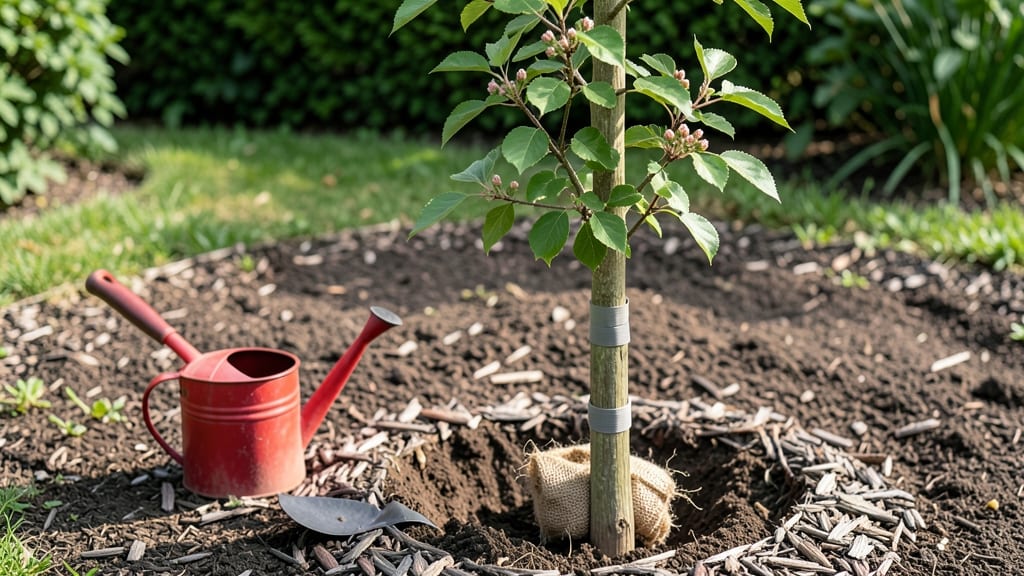
Determining how long a tree should be staked depends on its species, wind exposure, and soil conditions—most trees need support for 4 to 12 weeks, while larger varieties may require up to a year. Removing stakes too early risks trunk damage, while keeping them too long can weaken the tree's natural strength.
Tree staking duration varies widely based on the species' natural resilience. 🌳 For instance, fast-growing willows or poplars often stabilize within 4-6 weeks, while deep-rooted oaks or maples may need 6-12 months of support.
Soil type plays a huge role—sandy soils drain quickly and offer less stability, so trees planted there typically require longer staking. I always check for trunk sway when deciding to remove stakes, as this indicates the tree has developed enough root strength to stand independently.
Wind exposure is another critical factor—trees in open areas with high winds need staking for at least 3 months longer than those in sheltered spots. For example, fruit trees like apples or pears often benefit from extended staking during their first growing season to prevent branch damage.
The key is balancing support with the tree's natural development; too much time in stakes can actually prevent the trunk from thickening properly.
💡 In This Article
- Factors Determining Tree Staking Duration by Species
- Step-by-Step Guide to Staking and Removing Supports Safely
Factors determining tree staking duration by species
The root system of a tree is its foundation, and different species develop strength at vastly different rates. Fast-growing trees like willows or poplars establish shallow but extensive root networks within 4-6 weeks, allowing them to stabilize quickly.
Their fibrous roots spread horizontally, gripping the soil like a net, which is why they often need minimal staking. In contrast, deep-rooted hardwoods like oaks or maples send their primary roots vertically downward, taking 6-12 months to reach sufficient depth for stability.
This is why a young oak might need staking for nearly a year, while a willow sapling could go stake-free in just a few weeks.
Soil type dramatically alters how long a tree needs support. Clay soils hold moisture and provide natural stability, reducing staking time by 20-30% compared to sandy soils, which drain quickly and offer little resistance.
I've seen fruit trees like peach or cherry planted in sandy loam require 12-16 weeks of staking, while the same trees in clay-rich soil might stabilize in 8-10 weeks.
Wind exposure compounds this—trees in open fields experience 30-50% more sway than those in sheltered areas, often extending staking needs by 3-6 months.
For example, a newly planted apple tree in a windy orchard might need 9 months of support, whereas one in a protected backyard could be ready in 6 months.
Climate plays a hidden but critical role in staking duration. Trees planted in regions with heavy rainfall develop root systems faster because the soil remains consistently moist, accelerating root growth. In contrast, drought-prone areas can double staking requirements as roots struggle to penetrate dry soil.
Evergreens like pines or spruces are particularly sensitive to wind, often needing 12-18 months of staking due to their rigid, non-flexible branches that can snap under stress.
The key is observing the tree's natural resilience—if the trunk bends noticeably in the wind after removing stakes, it's not ready to stand alone.
Growth rate is another species-specific factor. Fast-growing trees like silver maples or birches can outgrow their need for staking in as little as 3-4 months, while slower-growing species like dogwoods or magnolias may require 12-18 months.
The rule of thumb is to stake until the tree's root system can anchor it 3 times wider than its canopy spread. For instance, a 3-foot-tall sapling should have roots extending at least 9 feet outward before stakes are removed.
This balance ensures the tree develops the strength to handle its own weight and environmental stresses.
Seasonal planting also affects staking duration. Trees planted in spring or early summer have 6-8 weeks of growing season to establish roots before winter dormancy, while those planted in fall may need 12-16 weeks of support before their first growing season.
The soil temperature at planting time matters too—roots grow most actively when soil temps stay above 50°F. In colder climates, extending staking into the second growing season is often necessary to prevent winter wind damage.
For example, a newly planted 4-foot-tall oak in a northern climate might need staking for 18 months to fully stabilize.