
Plants
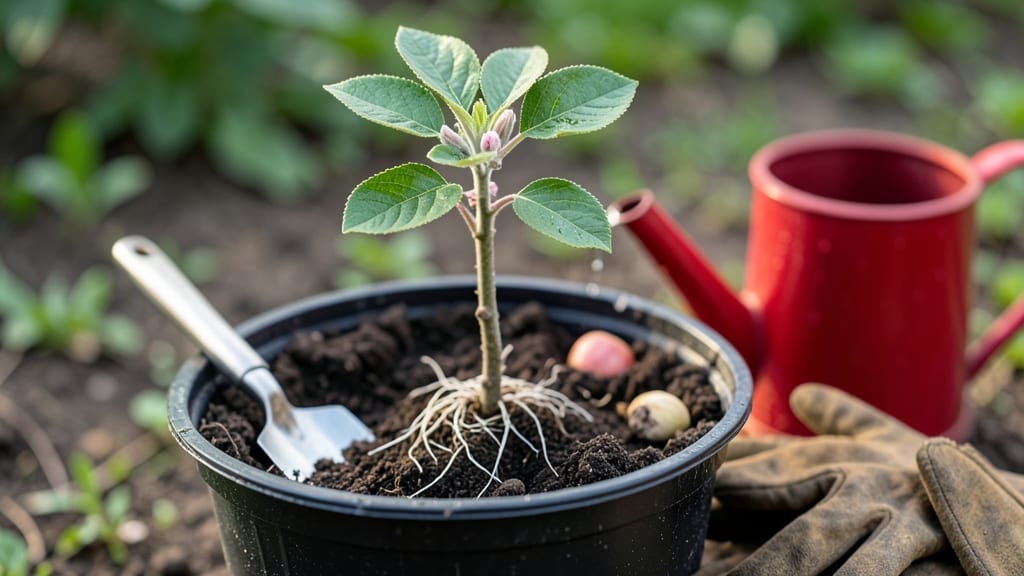
You can plant an apple tree from an apple, but it requires patience and careful steps: extract seeds from a fresh apple, plant them in moist soil, subject them to cold stratification, and wait for sprouts—though it may take years and won't guarantee the same fruit quality as grafted trees.
Growing an apple tree from a seed is more of a scientific experiment than a guaranteed gardening success. 🌱 The seeds inside store-bought apples often come from hybrid varieties, meaning the resulting tree may produce apples that look nothing like the parent fruit.
For best results, use seeds from heirloom apples or those grown in your region, as they're more likely to adapt to your climate. The cold stratification process—mimicking winter conditions—is crucial for breaking seed dormancy and encouraging root development.
Once sprouts appear, you'll need to nurture them through multiple growing seasons before they're strong enough to transplant. Most seedlings won't bear fruit for 5-10 years, and even then, the quality may differ from commercial varieties.
For faster fruit-bearing results, consider grafting a known variety onto your seedling once it reaches 1-2 feet tall. This combines the hardiness of your homegrown rootstock with the proven fruit quality of grafted scions.
💡 In This Article
- How Apple Seeds Germinate and Develop Roots
- Best Practices for Growing Apple Trees From Seeds
How apple seeds germinate and develop roots
The journey from apple seed to sapling begins with a biological process called seed dormancy, where the seed enters a resting state to survive harsh conditions. Apple seeds contain two key components: the embryo (future plant) and the endosperm (nutrient reserve).
For germination to occur, these seeds require cold stratification—a period of cold, moist conditions that mimics winter. Without this step, most seeds won't break dormancy and may remain viable but inactive for years.
During stratification, the seed's internal chemistry changes. Enzymes break down stored starches into sugars, fueling the embryo's growth. This process typically requires 6-12 weeks at temperatures between 34-40°F (1-4°C). Once stratification completes, you'll notice the seed coat softening slightly—a sign the embryo is ready to sprout.
The root (radicle) emerges first, growing downward into the soil to anchor the plant and absorb water. Within 2-4 weeks of warm conditions, the shoot (plumule) pushes upward through the soil surface.
Most apple seeds fail to produce viable fruit trees because they're often hybrids from commercial varieties. These seeds may grow into trees, but the fruit will differ drastically from the parent apple—sometimes even producing inedible or bitter fruit. This genetic inconsistency is why gardeners rarely use store-bought apple seeds.
The root system develops first, forming a fibrous network that stabilizes the young plant. These roots can grow 6-12 inches deep within the first year, seeking moisture and nutrients in the soil.
After germination, the seedling enters a critical phase where it relies entirely on its stored nutrients. During this time, the first true leaves appear—distinct from the initial seed leaves (cotyledons)—and photosynthesis begins.
The young tree will need full sunlight (6-8 hours daily) and consistent moisture to establish a strong root system. Without proper care, many seedlings fail to survive past this stage due to disease, pests, or environmental stress.
Under ideal conditions, the root system can expand 12-18 inches wide within the first growing season. However, these roots are shallow compared to mature apple trees, which develop deeper taproots over time.
The key to success lies in maintaining consistent soil moisture during the first 6-8 weeks after germination, as this period is crucial for root establishment. 🌱
What most people don't realize is that even if the seedling survives, it may take 3-5 years before the tree reaches 6 feet tall—a size where it can begin producing flowers.
This slow growth is why many gardeners opt for grafted trees, which combine the hardiness of seed-grown roots with the proven fruit quality of cultivated varieties.