
Blooming
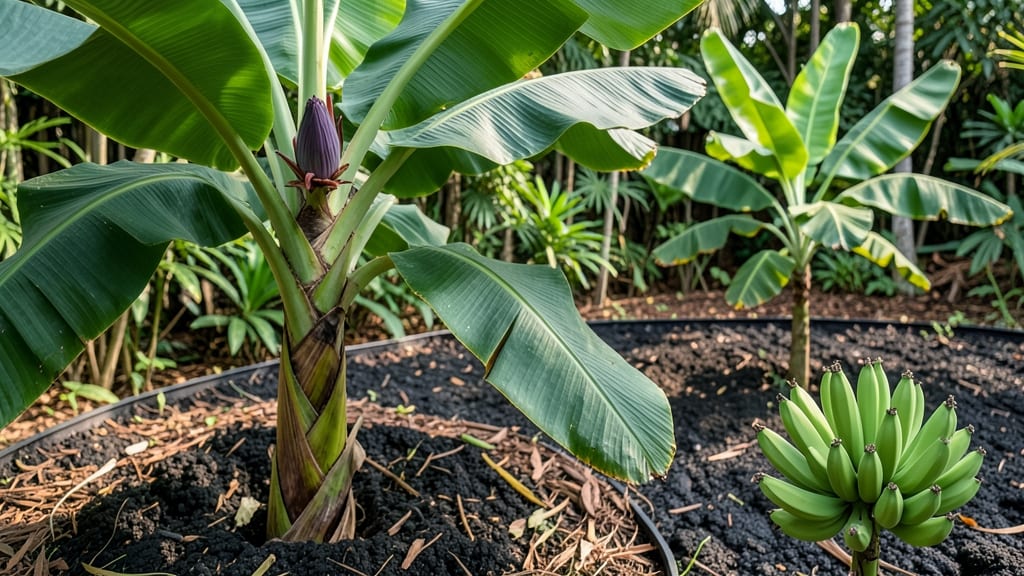
It takes a banana tree 9 to 12 months to produce fruit after flowering, though dwarf varieties like ‘Lady Finger’ can bear fruit in just 6 to 9 months. The exact timeline depends on the specific cultivar, local climate, and growing conditions—warmer tropical regions speed up maturation compared to cooler zones.
A banana tree's fruit production timeline begins after flowering, which itself can take 6 to 18 months from planting, depending on the variety. 🌱 The key stages—pseudostem development, flower emergence, and fruit growth—are all influenced by temperature and sunlight exposure.
For example, tropical varieties like ‘Musa acuminata’ mature faster in warm climates, while hardier types may need extra time in cooler regions. Understanding these stages helps home growers plan for harvests and manage expectations based on their local growing conditions.
What's fascinating is how dwarf varieties like ‘Lady Finger’ can produce fruit in half the time of larger types. These compact plants are perfect for container growing and urban gardens, offering a quicker reward for gardeners with limited space. The trade-off?
They typically yield smaller bunches compared to their larger counterparts. If you're growing bananas in a cooler climate, consider choosing a cold-tolerant variety like ‘Bluggoe’—it may take slightly longer to fruit but can handle temperature fluctuations better than tropical varieties.
💡 In This Article
- Banana Tree Growth Stages: From Planting to Fruit Production
- Fastest-Maturing Banana Varieties for Home Growers
Banana tree growth stages: from planting to fruit production
The banana tree's journey from planting to fruiting involves four distinct stages, each with specific growth requirements. First comes vegetative growth, where the plant focuses on developing its massive pseudostem—a false trunk made of tightly packed leaf sheaths that can reach 10-20 feet tall in large varieties.
This phase typically lasts 6-18 months, during which the tree builds energy reserves through photosynthesis, with optimal growth occurring at 75-85°F and full sunlight exposure. 🌱
Once the pseudostem reaches maturity, the tree enters the flowering stage, marked by the emergence of a large purple flower (the "banana heart") from the center. This flower develops into a hanging bunch containing 50-150 individual bananas, depending on the variety.
The flowering process itself takes 2-4 weeks, with temperature playing a critical role—varieties like ‘Cavendish’ need consistent warmth above 65°F, while cold-hardy types like ‘Bluggoe’ can tolerate brief drops to 25°F.
After flowering, the fruit development stage begins, where the bananas grow from tiny buds into their mature form over 9-12 months. During this period, the tree's energy shifts from building structure to nourishing the fruit.
Each banana starts as a small green finger and gradually develops its characteristic shape, with the skin changing from green to yellow as starches convert to sugars. This ripening process is influenced by day length and temperature fluctuations, which trigger the production of ethylene gas—the natural ripening hormone.
The final stage is harvesting, which occurs when the bananas reach their peak sweetness and the stem base turns yellow. What's surprising is that bananas continue to ripen even after being picked, thanks to ethylene production.
The entire cycle from planting to harvest can span 12-18 months for large varieties, but dwarf types like ‘Lady Finger’ complete it in as little as 9-12 months due to their accelerated growth rate.
The key difference lies in their genetic makeup—dwarf varieties have a shorter pseudostem and smaller leaf surface area, allowing them to allocate resources more efficiently to fruit production.
Climate plays a pivotal role in these timelines. In tropical regions like Costa Rica or Indonesia, banana trees mature 30-50% faster than in temperate zones like California or Florida.
For example, a ‘Dwarf Cavendish’ in Hawaii might produce fruit in 8-10 months, while the same variety in southern California could take 10-12 months due to cooler winter temperatures.
This variation explains why some gardeners in cooler climates choose cold-tolerant varieties—even if they take slightly longer to fruit, they're more reliable in unpredictable weather conditions.
What most growers don't realize is that the root system is just as critical as the above-ground growth. Banana trees develop a shallow but extensive root network that spreads outward, absorbing water and nutrients efficiently.
In container growing, this means using large pots (at least 20 gallons) with excellent drainage to prevent root rot—a common issue that can delay flowering by months. The roots also play a role in anchoring the massive pseudostem, which can weigh hundreds of pounds when fully grown.
Understanding these stages helps explain why some varieties mature faster than others. For instance, ‘Red Dacca’ bananas—known for their vibrant red skins—typically take 10-12 months to fruit because their larger fruit clusters require more energy to develop.
In contrast, ‘Bluggoe’ bananas, which are cold-hardy and smaller, can produce fruit in 9-11 months while thriving in USDA zones 5-9. The choice of variety isn't just about speed; it's about matching the plant's needs to your local growing conditions for the best results. 🌿